




Ashley Cook and Chris Pinter
January 29, 2026
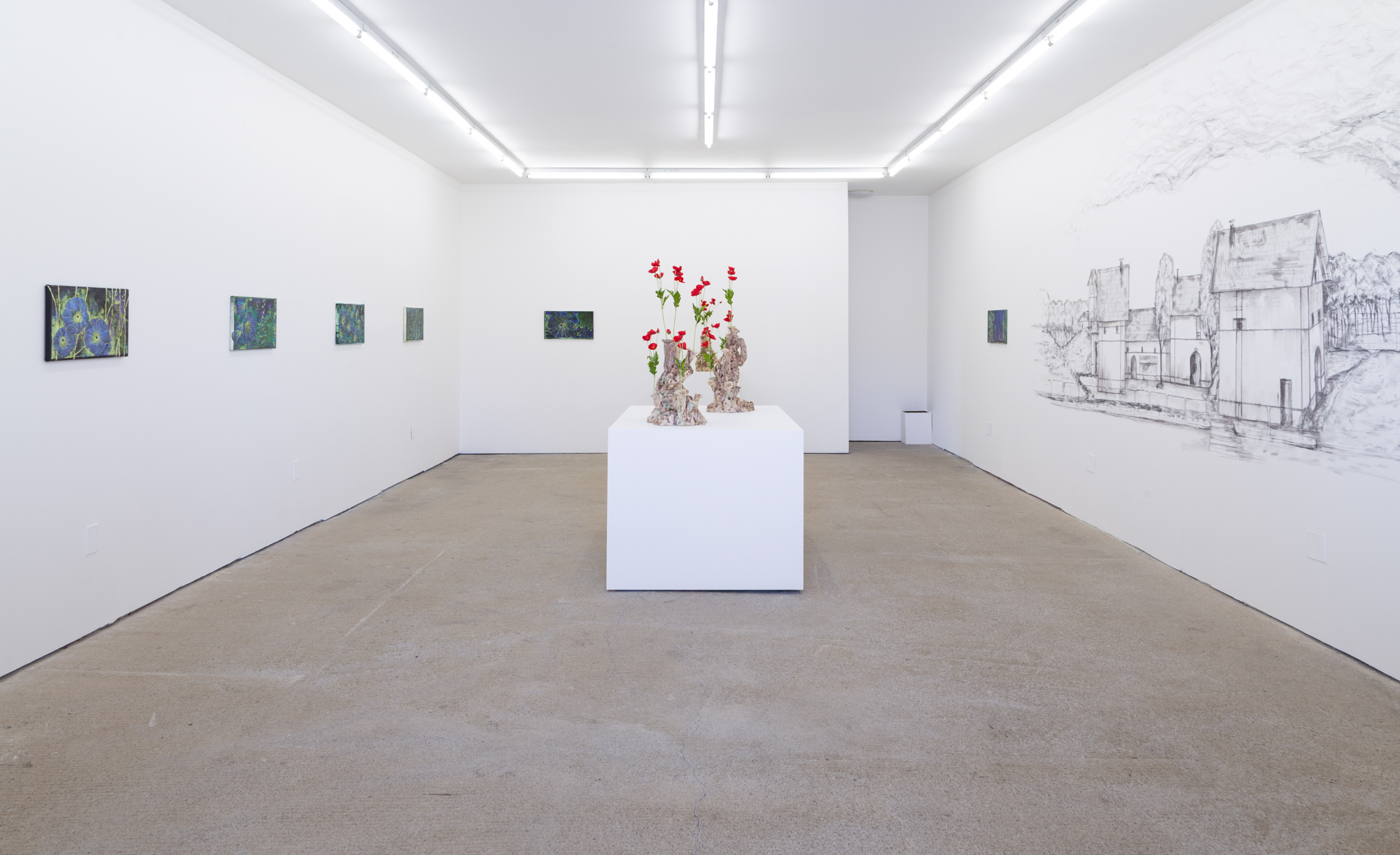
Art & Ecology, Veit Laurent Kurz at What Pipeline, November 7 - December 20, 2025
For their final exhibition of 2025, What Pipeline presented a collection of work by Berlin-based artist Veit Laurent Kurz. Earlier in the year, his paintings were featured in a three-person show alongside paintings by Quintessa Matranga (San Francisco) and Israel Aten (Detroit), continuing a relationship with the artist that began in 2014. Over the course of his career, Veit Laurent Kurz has earned a reputation for his practice of world-building that draws from German folklore, psychology, and contemporary environmental crises. Art & Ecology, on view from November 7 through December 20, 2025, employed the mediums of painting, drawing, sculpture, video and sound to carry forward an investigation into subjective reality through dreamlike syntheses of the human and non-human experience.
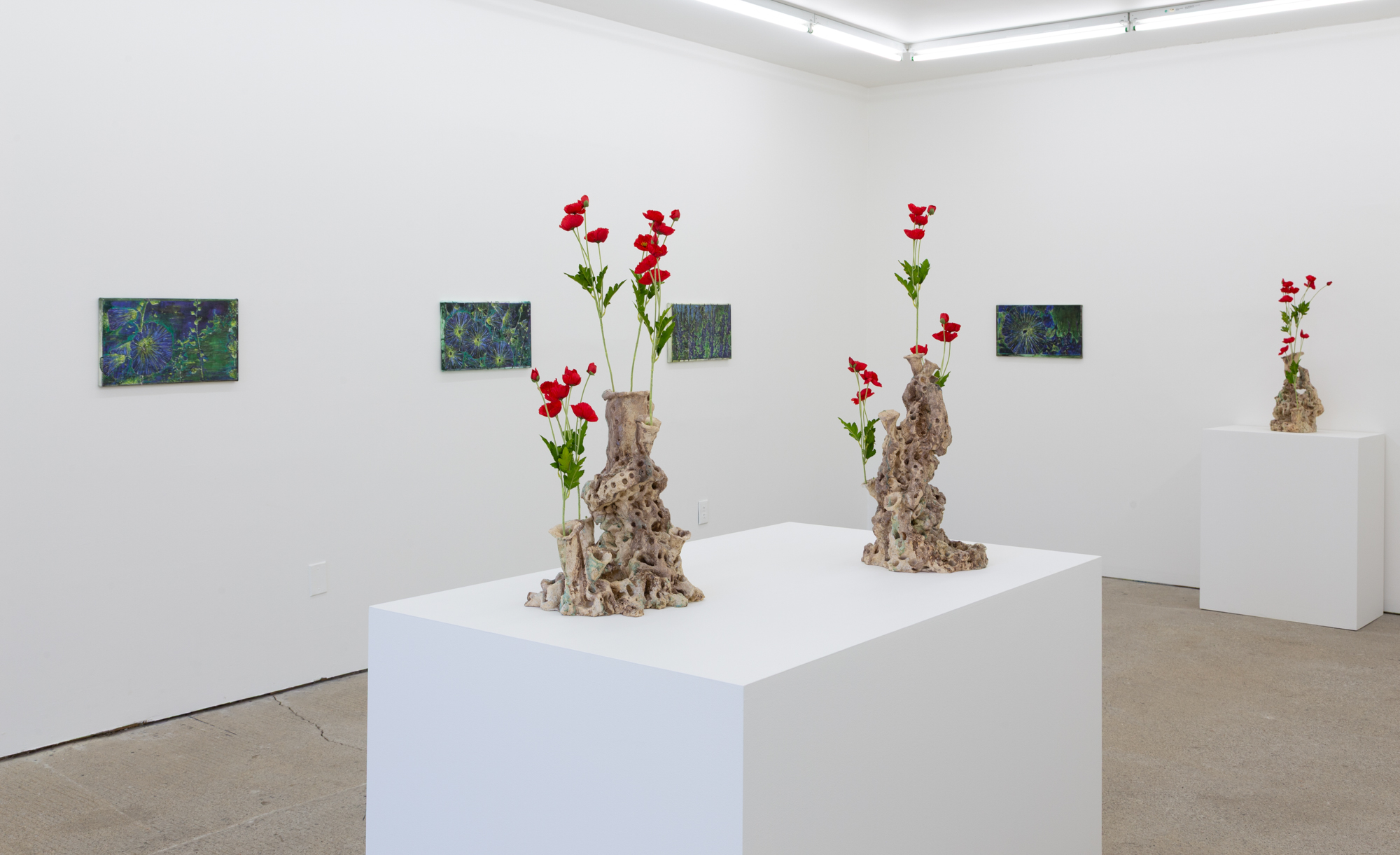
Art & Ecology, Veit Laurent Kurz at What Pipeline, November 7 - December 20, 2025
Beginning as a two-part exhibition called Circle of the Bee, which took place between Toyko and Los Angeles in 2022, Veit Laurent Kurz revisits the theme of contamination as it relates to physical, emotional and psychological wellbeing. But rather than treating contamination as a singular event, the artist sees it as an accumulation of both physical matter and mental strain that causes mutation and paranoia over time. This sensibility permeates Art & Ecology, where each of the works on display function less as discrete pieces than as interdependent organs within a larger system.
Central to this story is the recurring motif of the fountain; simultaneously prehistoric, mythological, and architectural. Traditionally associated with vitality and purification, the fountain here becomes a site of uncertainty, a threshold where nourishment and toxicity are indistinguishable. In the first text for Circle of the Bee1, Kurz draws a parallel between this ancient symbol and the Pacific Ocean following the 2011 Fukushima nuclear disaster. Invisible streams of radioactive matter traveling through water and air transformed the ocean, in his imagination, into a contemporary fountain that is quietly—yet violently—reshaping the biosphere and the psychic conditions of those who inhabit it. The video collage Fear Engine 2.0.1.1, assembled shortly before the 2022 exhibition on a small island in the Pacific Northwest, crystallizes this association. As the artist recalls his early years growing up near a hydroelectric power plant in the German town of Erbach, he recognizes his subjective distress as a collective experience that spans the globe. Kurz’s assertion that the ocean is now an infrastructural, diseased force that acts slowly and persistently is echoed by American architect Keller Easterling in Medium Design: Knowing How to Work on the World, who writes “the active forms of power are not the dramatic ruptures, but the quiet, repeatable dispositions.”2. This book proposes new ways of thinking about design that focuses on the space between objects rather than the objects themselves, in an attempt to address complex global issues like climate change.
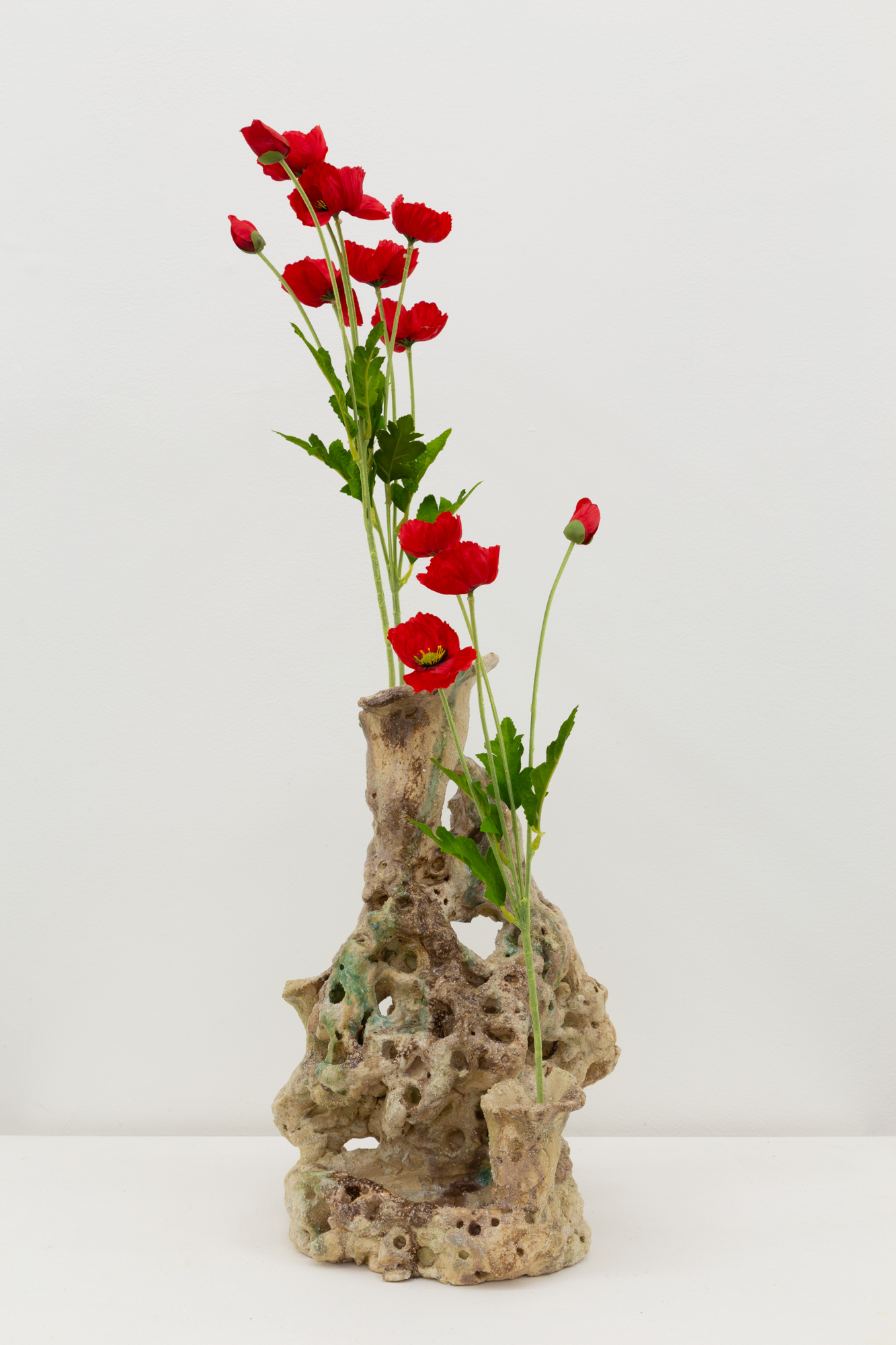
Bee Pond III (Art & Ecology Series), 2025. Ceramic, glaze, sand.
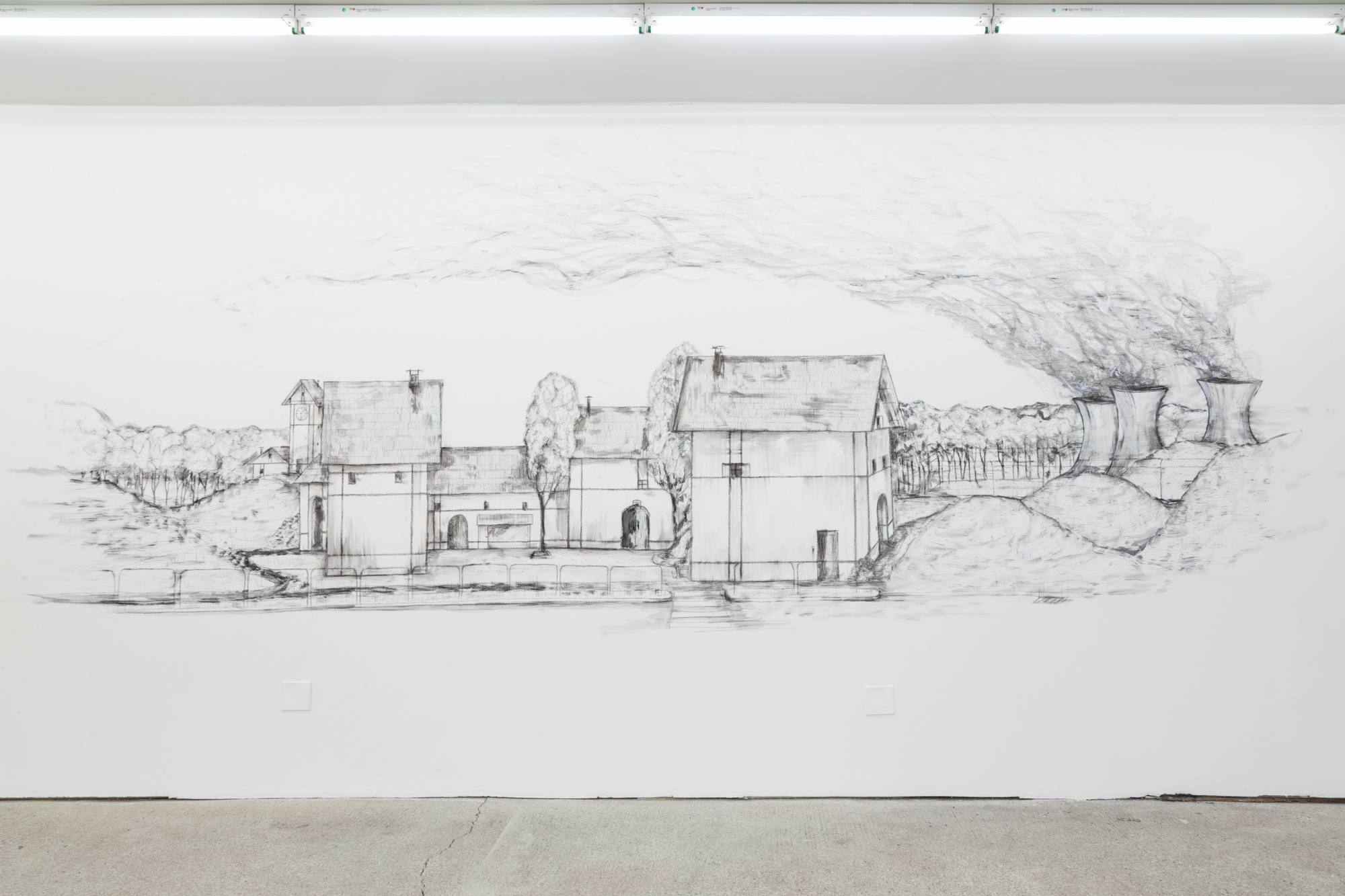
Elsbach (The Weeping Demon), 2025. Graphite, acrylic on wall.
A semi-autobiographical narrative undergirds the exhibition through the story of a young boy who, after hearing of a potential contaminant in the waters of his hometown, develops an obsessive fear that materializes as nightmares and bodily hallucinations. The boy’s imagination fuses genetic mutation with magical transformation, eventually giving rise to his metamorphosis into a bee. It is unclear whether the story is set in the physical world and caused by environmental exposure, or if it unfolds solely within the psychic terrain of childhood fear and fantasy. Kurz’s use of ambiguity here is deliberate, portraying the process of becoming as a confusing and all-consuming journey.
Environmental activism has been explored throughout art history by artists who attempt to dismantle the separation between humans and nature, and encourage our renewed sense of kinship with the natural world. The bee’s crucial role in maintaining biodiversity is significant to Kurz and their vulnerability to man-made pesticides and pollutants informs his surrender into their consciousness as an empathic act. The paintings in the exhibition seem to depict flowers with a radioactive glow but are actually done in the palette of the bee’s vision spectrum. Ultraviolet blue, green, and yellow wavelengths resonate from the flora as he represents the world from the perspective of the black and yellow winged pollinator.
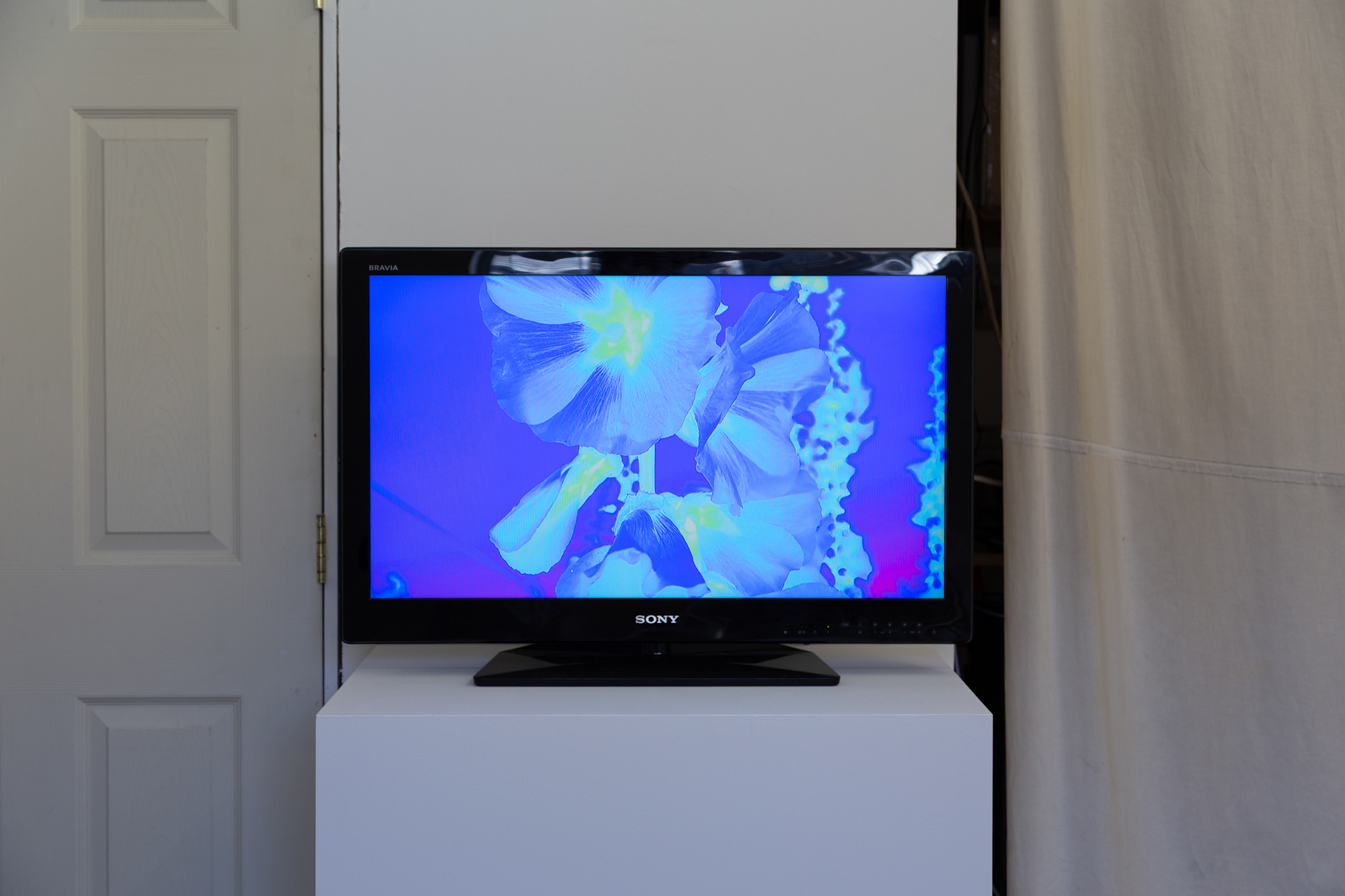
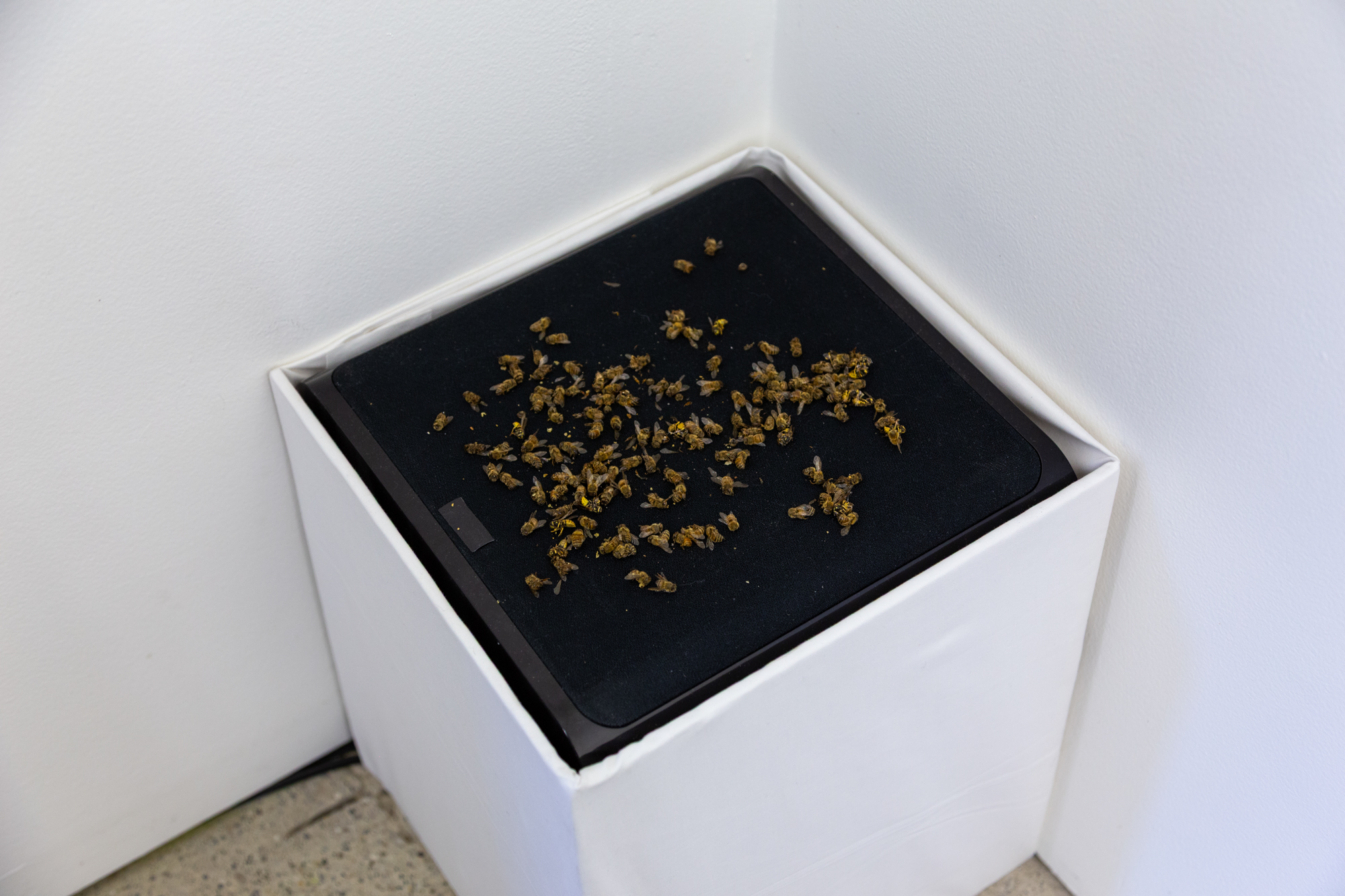
Bee Study (Green Sanctuary), 2025. Single channel HD video.
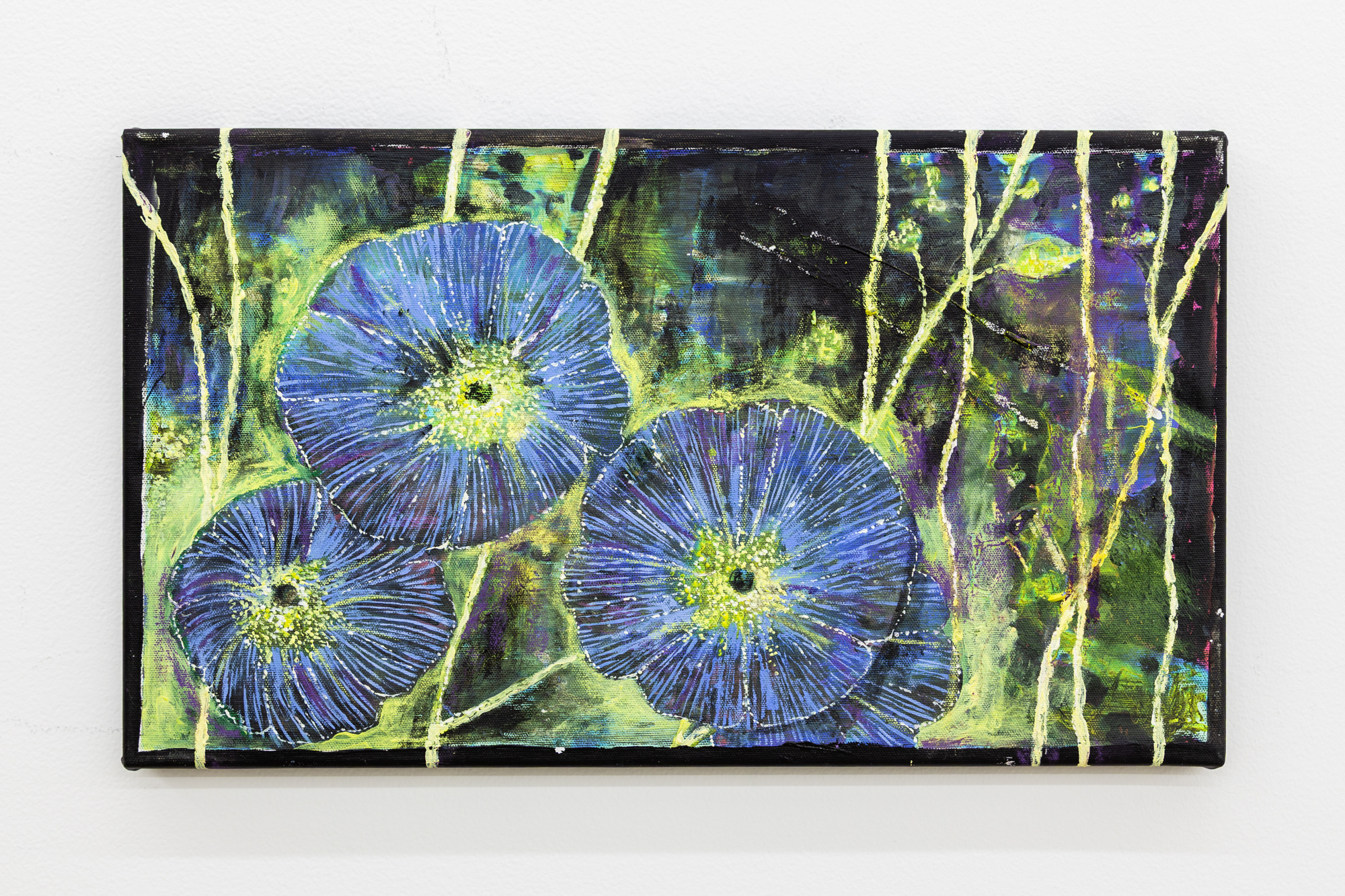
Trichromatic View II (Art & Ecology Series), 2025. Oil, acrylic on digital print on canvas.
Like empathy, the abstraction permeating this work facilitates a level of perceptual displacement that breaks down meaning to make room for something new. Kurz’s dynamic use of material speaks to his attention to the poetics of the assemblage, uniting Surrealist philosophy with the history of the “total work”. Known in Germany as Gesamtkunstwerk, this style of art practice emerged in the 19th century when artists began to explore the potentials of non-rational, mystical thinking through the creation of holistic experiences, often times becoming the work of art itself. But while the “total work” traditionally highlights the contribution of the artist as an individual, Kurz insists on relinquishing a defined state of selfhood, as suggested in his poem presented in tandem the show.3 This complex labyrinth of push and pull, mirroring and interdependency, ultimately highlights the interactive qualities of the biosphere and its similarity to the act of art and exhibition making.
3525 W. Vernor Hwy, Detroit, MI 48216
https://whatpipeline.com/
1. “Veit Laurent Kurz - Circle of the Bee 2.” XYZcollective. Accessed January 28, 2026.Link.
2. Keller Easterling, Medium Design: Knowing How to Work on the World (London: Verso, 2021), 38.
3. “Veit Laurent Kurz Art & Ecology November 7 - December 20, 2025.” Veit Show Info - What Pipeline, 2025. What Pipeline.Link.
*Images courtesy of What Pipeline/Alivia Zivich