




E-Man Bates
June 12, 2025
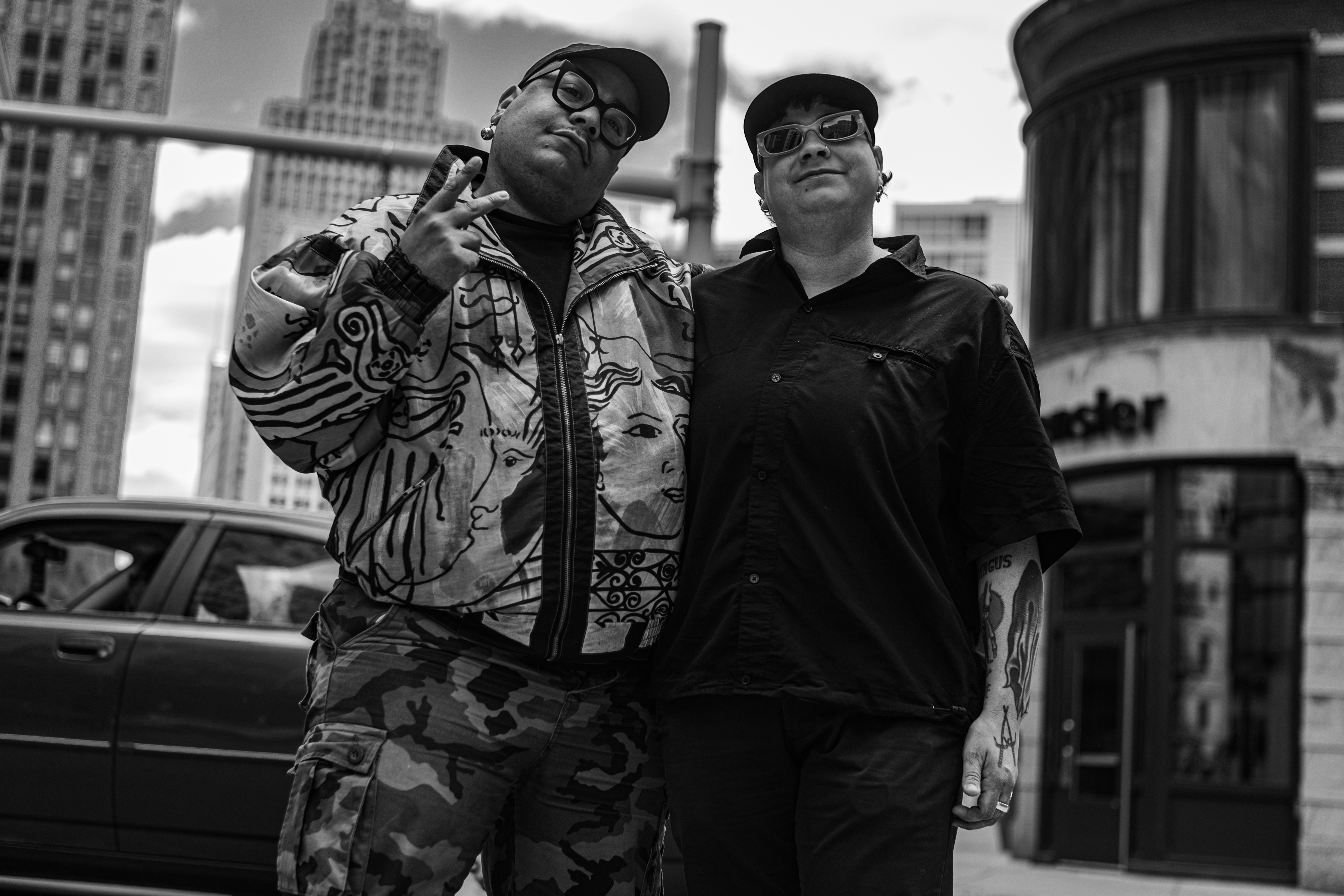
Ashton Swinton (Left) and Loren (Right) - Photo by E-Man Bates
This past Memorial Day weekend, ravers, casual listeners, and EDM fans from around the world converged at Detroit’s Hart Plaza for the 25th year in celebration of “Techno Christmas”. The festival was founded in 2000 by Event Producer Carol Marvin and Pop Culture Media, who initially gave it its original name, “Detroit Electronic Music Festival.” The name was changed in 2001 to “Ford Electronic Music Festival” to reflect its sponsorship by the then-sponsor, Ford Motor Company. A few years later, stemming from some financial trouble during the tenure of former Mayor Kwame Kilpatrick, FEMF was now simply renamed Movement. At that point, the festival gained financial backing through fundraising and production efforts from Electronic music pioneer and member of the Belleville Three, Derrick May, and in 2005, another Pioneer in Electronic Music, Kevin Saunderson, took over the production efforts and renamed it the Fuse-In Festival, marking the first year the festival had an entry fee. Despite all of these changes, the festival still struggled to generate sufficient revenue compared to the cost of producing the event. In 2006, the Detroit-based event company Paxahau took over production duties, rebranded the festival as the Movement Electronic Music Festival, and has been at the helm ever since. This year, it has been projected to have had an attendance of around 90,000 to 100,000 people across the three-day event weekend.
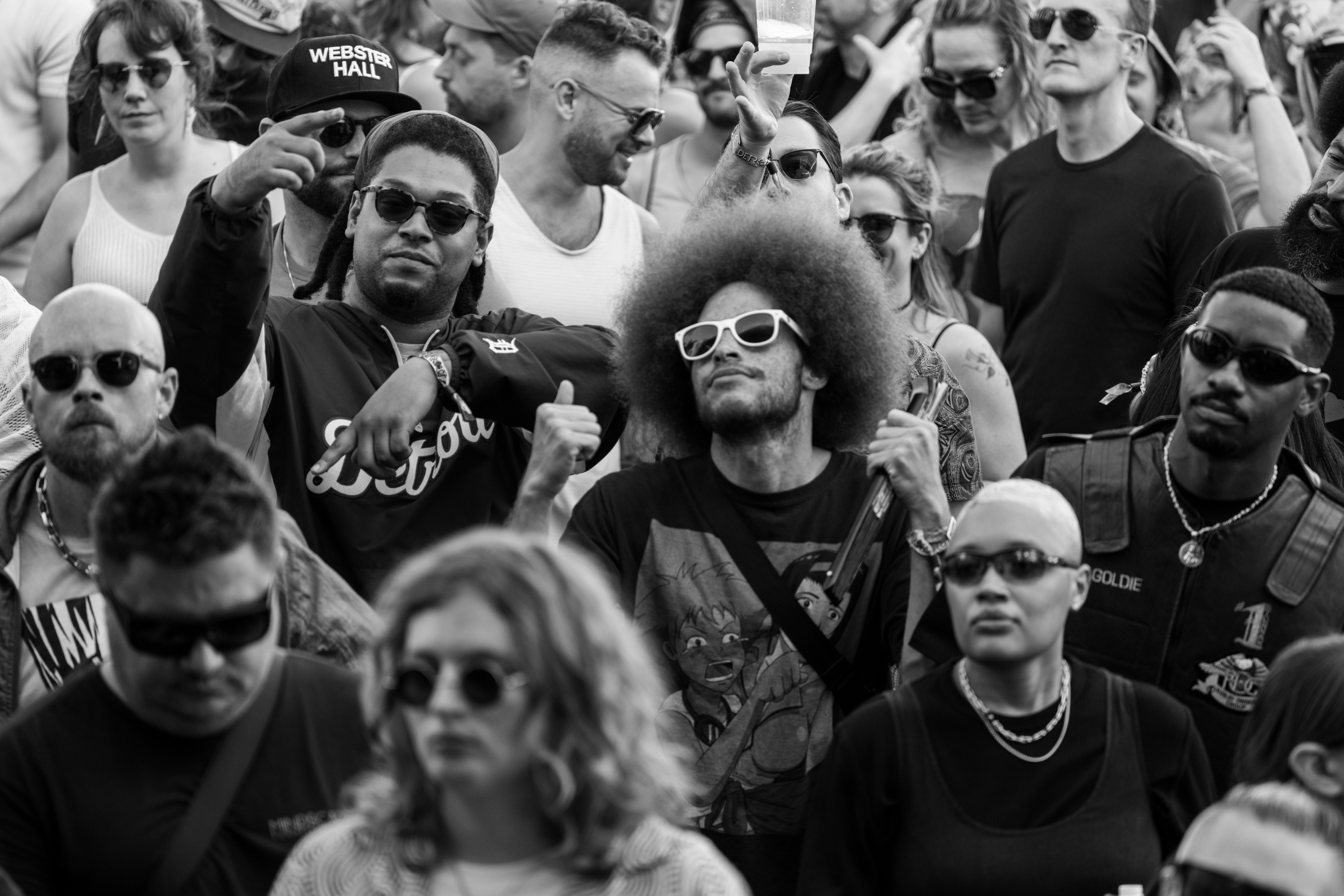
Movement Crowd - Photo by E-Man Bates
This was far from my first time attending Movement, but this was my first time with an assignment. What originally started with one idea evolved into something different, and like the festival itself over the past two and a half decades, we ride with the change and adapt. This change led me to profile two DJs that graced Movement Festival’s Waterfront and Detroit Stage, respectively. Loren, playing Movement Festival for the fifth time, and Ashton Swinton, making his debut as a DJ, but previously as a vocalist, complemented Marshall Applewhite’s set in 2016. Credit to Katherine Addy Communications for the connection.
E-Man: Loren, that was your fifth time playing movement, right? And Ashton, this was your first time playing as a DJ, but you did vocals right? Right? So you both probably had two different prep styles going into it. How do you prepare for the festival?
Loren: “Yeah, so usually I’m just at home, I sort through records. I mean, I had multiple gigs throughout the weekend, so I tried to sort a couple of different mags, one for the festival and one for the after-parties that I’m playing. I start by sorting out my vinyl. And then, yeah, just bring my speakers out to my living room. I sit on my couch. I get coffee, and then I start going through tracks, creating folders where I put these tracks for Movement and the after-parties. It’s really just like cycling through all my music, trying to imagine the parties in my head and listening to the tracks at the same time.”
Loren, who is originally from Lake Orion, MI, has been DJing since their parents purchased them a turntable set at 17. Originally, Loren had their sights set on a career in the BMX world, but they decided to pivot to music at a young age. “I took BMX very seriously for a long time, from when I was in elementary school until I moved down here. It kind of slowed down when I started getting into DJing and taking DJing seriously. There wasn’t a lot of money in women’s BMX at the time. I mean, now we have Olympic freestyle teams, and the X Games have a women’s class, but that wasn’t the case when I was riding. I was, however, riding at a very elite level; I went to the X-games to teach clinics.” Loren has an older sister who introduced them to the Detroit scene. While still in high school, Loren would come down to Detroit to visit their sister on weekends and develop a passion for learning how to DJ. “I started discovering parties, people I liked, and, yeah, I just really got into music, inspiring my desire to learn how to DJ. My mom knew that, and she just so happened to come across these belt-driven turntables at a garage sale. She bought them and brought them home for me, and, yeah, the rest was kind of history. When I moved down to Detroit, I lived over in New Center. A good friend of mine, Jason Clark, knew I needed to get a job, and the first thing he thought of was, ‘Hey, why don’t I try to hook you up at Detroit Threads?’ (A record store in Hamtramck). As I worked there, I reviewed many different types of records, because my job was to label the records and price them. I had the opportunity to jump from IDM records to house records to technical records, and so, yeah, I mean, just discovering that as I was working there kind of shaped my approach into a more mature curation.”
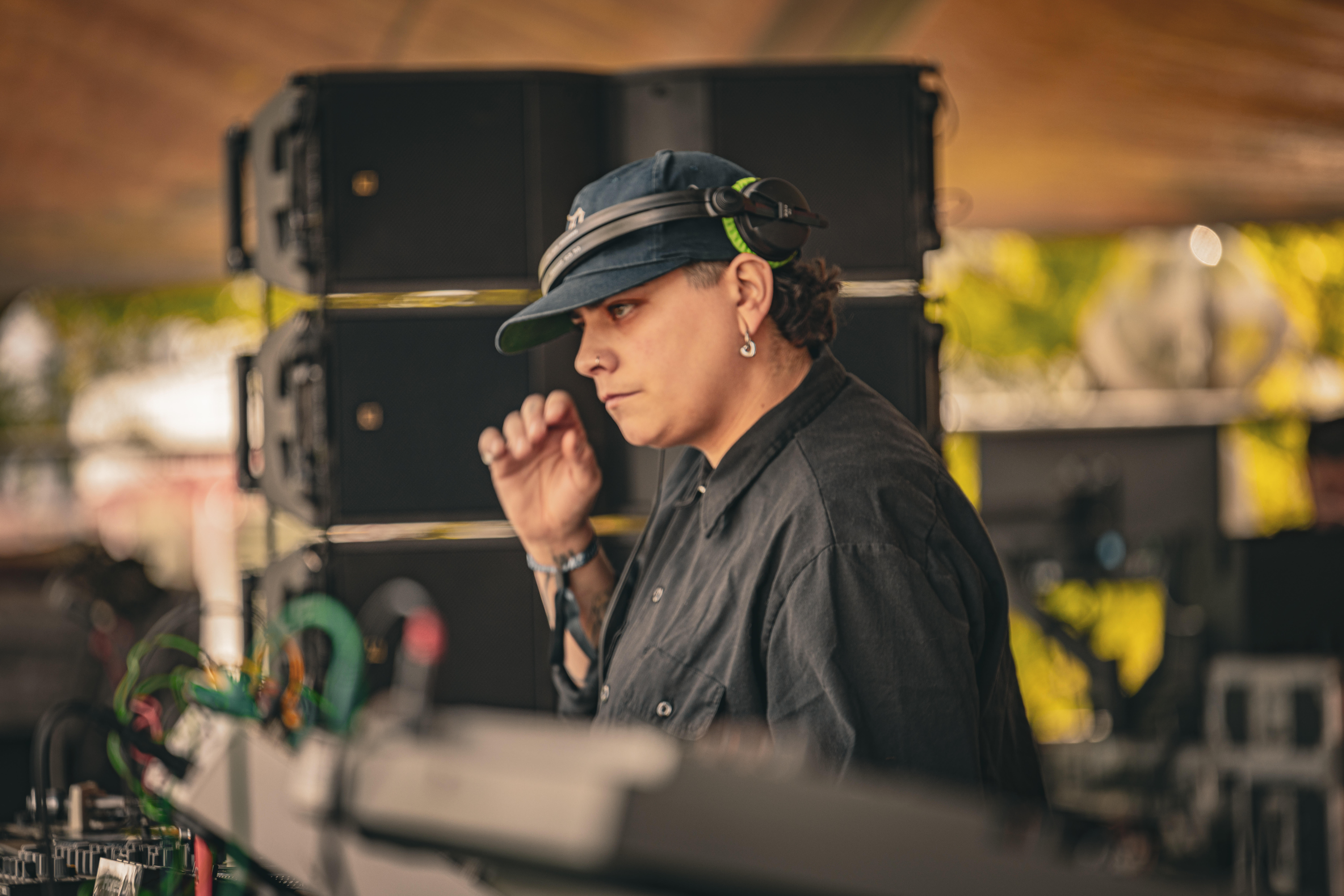
Loren performing at Movement 2025 - Photo by E-Man Bates
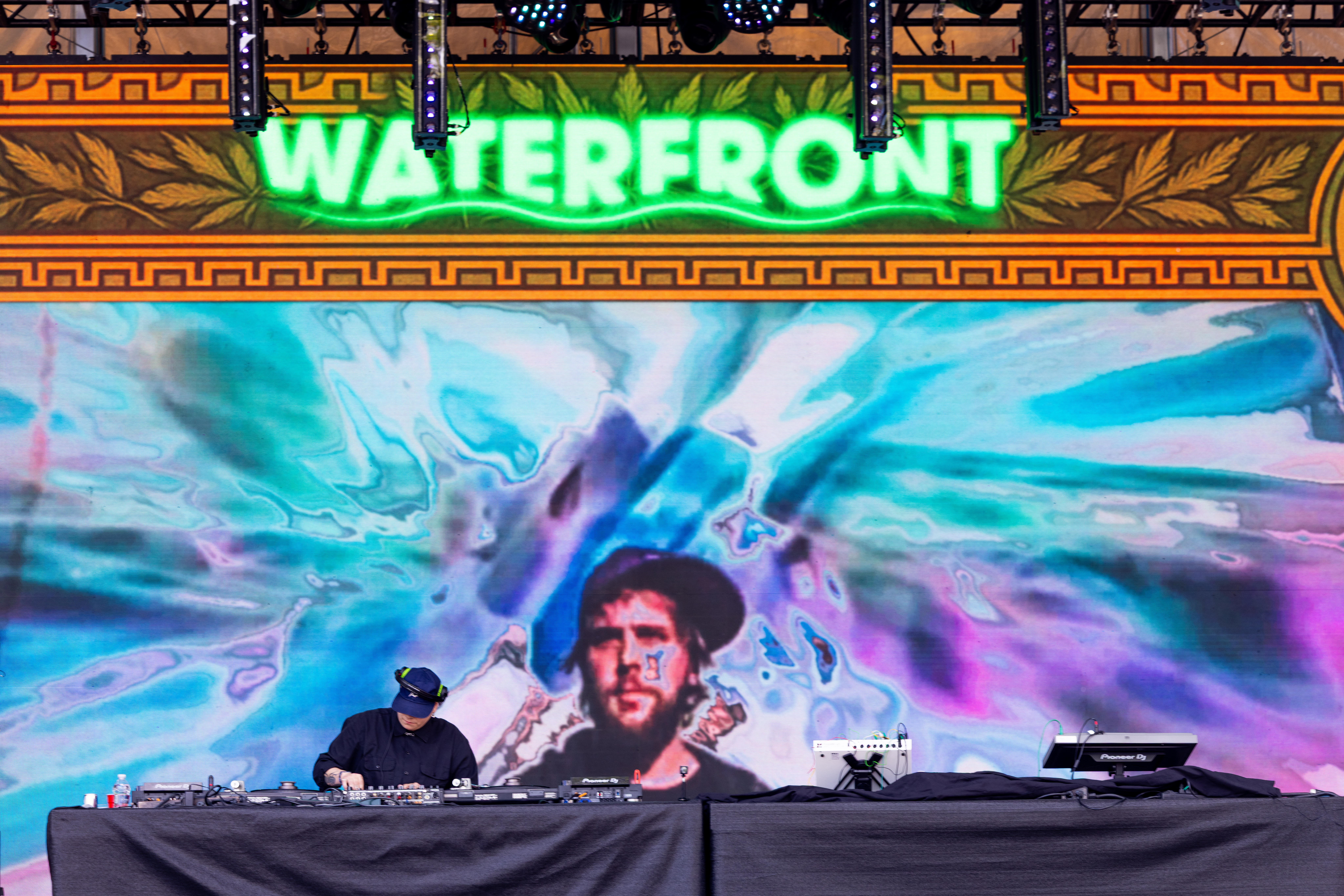
Loren performing at Movement 2025 - Photo by E-Man Bates
E-Man: Ashton, how is it different preparing for a DJ set compared to doing vocals for Movement?
Ashton: “Well, with the vocals, I had a chance to practice for it. We had a couple of sessions before the performance. With DJing, the preparation was more chaotic. I just bought a bunch of music, put it into some folders, and played it based on how I was feeling at the moment. I had about 50 tracks on the playlist.”
Ashton’s family also played a big part in their story. A second-generation DJ from Detroit’s West Side, Ashton’s childhood was filled with music. His uncle was a DJ for WJLB, and his father was also a DJ; he’d often hear them playing records in the basement throughout his youth. His Grandmother, GiGi, also played a significant role in his journey as she frequently drove him to gigs at the now-defunct venue, The Works.
“Yeah. It’s like any other weekend when I was grounded or anything. I’d just call Gigi, and she’d be like, ‘ Well, just tell your dad you’re coming to sleep at my house, and I’ll take you wherever you want to go. ‘ She would come and pick me up, and my dad would just be like, ‘You can’t just take Ashton anywhere.’ She’s like, ‘I birthed you. I can do whatever I want.’ Some of my early influences are definitely from WJLB every Friday night; DJ Godfather had this four-hour show, so my sister, my grandma Gigi, and I would drive around Belle Isle and listen to the whole Ghettotech mix.”
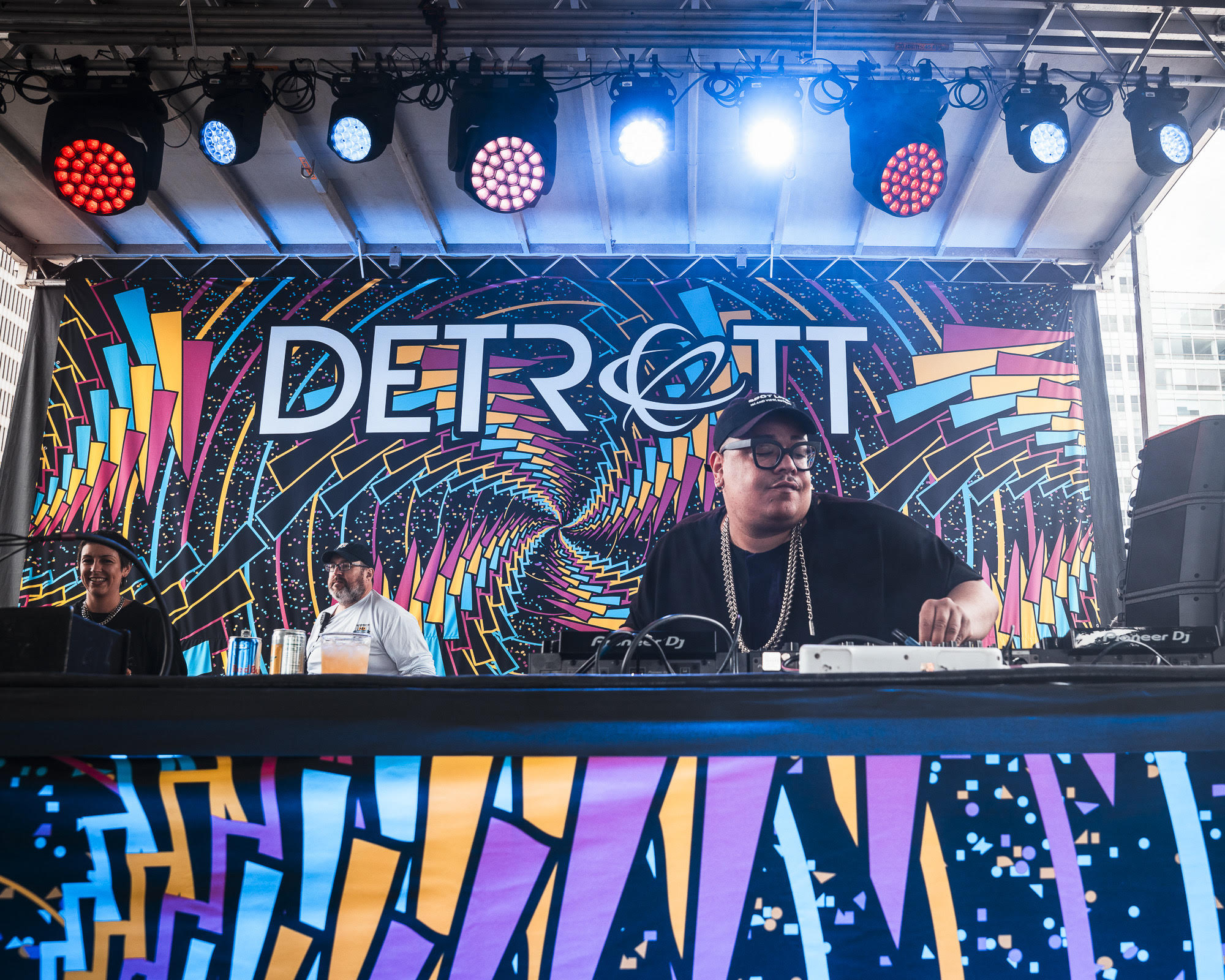
Ashton Swinton performing at Movement 2025 - Matt Christ and Curtis Schabath
Both Loren and Ashton have their own unique styles, one of which is described as Acid Techno. “I would describe it as more of a feeling and a form of internal awareness; I feel acid just makes me think of what my body is on the inside, if that makes sense. That’s how I would describe it. It’s just like very, very inside my body. Like it’s already been there forever,” Loren explains.
They both have residencies, Loren, being the youngest resident of TV Lounge at age 18, and Ashton in New York City at Earthly Delights. They are both responsible for the “Duology” series, which takes place at Spotlite, and Loren is credited with the “Hunni” series at TV Lounge. “Duology was born from the idea that A(Ashton) and I are very, very close friends. We DJ together, and in our DJing, we often find synchronicity. Hence, the word duology refers to a very synchronized playing together, where we don’t have to talk much. It just kind of flows. We do it the first Thursday of the month; we’ve been doing that for a year and a half. So, yeah, it was just an idea of us being able to have a night where we could just be ourselves if we wanted to. We have an outlet to bring some new, fresh faces to the city of Detroit, and we want to bring in some Midwest talent from Chicago, Ohio, Pittsburgh, and similar areas.” Hunni is a series that creates a safe space for people in the LGBTQIA+ community and the electronic dance music (EDM) community. “Hunni is a space where all queer, trans, POC, masc, female, like, any identifying queer person can come, feel safe, feel welcome, feel a sense of community. On the DJ side of things, we keep that space open for young queer DJs from all over to come and have a chance to play.. So, yeah, it’s just a sense of community. It’s a sense of queerness,” Loren said. “That’s because that’s who we are.” Loren and Ashton continued.
Loren also tries to incorporate visuals of their late sister into her set, but this year, with the passing of prominent DJ Grant Jackson, Loren wanted to work in visuals of him as a tribute as well. “Grant was an absolute staple in the music scene. I mean, from the original days at The Works when he was doing his catdog stuff, to doing the Dubstep shows, to now, putting on so much young fresh talent for Taco Tuesdays. For his celebration of life, MoodyMann was there; he’s a legend. Like, people’s my first. Every year, I try to honor my sister if I play. I always do a little tribute to her; however, this year we also wanted to include Grant in that. He was such a solid person in the community, and we deeply miss him, for sure.” Loren said.
Glad we were able to connect. You can catch Loren and Ashton in a DJ booth near you soon, whether it’s at home in Detroit or overseas in clubs such as Golden Gate in Berlin, Germany.
Photos by the author