




A conversation with Laura Kraftowitz, Founding Executive Director of City of Asylum/Detroit
June 15, 2026
Image courtesy of City of Asylum/Detroit
In 1988, the Indian-British novelist Salman Rushdie published The Satanic Verses, a controversial novel that was banned in over a dozen countries. For the next decade, Rushdie was forced to live in hiding to escape threats of assassination. Thanks to his abundant resources, he was able to do this, but most writers and artists who create paradigm-shifting work are not.
As part of Rushdie’s reemergence to public life, he helped found the City of Asylum network with a mission of supporting writers who challenge governments and societal norms. Now known as the International Cities of Refuge Network (ICORN), this organization enlists cities to provide two-year fellowships to writers and artists who are forced to flee their home countries when the work they do puts them in danger. The point of these fellowships is to provide safety, but also to ensure that writers and artists can continue making their work and impacting society as they transition to a life in exile. The ICORN network, headquartered in Stavangar, Norway, now spans 90 cities. Since 1993, hundreds of exiled writers and artists have been hosted.
Nearly all member cities are in Europe, but the US has begun to follow suit, with programs in Las Vegas, Ithaca, Pittsburgh, and Detroit. Laura Kraftowitz is the co-founder of City of Asylum/Detroit. In the following interview, she shares insight into the experiences of establishing this kind of program here in our city.
rm: So, your organization is called the City of Asylum/Detroit, but the organizations in Europe are not called City of Asylum?
LK: A key difference between doing this work in the US and anywhere in Europe, is that in Europe, they are municipally funded programs. So in the International Cities of Refuge Network, there are European mayors and city officials participating and providing support. In the United States, you don’t have that kind of support for such a program.
rm: So, City of Asylum in the United States is more of a grassroots movement…
LK: Yes, it’s unfortunate that we are lacking the kind of support that could help this type of work thrive in the US, but we know how to be scrappy. We find support in our communities. The grassroots model that is more active in the US encourages our organization to connect and collaborate with the people around us, and to engage them in the movement. And since it’s not a top-down approach, it also allows us to be more nimble and imaginative about how we achieve our goals.
rm: The work that you are doing involves hosting a writer, and sometimes an artist, providing them with a fellowship that includes material and professional support…how exactly would an artist or writer qualify for your fellowship?
LK: Writers or artists who qualify for support are those who have been subjected to direct threats to their safety because of the work that they do. And oftentimes, that involves prison or even death sentences issued by a government, or assassination attempts by people around them that are angered by the work they do.
When we met our first fellow, Pwaangulongii Dauod, he was in hiding in Nigeria because he had written an essay about queer identity, and about a friend of his who committed suicide. It’s a really moving, electric essay that articulated the discussions about queerness and postcolonialism that were happening at the time among Nigeria’s LGBTQ+ youth. The essay, Africa’s Future Has No Space for Stupid Black Men, was obviously provocative in his homeland, and he wrote it under a pen name, but his real name was leaked. It is illegal to be gay in Nigeria, and some people tried to assassinate him. In that case, he was threatened by a conservative community, not necessarily the government.
He now lives in Detroit. He is thriving here, teaching the next generation of Detroit creative writers as a professor at Wayne State. And he will be publishing his debut book in February with McSweeney’s, called The Places Our Fathers Lived.
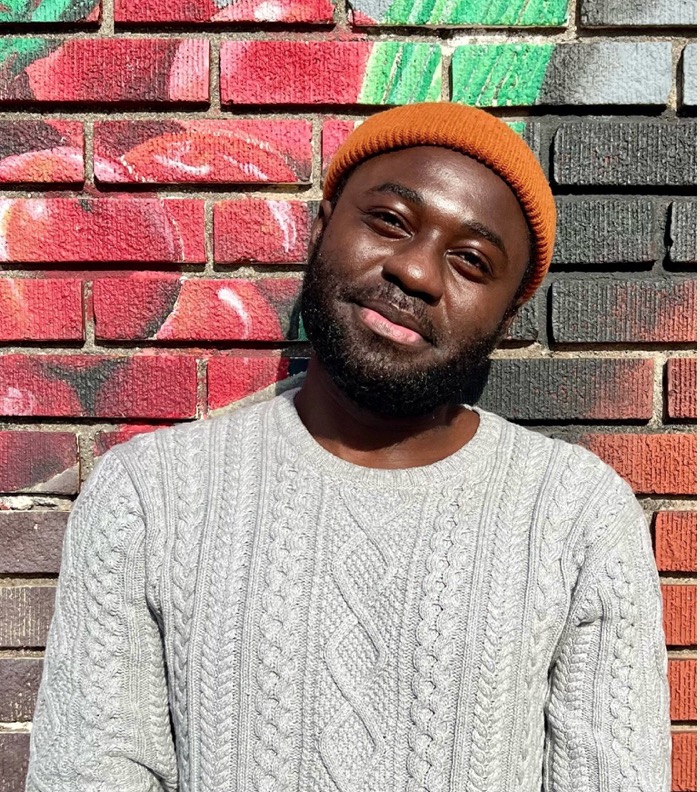
City of Asylum/Detroit fellow Pwaangulongii Dauod
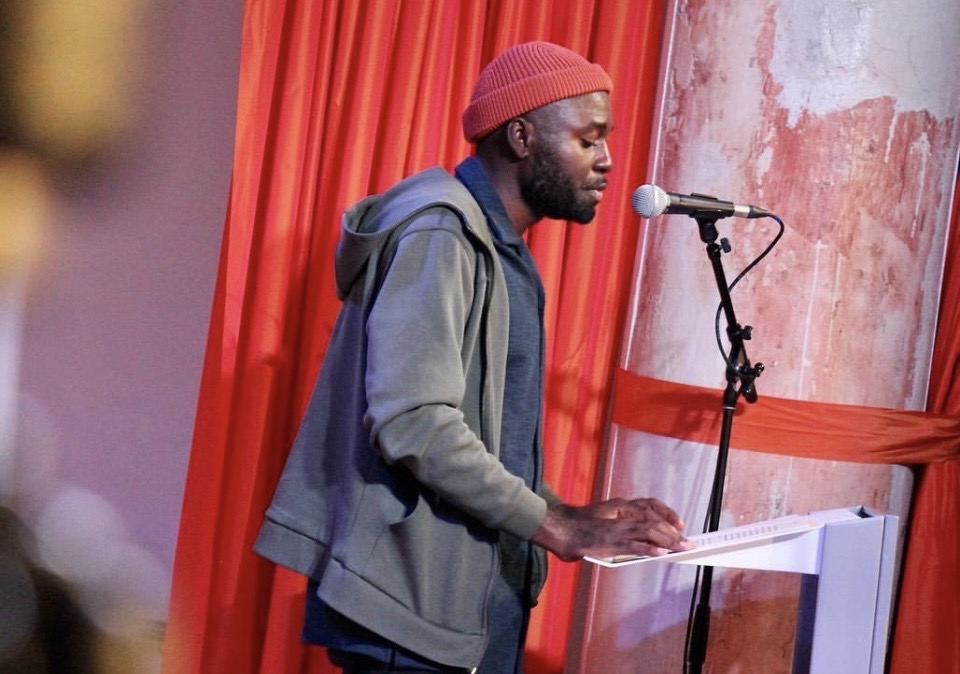
Pwaangulongii Dauod speaks about writing and risk at the Dissidence tour of exiled writers
rm: This is a perfect example of how impactful your organization is for the people you work with. And I feel like, not only was this individual’s life improved through City of Asylum/Detroit, but you are also providing an opportunity for the community of artists and writers in Detroit to directly engage with—and learn from—his story.
LK: We knew when we started City of Asylum/Detroit that we wanted to connect these very brave global artists to our local creative community. We know that Detroit artists are extremely engaged and courageous, and we just saw it as a really natural fit to start doing this type of work here.
Detroit is a really special place to build community, and it’s uniquely poised to be a safe haven for incoming artists and writers who are working at the margins, because that is literally its cultural foundation.
You know, most of the European cities that are part of the International Cities of Refuge Network are cities where the majority of the population is white, and where program administration and leadership are heavily white and often very male. In Detroit, we have the opportunity to rethink these hierarchies and discover different ways that this work can be done.
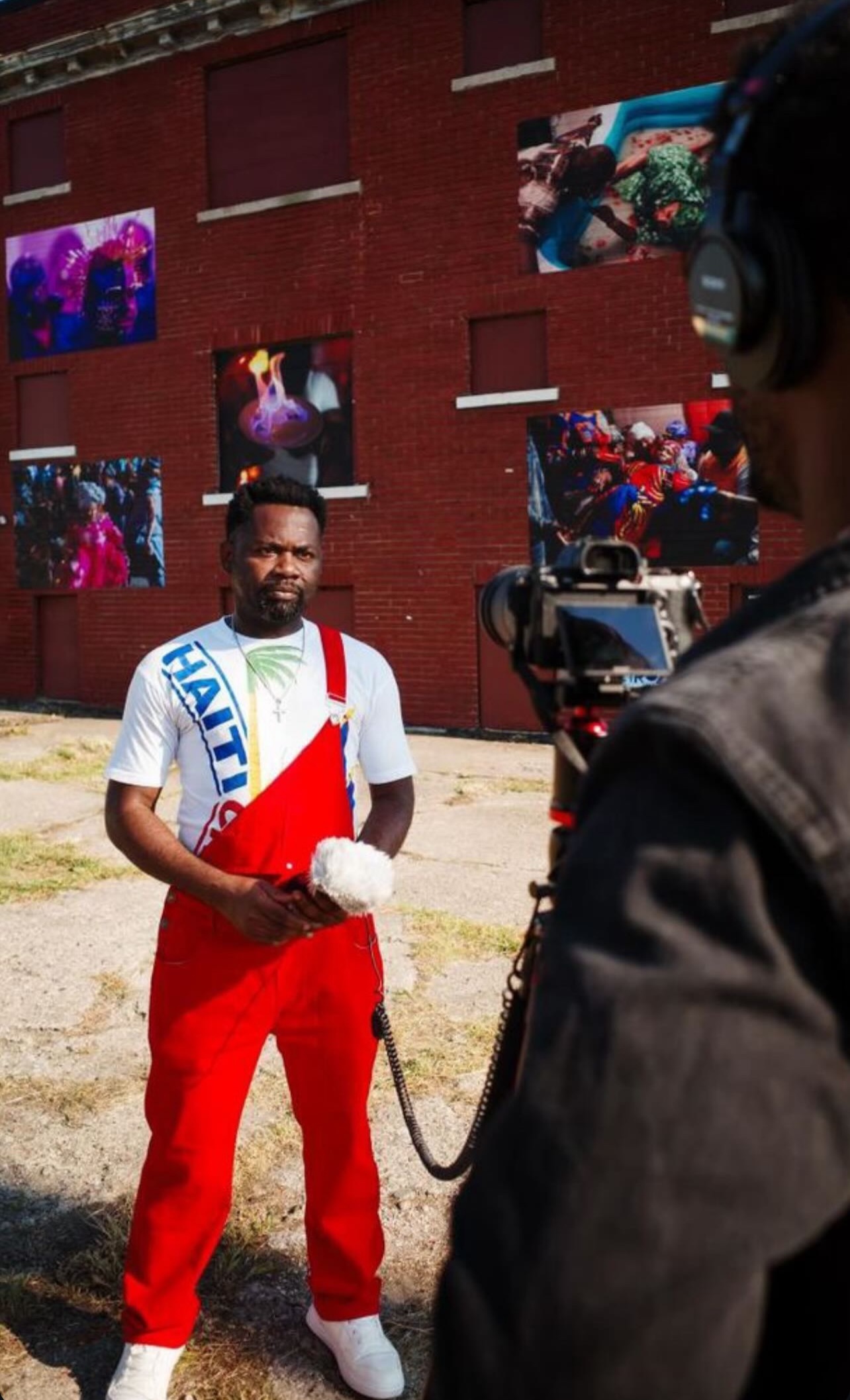
Dieu-Nalio Chery speaks with Voices of America at the opening of his permanent exhibition, Haiti Here and There
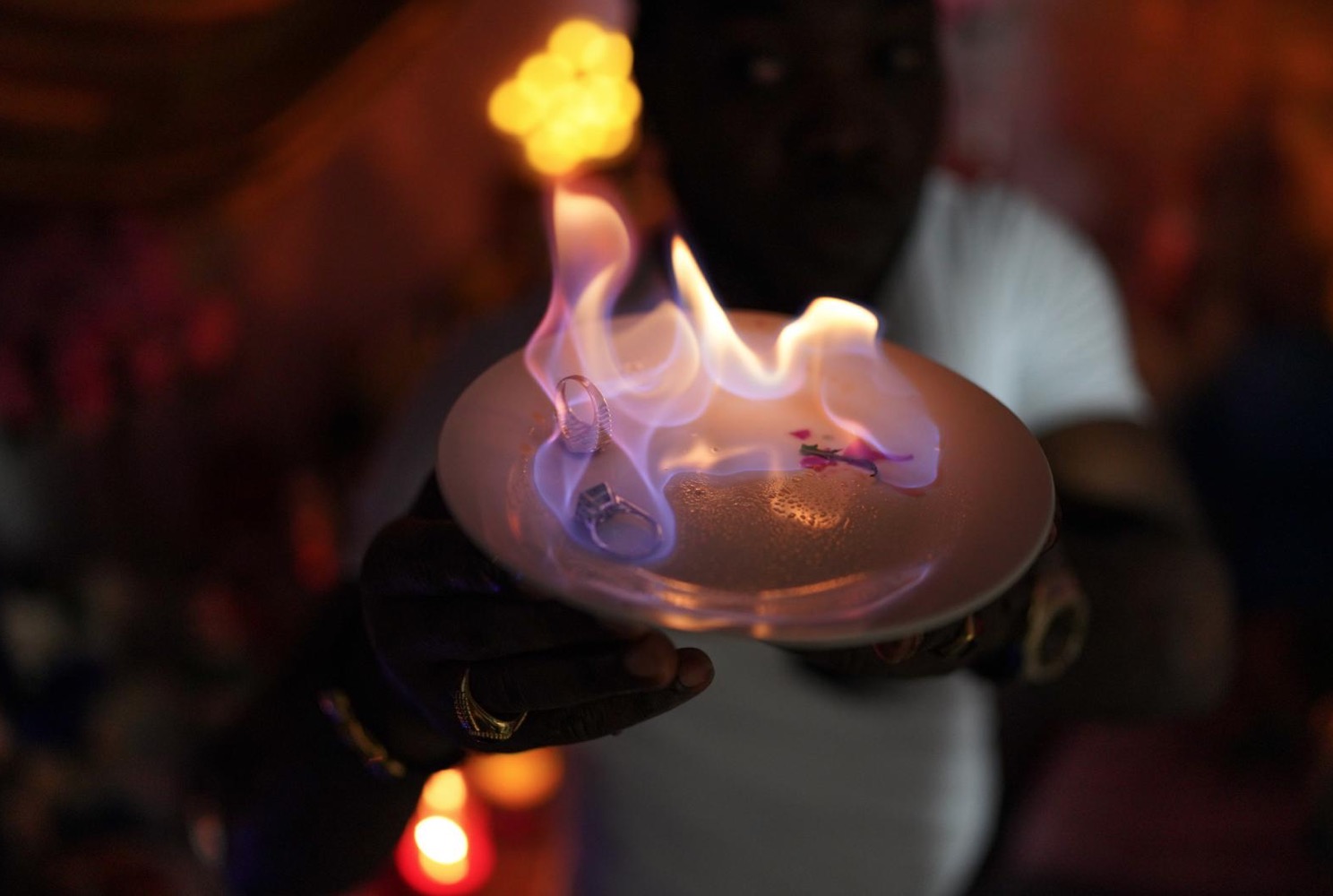
From Dieu-Nalio Chery’s photo essay on Vodou practices in New York City
rm: So you are the co-founder of City of Asylum/Detroit. Who else helps run the organization?
LK: Yes! My co-founder is the Palestinian American poet Edward Salem. Our new chair, Sabrina Balgamwalla, is a Pakistani American lawyer who runs the Asylum and Immigration Law Clinic at Wayne State. Our board is majority women, majority immigrant, and majority people of color. When inviting people to join our team, we look for those who have roots or a connection to Detroit, and/or a connection with our fellows. Our model is more so one of solidarity than charity. We’re providing safety and support, but our fellows are sharing wisdom and demonstrations of courage. The challenging experiences that they go through are a kind of cultural material that has the ability to actually change the ways we think and do things. Our board is made up of individuals who face similar challenges in their own lives, and the work that comes from that kind of solidarity is quite profound.
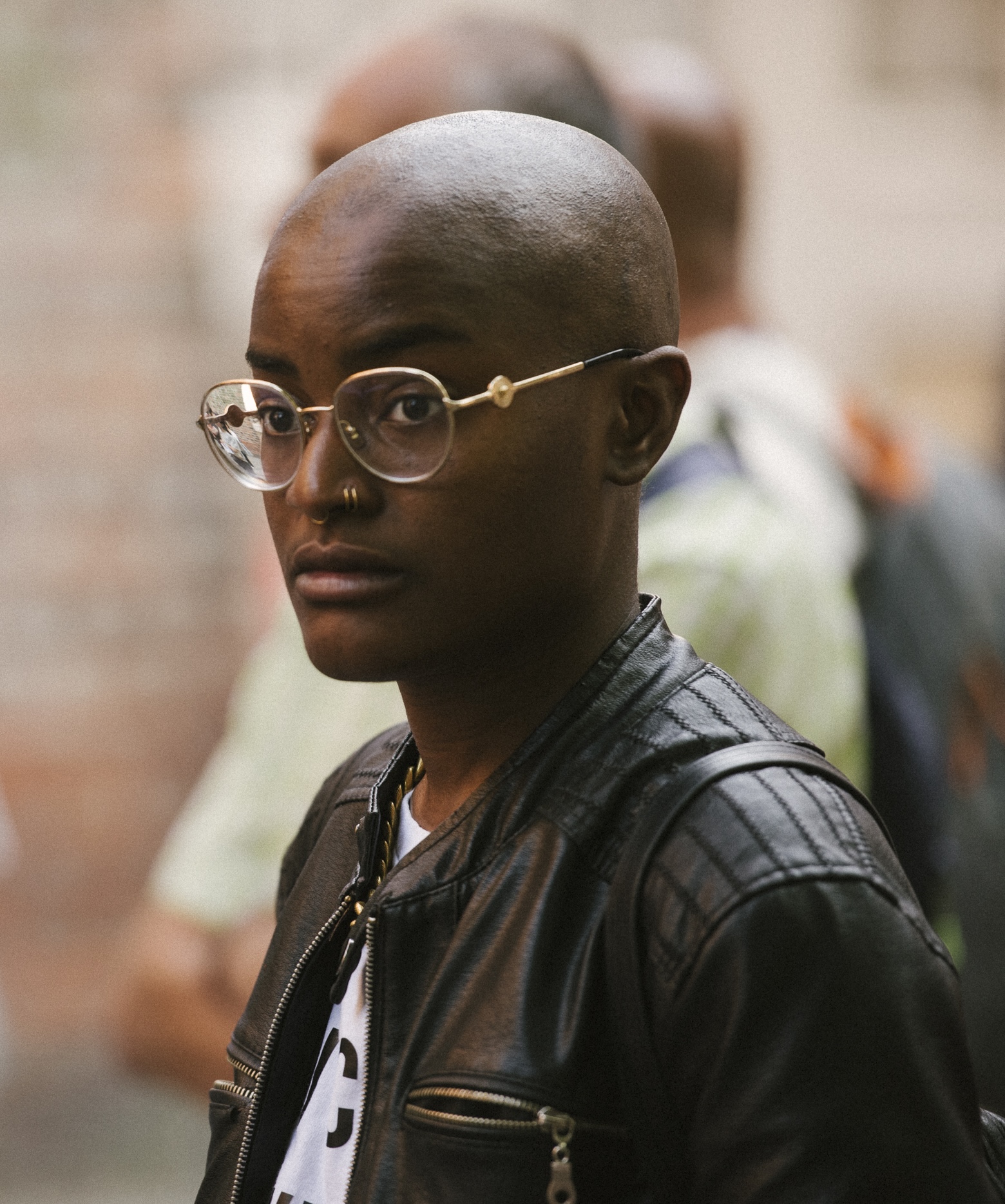
City of Asylum/Detroit fellow Aaiún Nin
rm: How many fellows have you hosted so far with the City of Asylum/Detroit?
LK: Well, Pwaangulongii was our first fellow; he arrived here in 2022. Then we had Dieu-Nalio Chery, our second fellow, who is a Haitian photojournalist, come to Detroit in 2023 with his family of five, and who have become like extended family. There’s Aaiún Nin, our fifth fellow, a queer Angolan poet currently living in exile in Switzerland. As you know, the genocide in Gaza started in 2023. I was a solidarity activist living in Gaza before coming to Detroit, and I mentioned that my partner and co-founder is a Palestinian poet.
We felt it was necessary to bring over someone from Gaza at that point, and that is how we met the poet and journalist Tareq Hajjaj and the artist Taimaa Salama, a Palestinian couple who were some of the last people to evacuate from Gaza before the border closed in March 2024. We worked for 10 months on their visa and they ended up getting one of the best visas out there, the O-1 for exceptional talent. It was huge!
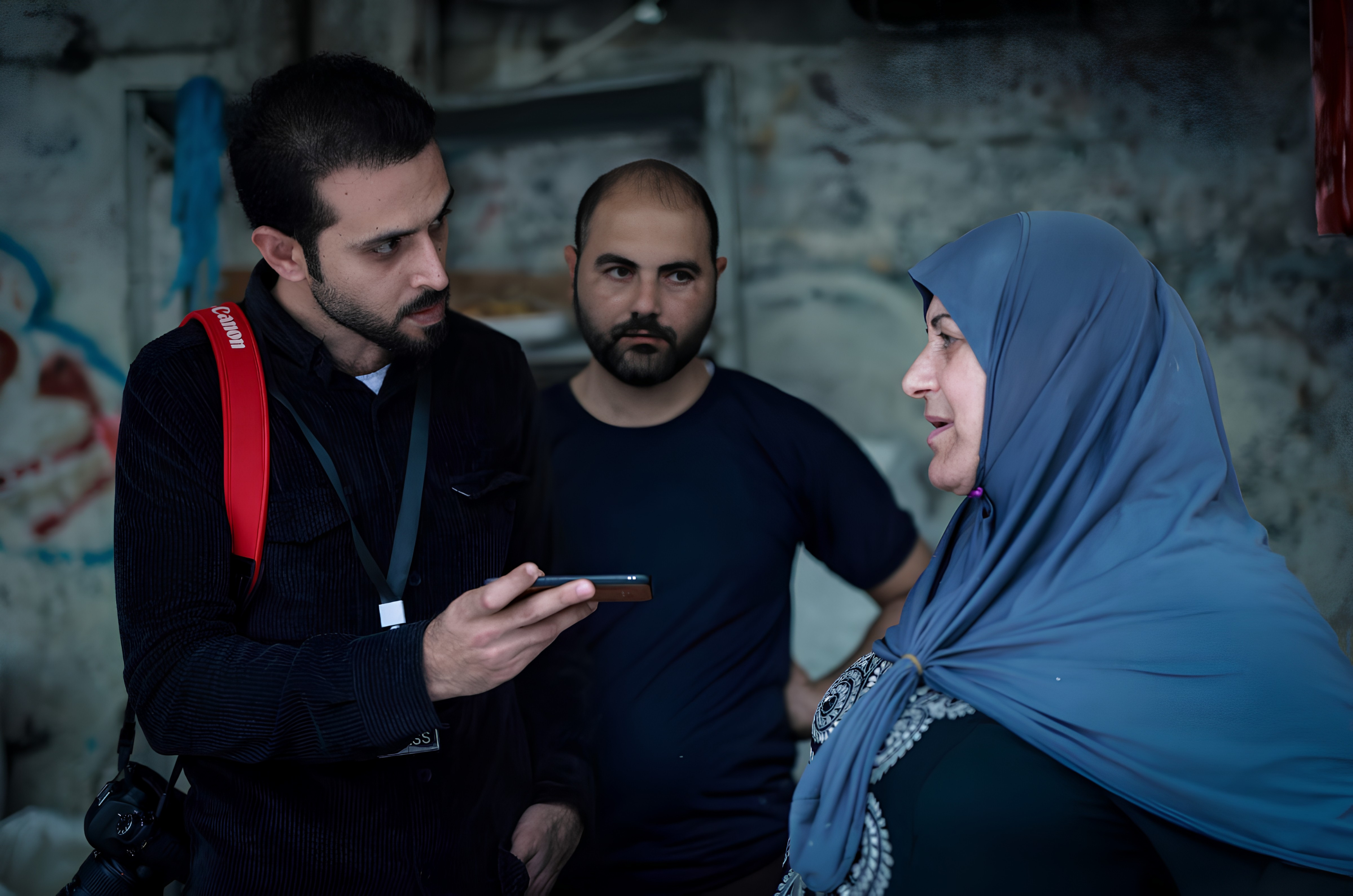
Tareq Hajjaj working on a story in Gaza
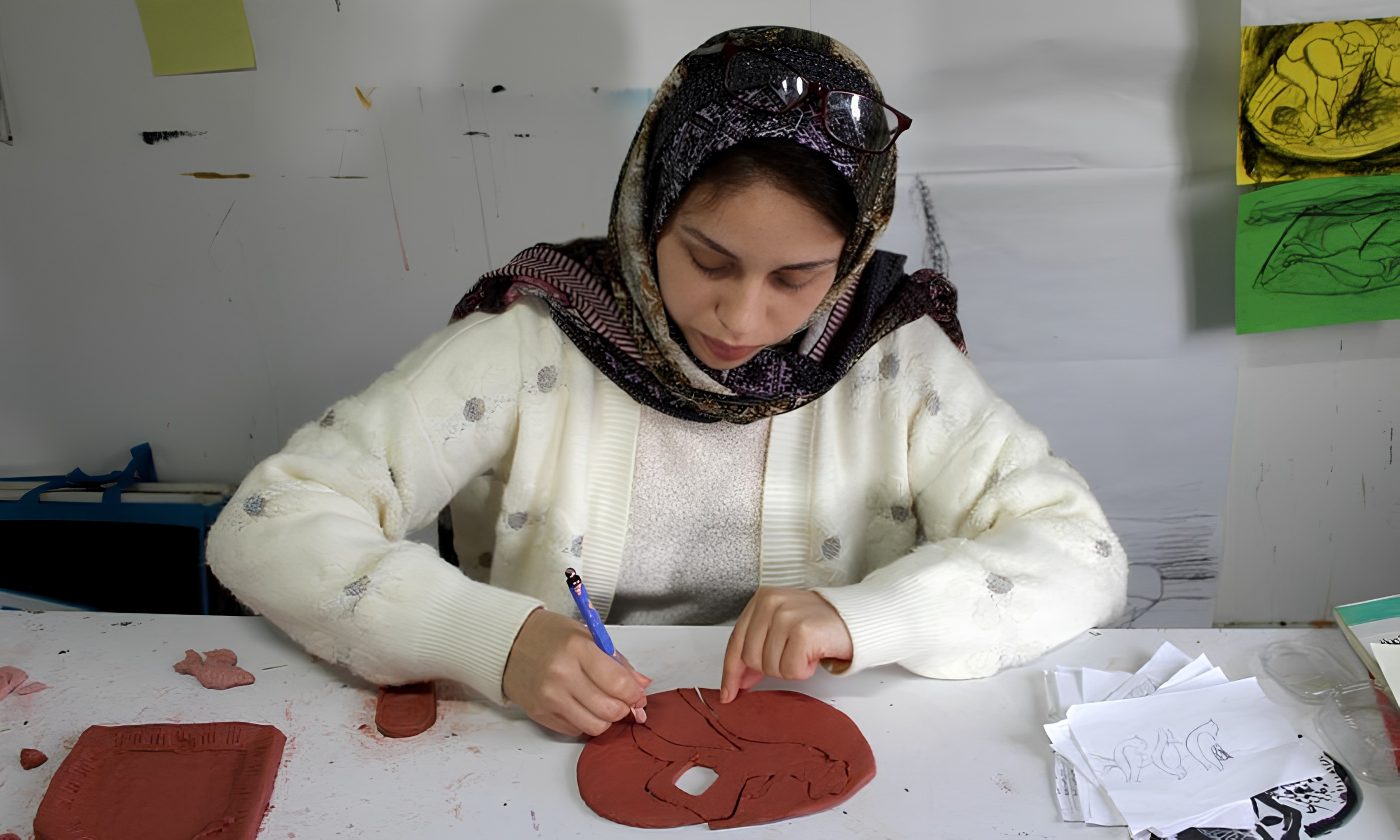
City of Asylum/Detroit fellow Taimaa Salama
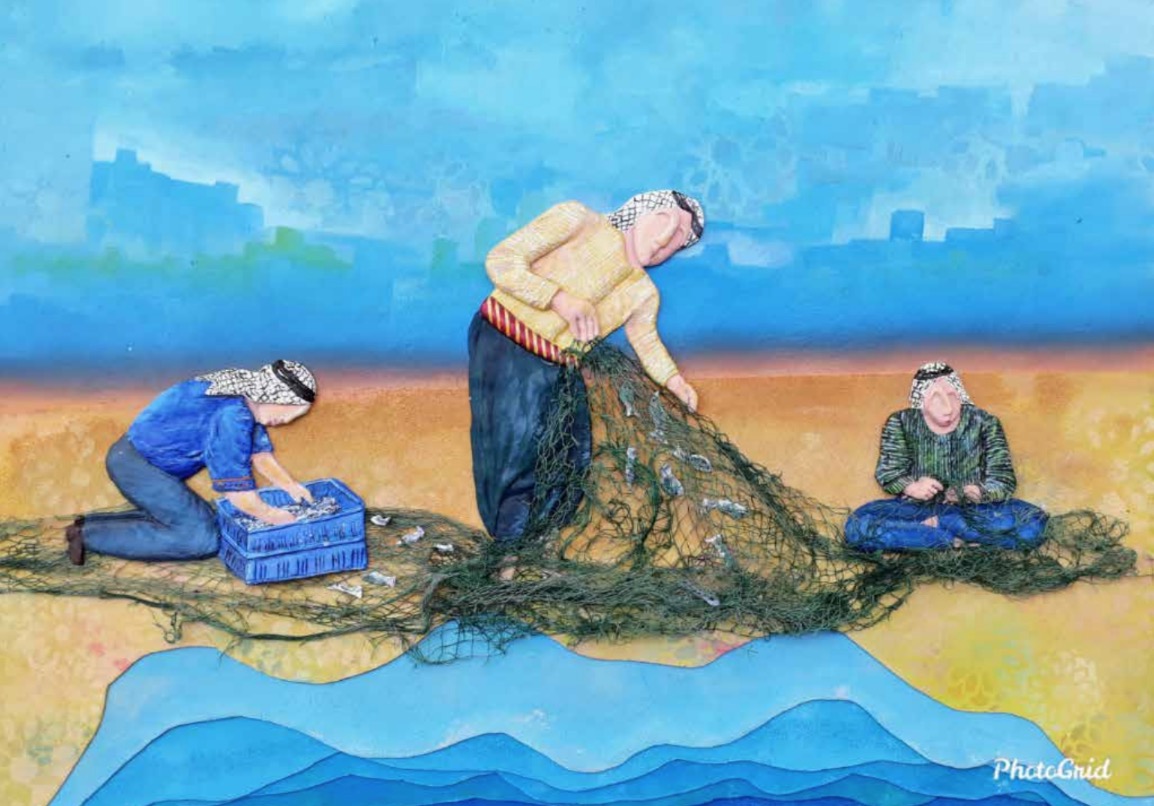
A tactile artwork by Taimaa Salama
rm: Are they still here?
LK: Unfortunately, they were never able to get to Detroit because the Trump administration revoked their visa days before they were set to travel.
After 10 months of working with them, getting to know them, and building community, there were dozens of people and organizations that were looking forward to working with them. One of the beautiful things about this work is that you see so many people come together around one person or around a family. But yeah, and then it was just taken away.
rm: That is devastating. How has that impacted your organization? Are you working with them despite them not being in Detroit?
LK: Yes, so this situation led to a really critical juncture for us. We realized that even if they cannot come here, we cannot just abandon them. This prompted us to rethink how our fellowships should be structured. We created the “Fellowship in Exile,” a program designed to support people wherever they are. Taimaa, for example, has been working together with a local artist, Toby Millman. Their collaboration was recently on view at Hatch Gallery in Hamtramck.
Taimaa is also working with our board member, Sofia Farah, to create a Gaza memorial quilt in collaboration with the Women’s International League of Peace and Freedom. After we receive all of the patches, we will assemble the quilt next door in the Riad.
rm: You are referring to the structure next door to the City of Asylum/Detroit house?
LK: Yes, it’s called the American Riad, and they are a very close partner of ours who built this gorgeous structure in collaboration with a think tank in Morocco, and it was designed by a Syrian woman architect.
We are honored to be stewards of that space. We host events there that are in-line with our mission, although anyone in the community is invited to host events. For instance, we just hosted a public event with some musicians from Egypt.
rm: And the really cool old Detroit house that is next door to the Riad is where the fellows stay?
LK: Exactly. Tareq and Taimaa would have lived here had their visa not been revoked.
Same with Aaiún Nin, who writes about queerness, the injustice of the immigration system, and other important topics, and who is so punk and radical and would be such an amazing fit for Detroit and vice versa, so we worked to bring them too, but again, just days into our attempt to get them a visa, Angola was put on the banned list.
rm: Let’s hope that Trump and his MAGA movement will be out of office very soon, and that the borders can open up again for all of these artists to finally come to Detroit.
LK: That would be phenomenal. And in the meantime, we are doing collaborations through our Fellowship in Exile program.
One thing I’d like to mention is that the West is not the only place where an artist can be safe. That’s an added richness of the Fellowship in Exile, that it allows us to debunk the mythology that the West is some prime example of safety and democracy.
You can learn more about the City of Asylum/Detroit on their website
And you can learn about the International Cities of Refuge Network at on their website