




Lisa John Rogers
August 10, 2026
There is no known origin to when humans started to bow as a sign of respect. In Japan, where it is still customary in everyday interactions, it’s believed to have started around 6th century CE when Buddhism was introduced by China. There’s a long and storied history of people bowing to their monarchical superiors, at least thousands of years of suspected bowing to ancient Egyptian pharaohs, for instance. But what if the genesis of the act of scrunching one’s abdomen and bending the head and shoulders in reverence came from a more natural inspiration? From that of the tree.
There’s a long history of holding trees in high esteem; the mythical “tree of life” in ancient Mesopotamia, “Yggdrasil” as it’s known in Norse mythology, or “Crann Bethadh” in Celtic myth. There’s the sacred fig tree known as “bodhi” where Prince Siddhartha Gautama sat mediating until he attained bodhi (enlightenment), transforming into what we now know as Buddha or Bodhisattva. So, what if the acting of bowing came from imitating these idolized titans here on earth?
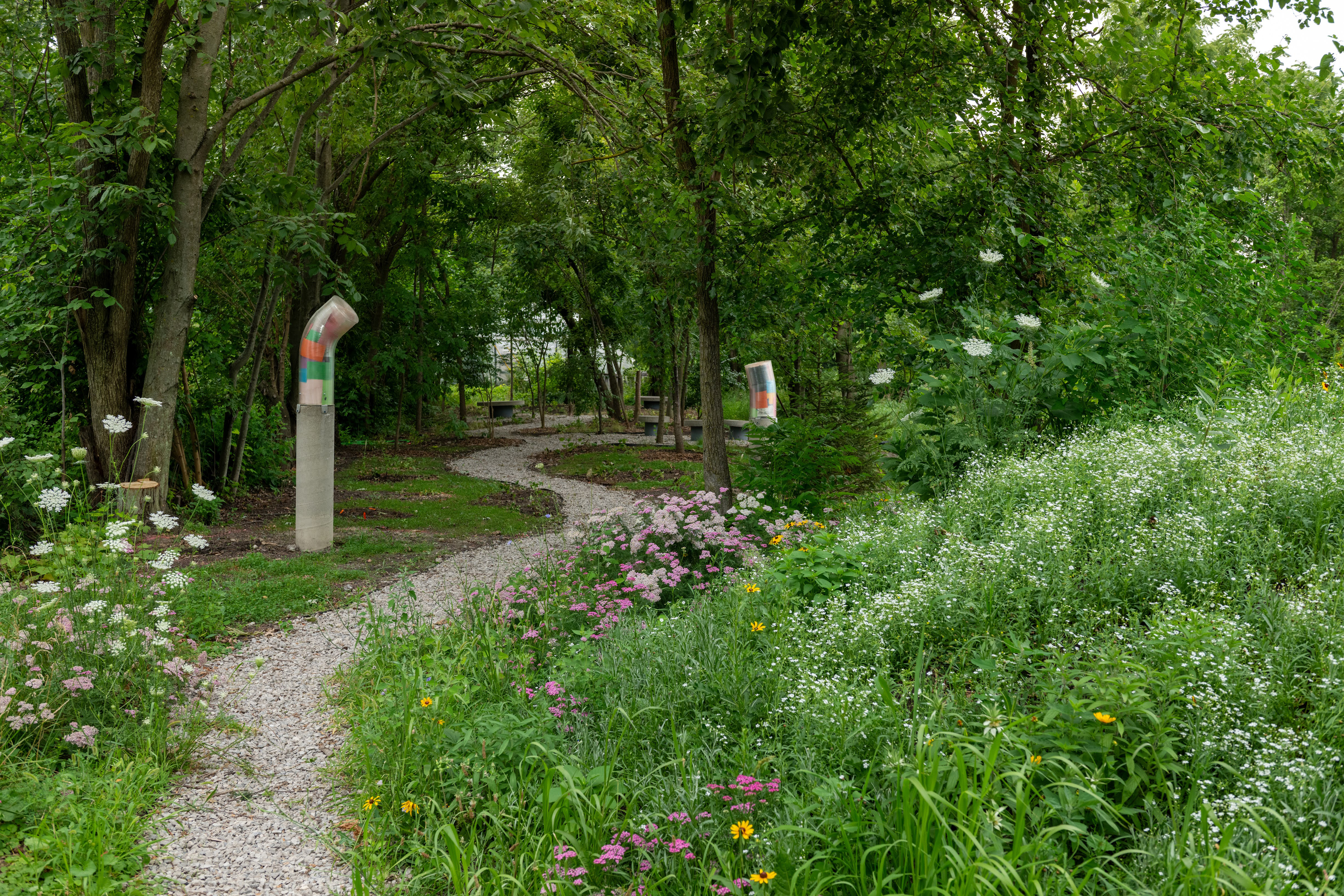
From the street looking into the new Common Ground Flower Park in Detroit’s Core City, two sculptures tilt toward one another in this type of reverence. Just as the boughs of the trees above them seem to bend toward one another, creating an inviting entrance or archway. The installation titled Natural Stories marries the flora and human fauna in a sort of shrine to the city’s wilderness.
A winding gravel path splits the two sculptures and guides people from the street, past a wildflower meadow, beyond the arbored archway, and into the park — where there are circular cement benches peppered under shade from the trees. At once a contemplative and collaborative place; the artists Simone DeSousa and Bilge Nur Saltik worked with neighbors and members of the Grand River Block club to create this installation.
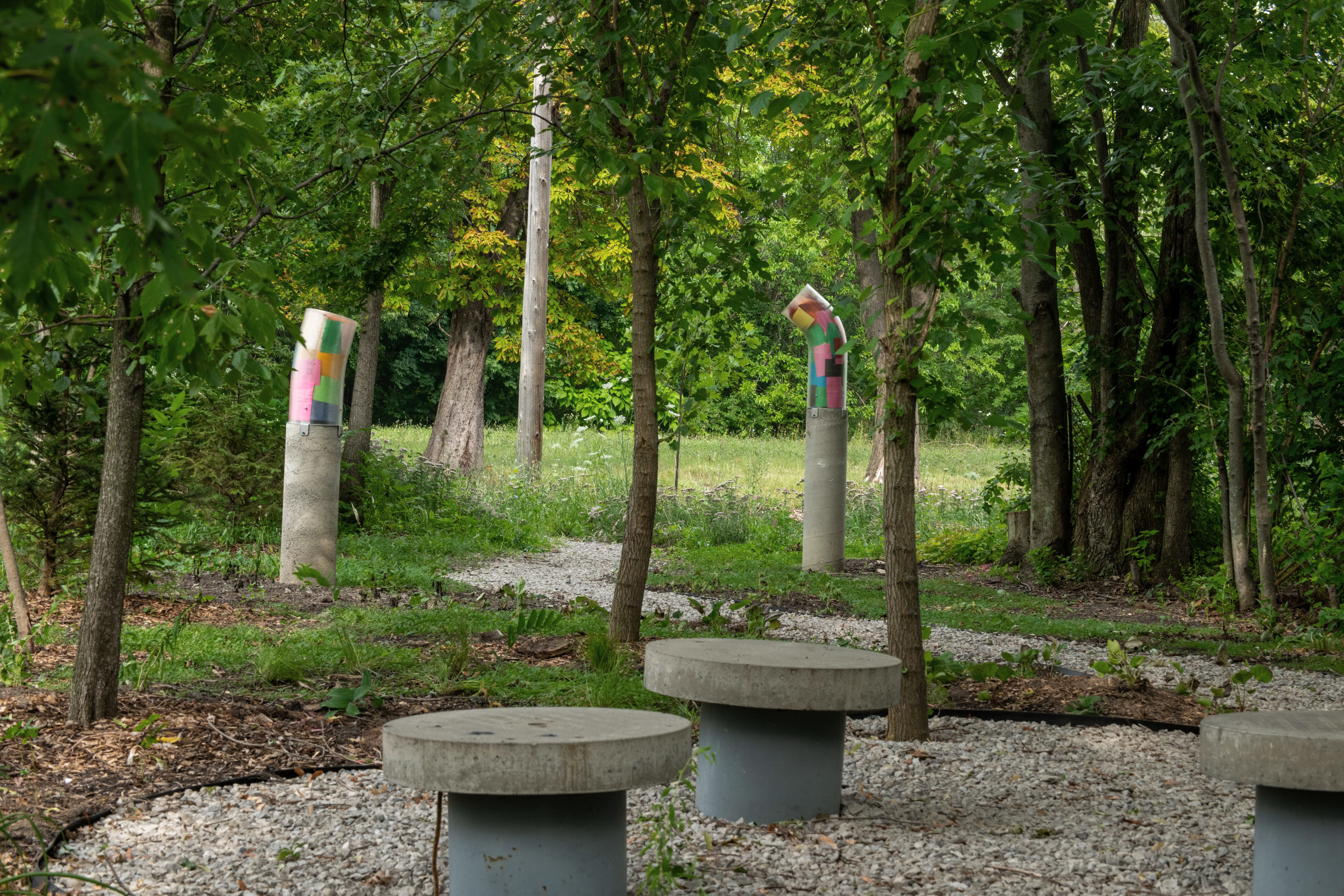
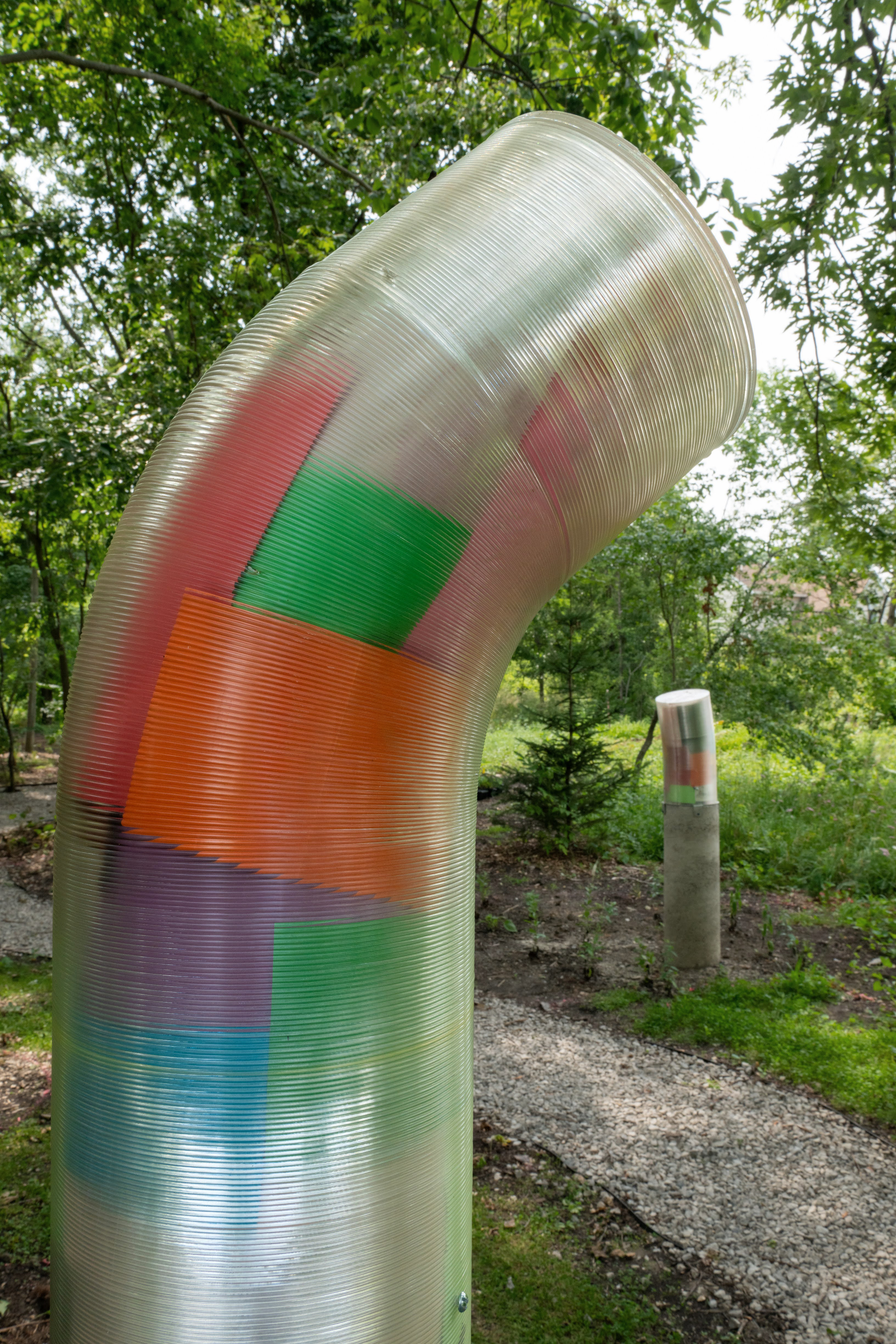
The sculptures have cylindrical cement bases, topped with 3D printed environmental plastic, and are held together with stainless steel. The environmental plastic has a ribbed effect, like 3D objects often do, and from afar they sometimes look like pearlescent glass. The environmental plastic is also a cylinder that’s the same circumference as the base, except that three/fourths of the way up they both start to curve (to differing degrees).
The way a spot of sun shone through the trees and onto the shorter of the two sculptures, it almost looked like how a plant moves as it seeks the sun. On the tilted top, the ribbed edges turn into rings, like a tree stump.
The park was built around the already existing trees, and so the art was inspired by that. One of the trees had a bough cut into a stump, about 27 rings were counted. Right next to it, another tree had a pattern of abstract metal diamonds adorning on its trunk — an old metal fence that got absorbed into the tree as it grew.
According to DeSousa, one day the artists gathered about 30 to 40 neighbors and block club members for a silent walking meditation. Multi-colored paper was distributed, and everyone was asked to write down words, letters, or drawings dedicated to the land. Then, the artists took those papers and placed them inside the 3D portion of the sculpture, words-side-in for privacy. These rectangular patches of color form a kind of narrative quilt that seems to orient more, like how trees can act as time capsules, toward deep time.
Natural Stories is a public sculpture installation in Detroit’s Core City neighborhood created by Turkish designer Bilge Nur Saltik and Brazilian artist Simone DeSousa. The installation opened in Spring 2026 and will be permanently on view in the Common Ground flower park.
Photos by John Donabedian, courtesy of the artists.