




An Interview with Clearline, a Detroit-based Environmental and Fashion Magazine
August 24, 2026
“We believe there is a clear line between what is right and wrong in the textile industry. There is a clear line between how we should treat and should not treat our environment. There is a clear line between saying something and watching these issues continue.”
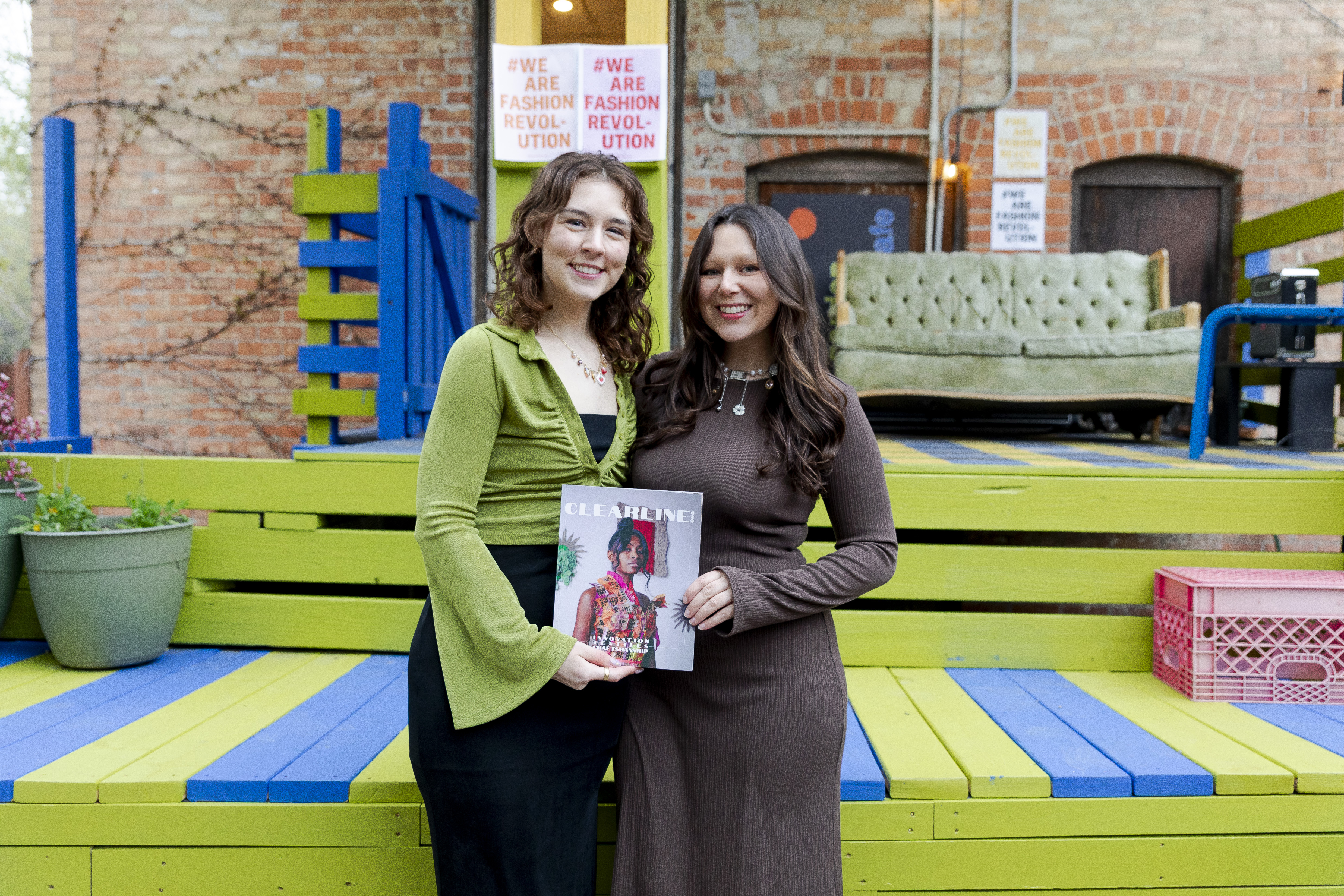
Clearline Magazine Launch party on April 25th, 2026 in Detroit, Michigan. Credit: Sylvia Jarrus for Clearline Magazine
In Spring of 2026, Sarah Sparkman and Carolyn Ridella celebrated the launch of Clearline Magazine - Issue 6: Innovation, Textiles and Craftsmanship. The theme of this newest edition functions in tandem with previous issues to further explore environmental activism and sustainable practices in textile art and design. Sarah and Carolyn co-founded Clearline in 2019 with the goal to raise awareness of eco-friendly methods of living and working around the world, and highlight Detroit’s participation in this growing movement. Sparkman’s editorial direction complements Ridella’s creative direction and design work to fuel local discourse, and present a diverse collection of perspectives and solutions surrounding climate-related issues.
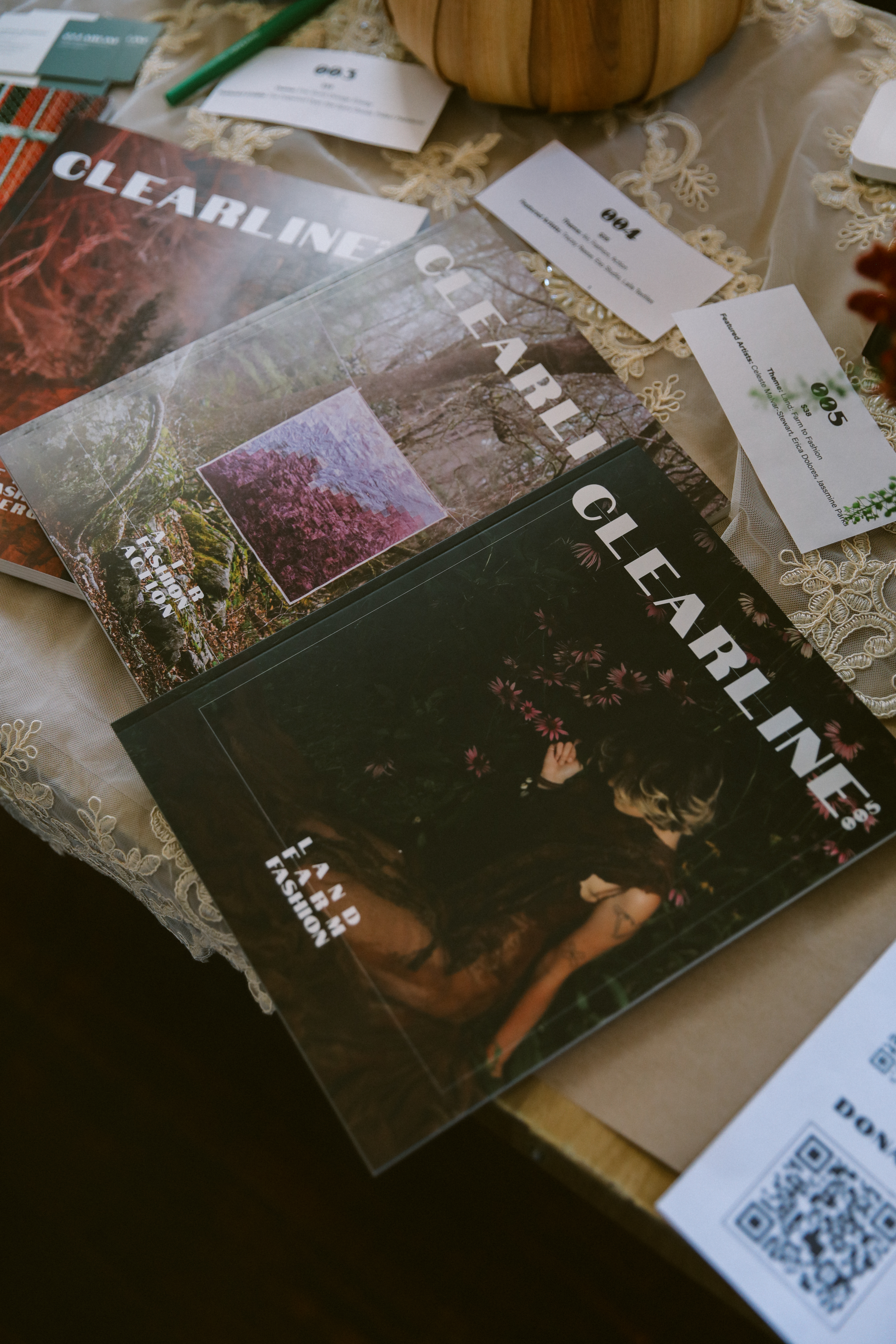
Image of Clearline Magazine covers on display at the launch of Issue 5. Credit: Christina Stoever for Clearline Magazine
Clearline’s submission-based curatorial process opens their grassroots magazine to the vast network of contemporary artists, designers and scientists who are passionate about sustainability and fashion, and how the two can come together to address some of the ongoing crises. Contributors of their most recently published book were prompted to reflect on innovation in fashion and textile design, and the use of material in fast fashion vs. slow fashion. The selection team at Clearline also expressed a curiosity for new ways that a passion for sustainability can manifest creatively, and how colors can be used intentionally to elicit emotion or articulate a vision, whether it be grim or hopeful.
I had the opportunity to meet with Sarah Sparkman and Carolyn Ridella to learn more about their experience running this grassroots environmental and sustainable fashion magazine in Detroit…
runner magazine: Sarah and Carolyn, how did you both end up working together to start Clearline?
Sarah Sparkman: Individually, we were both interested in, and actively learning about, textiles, sustainability and design. In Fall of 2017 I was in an independent study program with the artist Karen Hampton at Michigan State, where I was researching natural dyes and then in Spring 2018 I took a weaving class with her. That’s where I started to learn weaving. I had to create a syllubus for the independent study and we landed on a project where I would create a blog, interviewing sustainable textile makers.
I was in Lansing at the time at Michigan State, and so was Carolyn.
rm: What were you studying at Michigan State?
SS: I was in the Residential College of Arts and Humanities, paired with a minor in Environmental and Sustainability Studies and a minor in Peace and Justice Studies.
Carolyn Ridella: I majored in Creative Advertising with a minor in Graphic Design at the College of Communication Arts and Sciences.
rm: So this interest in textiles, natural dyes and sustainability obviously influenced your ambitions to start the magazine…
SS: In the Arts and Humanities program, with my minors, I was doing a lot of research on history and the arts, and the role that art plays in sustainability. I became particularly interested in the history of textiles as a medium to work with, and the sustainability issues around that. Natural dyes were a big interest for me. One of my study-abroad programs was in Costa Rica, where we were doing Eco-Tourism studies.
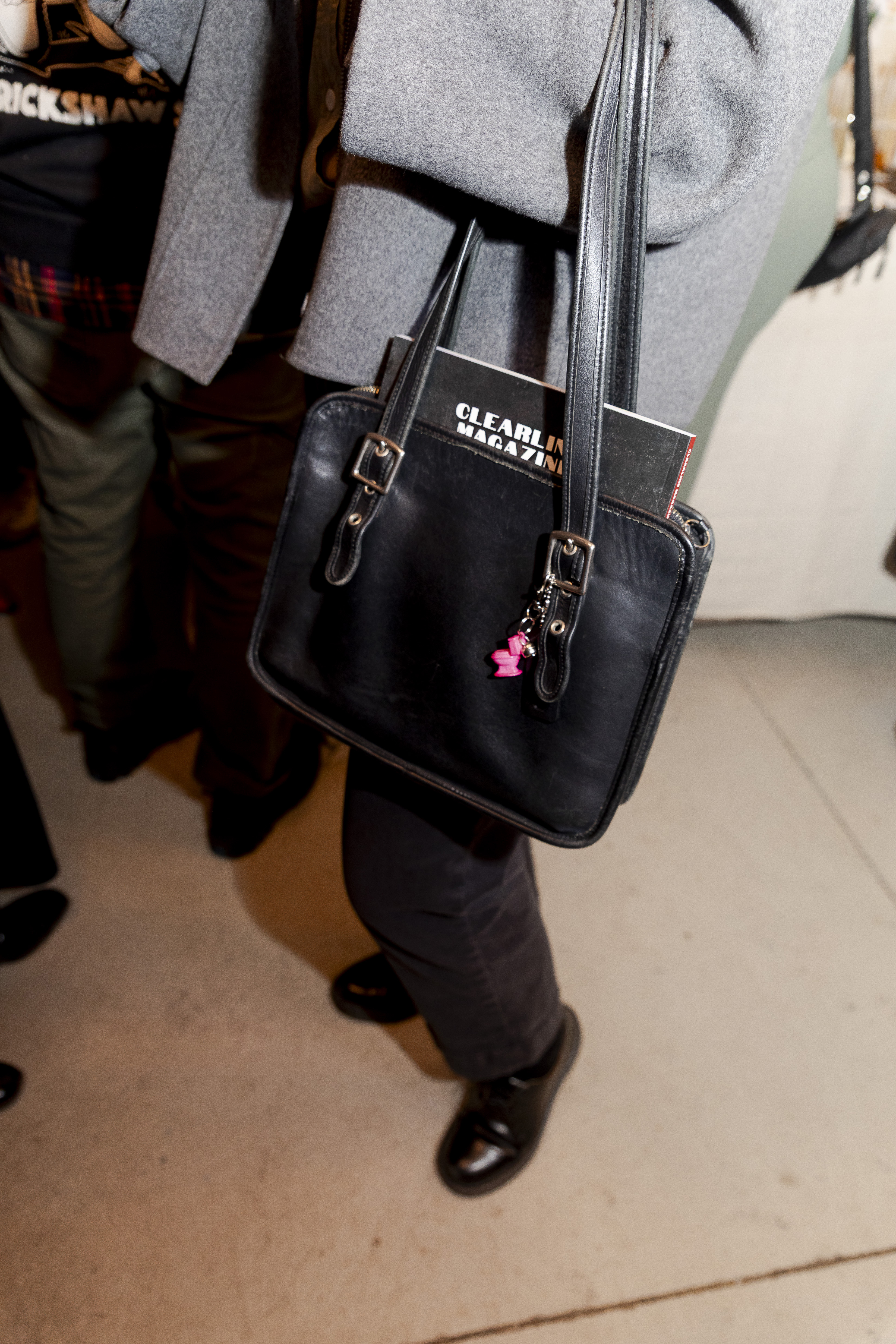
Clearline Magazine Launch party on April 25th, 2026 in Detroit, Michigan. Credit: Sylvia Jarrus for Clearline Magazine
CR: The funny thing is that Sarah and I went to the same high school, and then the same college, but it wasn’t until post-grad that I started working for the landscaping company that is owned by Sarah’s family. We were spending almost every day together, and I really liked what Sarah was doing with the blog. I was also part of MSU’s fashion magazine called VIM, and have worked on independent projects that resulted in several mini zines. It made sense at that point that we team up. Sarah’s blog featured interviews focused on sustainability in fashion, [and Sarah was applying for a Fulbright at the time, hoping for a way to expand on her blog, and possibly make something tangible] and we decided a zine was a perfect way to collaborate. We were excited to have a physical object in addition to the work published online.
rm: So Carolyn, you are the designer of the website and the book?
CR: Yes, I am.
rm: And how did you both come up with the name Clearline?
SS: So my brother Eli also works on the magazine with us. One day we were on a road trip, and I was telling him that I wanted the name of the magazine to convey transparency, you know, like, there’s clearly something wrong, and so I remember he brings up the techno song Clear by Juan Atkins.
Our intention behind Clearline has always been to educate people who are less aware of sustainability in the textile industry. We thought “there’s a clear issue”. How can we invite artists, writers, and educators to share their perspective - how can we draw a line? What do creators think about what’s going on?
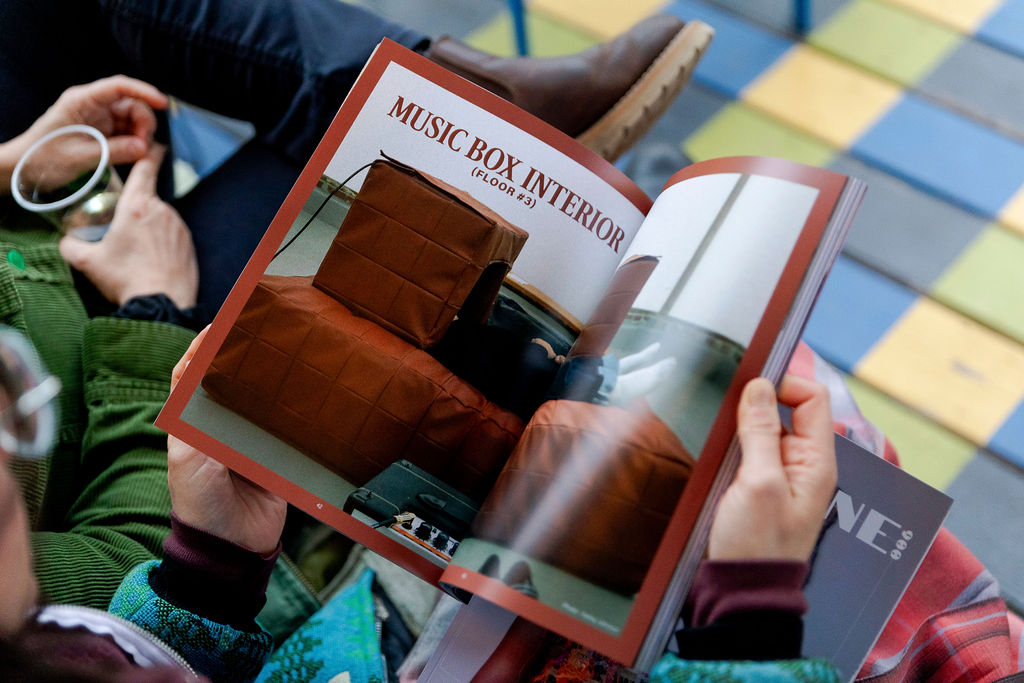
Clearline Magazine Launch party on April 25th, 2026 in Detroit, Michigan. Credit: Sylvia Jarrus for Clearline Magazine
CR: And throughout the years, it’s been like a journey of learning for us as well. We are not experts on sustainable fashion, but I feel like Clearline has a great way of amplifying so many different perspectives, and their take on these very serious issues. Six years later, we’re realizing the line, that we thought was so clear, is actually pretty blurry. So it’s even more important now, as climate change progresses, to share these stories.
rm: Yes. Sustainability has become a central topic in so many fields. We are in a time right now where we are seeing blueprints that set higher standards in terms of sustainable practices. Dedicating an entire magazine to that is really important and it’s also really cool that it’s happening in Detroit.
SS: Agreed, and it’s exciting to see other magazines popping up in the city, too. There is another newer print magazine called Rueted in the city that focuses on fashion, culture, and self-expression. It feels great to be part of this effort locally as well as on a wider scale.
Before we go any further, I wanted to add that one of the most prominent moments that prompted my interest in ethical and sustainable practices in fashion is the 2013 Rana Plaza collapse in Bangladesh. This tragedy brought a lot of awareness to the conditions that the people of Bangladesh were working under.
A fashion revolution movement started in the UK in 2014, and people from other countries became inspired to take part, which ultimately led to “Fashion Revolution Week”, started by Orsola De Castro, which takes place every year at the end of April. 2025 was Detroit’s first time participating in Fashion Revolution Week.
rm: So you guys just launched print issue 006. Do you publish content online as well?
SS: After our launch, we were both on vacation for a little bit, but we’re going to be putting out a digital version soon as well. All of our other issues also have digital versions available.
rm: What kinds of things do you feel like you’ve learned about the topic of sustainable fashion since you started?
CR: I feel like through Clearline, I have had the opportunity to learn more about the technical skills [in fashion and textile design.] I have also tried to reach out to other artists that are not working in the realm of textiles, for example, I found an artist, Lisa-Marie Price (featured in Issue 004), who creates her own pigments using natural dyes, which she uses to make these beautiful paintings. That’s one skill that I didn’t even think of when starting the magazine…
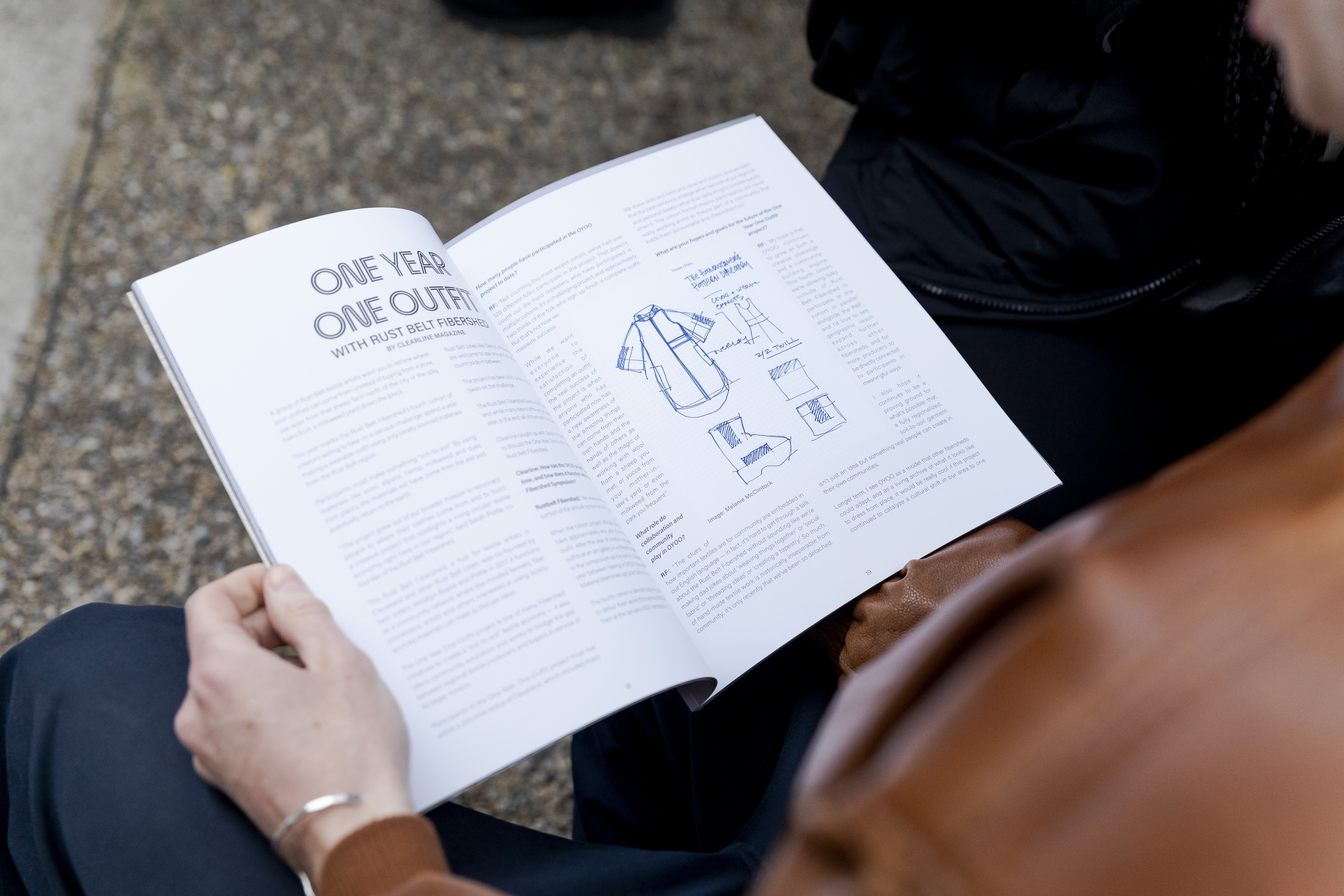
Clearline Magazine Launch party on April 25th, 2026 in Detroit, Michigan. Credit: Sylvia Jarrus for Clearline Magazine
SS: Looking at our first issue, which was just eight pages, and then holding issue 006 in my hands, I just realized the growth that we’ve had professionally in the space of publishing. Meeting other people like runner, Arkiv, and Reuted, we have learned not only about the textile community, but also about the magazine community.
I also have learned a lot more about “e-textiles”, which is something we hadn’t really touched on before issue six. E-textiles, also known as electronic textiles, combine technology and textiles. In our latest issue, you might have seen an interview with Craftwork Collective…They make these really cool large-scale textile installation projects. For example, one piece uses sentiment analysis to listen to someone speak, analyzes it, and then reflects it back through textiles of different colors.
rm: How do you plan to move forward?
CR: Well, we had a big shift during issue 003 when we decided to become more formal, started posting more on social media, and doing a call for artists. This led to us working with a lot more international artists. Issue 003 was our thickest magazine. Since then, we still do calls for art but also have found our way of curating more, and reaching out directly to people we wanted to feature.
rm: And how do you financially support the work you are doing with Clearline?
SS: With Clearline being about sustainability, we realized that the self-funded approach that we were taking was actually not a sustainable model, so we decided to take a couple years off, which gave us a chance to really rethink how we would fund the project, establish the next theme and curate the content moving forward.
CR: Over those years that we took a break, we were still meeting and thinking about the project. By then, we had just finished the four issues that were focused on the elements, air, fire, water, land.
During that break, we were still active in other ways. We did some zine making workshops. We also made a short film. Isabelle Tavares, one of our editors, was in film school at the time and directed and produced the film ‘Earthly Contrails'. And so that was just another part of our process that we hadn’t done before.
SS: So after that break, we decided it would be best for us to look to our local community and find financial support through partners. There are people in town, like Eugenie, who care about these issues too. They had already held our magazine in their store in the past, and we approached them about a partnership. We were able to fund print copies of issue 006 for the featured artists with the support from Eugenie. Additional sponsorships allowed us to cover the entire print run.
rm: So, you took a break after publishing issues around the four elements. How did you end up deciding what the next themes would be?
SS: When we were discussing the themes for future projects, we both naturally felt that technology and innovation would be the next thing we have to talk about. While in the brainstorming process, Carolyn and I saw a show with a few pieces that focused on textiles, sustainability, and technology. We took that as a sign that we were on the right track.
rm: Do you feel that what you’re doing, in addition to publishing and fashion, is also activism?
CR: I feel like anything that is dedicated to learning about and practicing sustainability is pretty political right now, it’s like an activist stance at this point, you know?
SS: Agreed. The hope of Clearline is to take steps towards change in the texile industry. Sometimes I even catch myself calling Clearline a sustainable fashion magazine, but in reality, some of it is wearable textile art, some of it is photography where the artist is reflecting on these issues. We welcome many different mediums to explore these themes. I think it’s important to give some breathing room to “textiles” as a subject too. Not everyone is a textile artist, but everyone has a relationship to clothing, so a broader range of perspectives shouldn’t be lost when it comes to talking about this.
rm: Are there any practitioners, scientists, thinkers that you read? Who do you look at to learn about new trends that are going on in the sustainable fashion community?
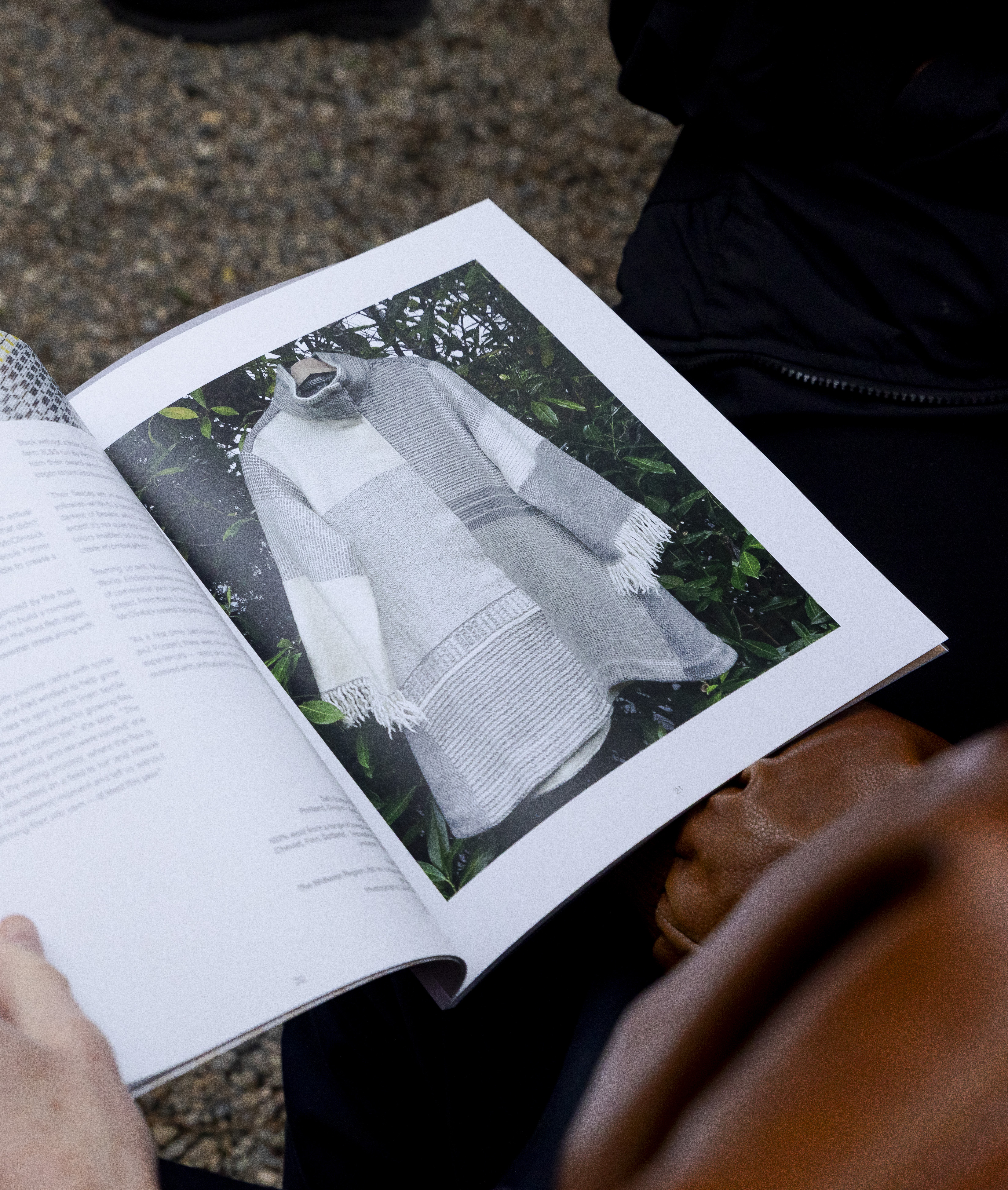
Clearline Magazine Launch party on April 25th, 2026 in Detroit, Michigan. Credit: Sylvia Jarrus for Clearline Magazine
SS: I listen to a podcast called No Ordinary Cloth; it’s amazing. The episodes are about an hour, and it’s less about sustainable fashion in particular and it’s more about textile innovations, like brewing beer for bio-learther, and other examples like that. I also read different books, one being With Her Own Hands: Women Weaving Their Stories. Carolyn started reading that book too.
For our last, my brother Eli interviewed Sophie Thanhauser who wrote the book Worn: A People’s History of Clothing, and I would love to interview the writer of With Her Own Hands for our next issue.
CR: I’m always on the look out for new innovative solutions to sustainability and everyday creators, on social media platforms like TikTok and Instagram.
rm: The content of your book is certainly informative, but do you feel like it could also function like a tool box, providing recipes or suggestions on ways that people could practice sustainability in their own homes or in their own practices?
CR: Yes, I feel like Clearline is very educational, not just for us, but for our readers. In just the short time we have been doing this work, I have learned so much about different ways to be sustainable. Also, so many people have come up to me and told me they are inspired to create in a different way because of Clearline.
SS: The information in the magazine also connects people, leading to partnerships and collaborations around sustainability. Ecosphere Organics is a Detroit-based, sustainable materials startup that transforms food and agricultural waste into high-value raw materials and biodegradable products like compostable packaging. They have welcomed Detroit-based artists to use their products as materials for artmaking.
In one of the interviews I did with Camille Ann-Brewer, the archivist at the Wright Museum, she brought up Nellie Sargent-Johnson, who was a weaver in the 1930s here in Detroit. Nellie started a hand-weaving newsletter that went out all across the country, and I think just reflecting on her and how she created community through this print publication, answering people’s questions and whatnot, I do think we try to do that. In one of our issues, we have a piece about how to do an onion-dye bath, so there are ways that people can learn skills directly from the content, in addition to more contemplative pieces.
rm: It’s important for people to have resources for how they can participate in the network in their own way, and there are many ways to do that, like just being more aware of where they’re buying clothes or how they’re using their materials or even how material feels on the physical body, linen versus polyester and stuff like that.
We’re at a weird place in history. It feels like we’re living inside a dying body you know, and figuring out how we can survive after it does die. What kind of new body are we going to create? And so sustainability is a big conversation that encompasses human rights and so many other big conversations.
SS: Yeah and sometimes Carolyn and I have gotten overwhelmed because we know the topic of sustainability does encompass huge conversations and we want to make sure that when we do address any of these, that we are contributing in a careful and meaningful way.
Clearline is a huge team effort. Our editorial team includes Eli Sparkman (Issues 002-006), Isabelle Tavares (Issues 003-006), Amanda Rahn (006). Clearline has featured over 200 artists since its inception.
Visit clearlinezine.com to learn more about the magazine and sign up for their newsletter for updates!
*Photo Credit: From 006 Launch Party photographed by Sylvia Jarrus (@ sylviajarrusphoto).
From 005 Launch Party photographed by Christina Stoever (@ xtina_stoever)