




An Interview with Moe Draper
September 1, 2025
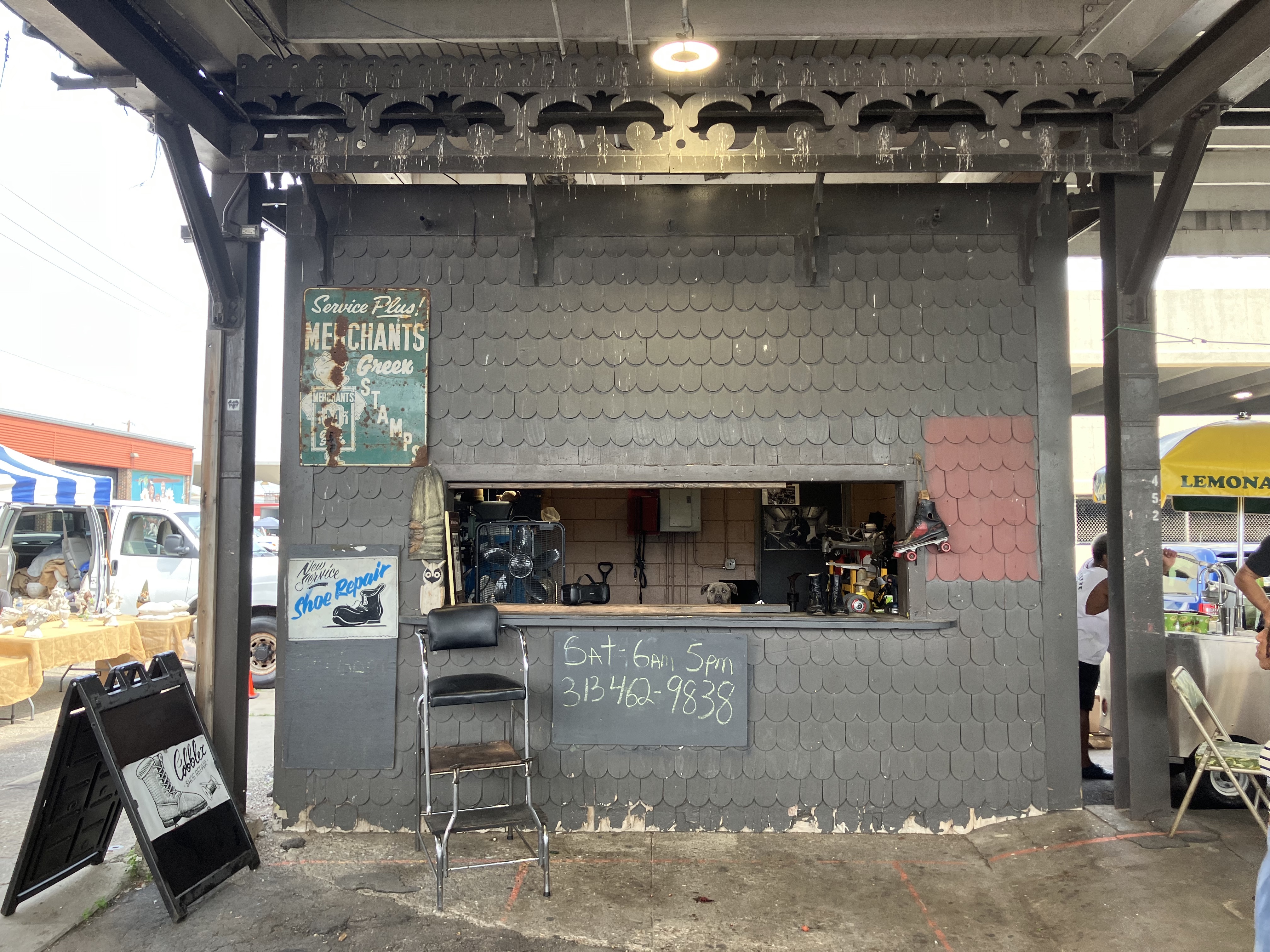
For anyone who has ever noticed the small old-time wooden hut during a casual stroll through Shed 4 of Eastern Market may have wondered what goes on inside. Maybe the window was closed to reveal a hand-painted clock by Tyree Guyton, but if it was open, you could see stacks of shoes spanning eras and trends, all waiting to be tended to by Moe Draper, the Detroit Boot Cobbler. His dog Ash may be peering out, looking for a new friend while curious onlookers ask questions about the art of shoe repair.
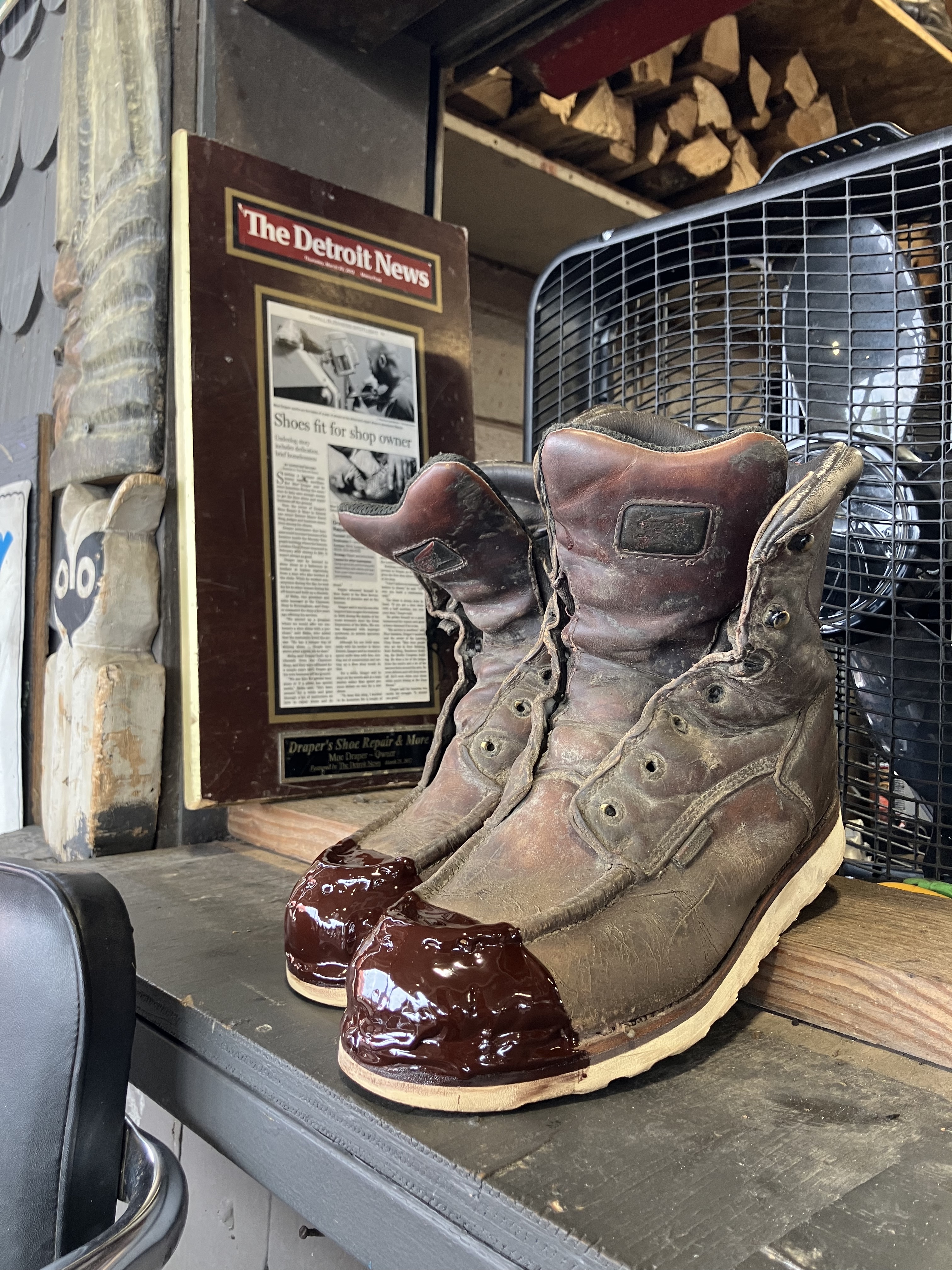
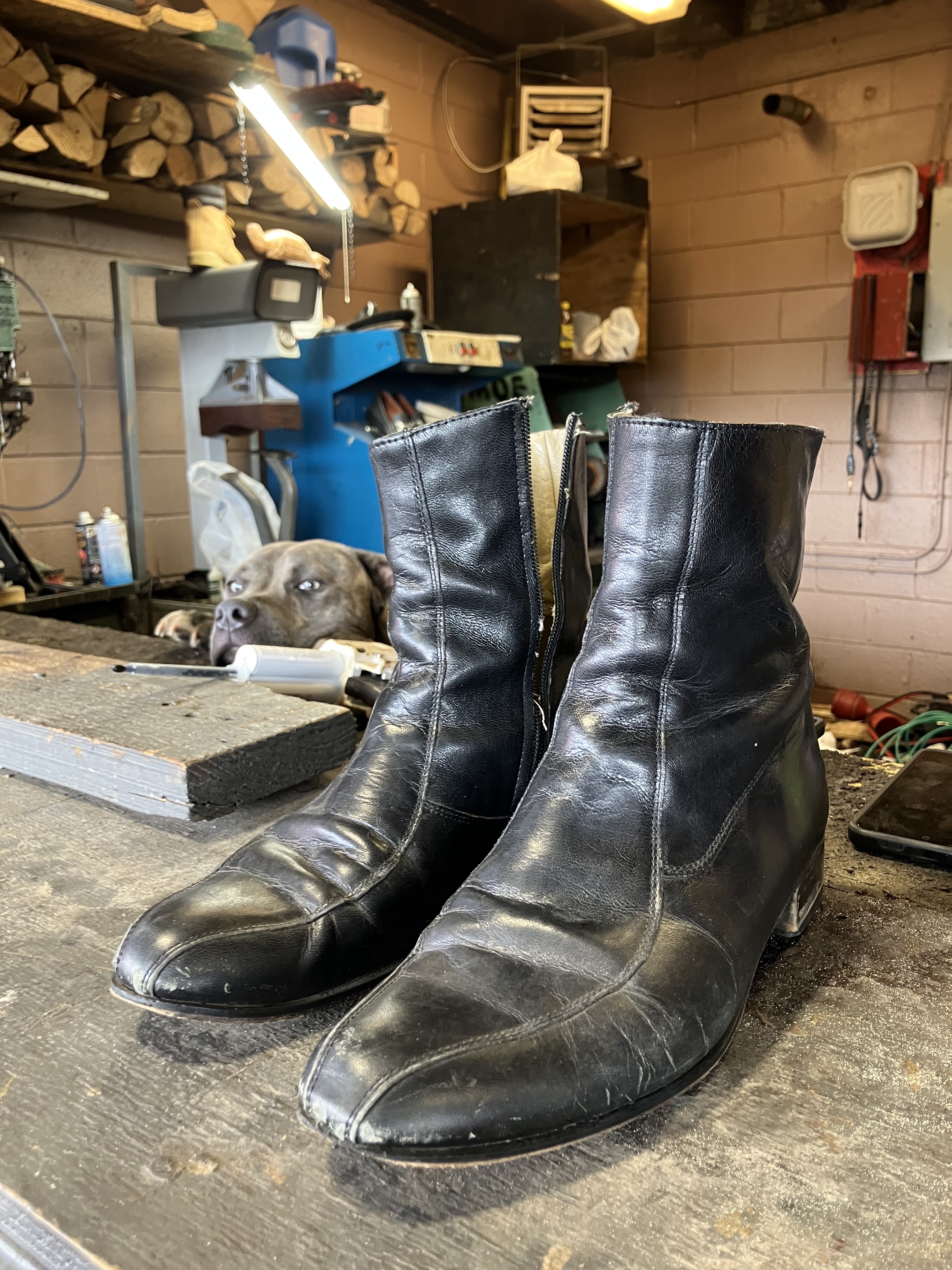
Runner Magazine: Hey Moe, thank you for inviting me to learn about your shoe repair business. It seems like you know a lot of people around here. Have you always been at this location?
Moe: I have been here since 2013. Before that, I was downtown at a spot above the London Chop House, just outside of the Murphy Telegraph Building.
RM: And so how did you get into the shoe repair business?
M: I used to work at topless bars as a bathroom assistant. My job was to make sure that the glitter was off the customer’s shoes so their wives didn’t know they were at the bar.
RM: Okay. So that was how you became interested in shoes?
M: I was told that if I learned how to fix shoes, I would make three times as much, so I decided to learn how to fix shoes, and the rest is history.
RM: Did you go to school to learn this craft?
M: I bought myself a shop and learned through watching YouTube videos.
RM: So you basically learned on the job?
M: Yes. Then I found out about an association called SSIA, which stands for the Shoe Service Institute of America, who also helped me learn my craft by sponsoring me to go visit different shops around the country. Because of them, I was able to train at Red Wing Shoes in Lakeland, Florida. Then I went to Delaware. I’ve gone all over to learn while trying to operate the shop at the same time.
RM: How do people hear about your business? Do you also have an online presence?
M: When people come to Eastern Market they see what I do. I’m like a fixture of Detroit.
Customer #1: Yes, he is like a fixture of Detroit. I have gotten my shoes repaired with him for years. I’ll be back next week…
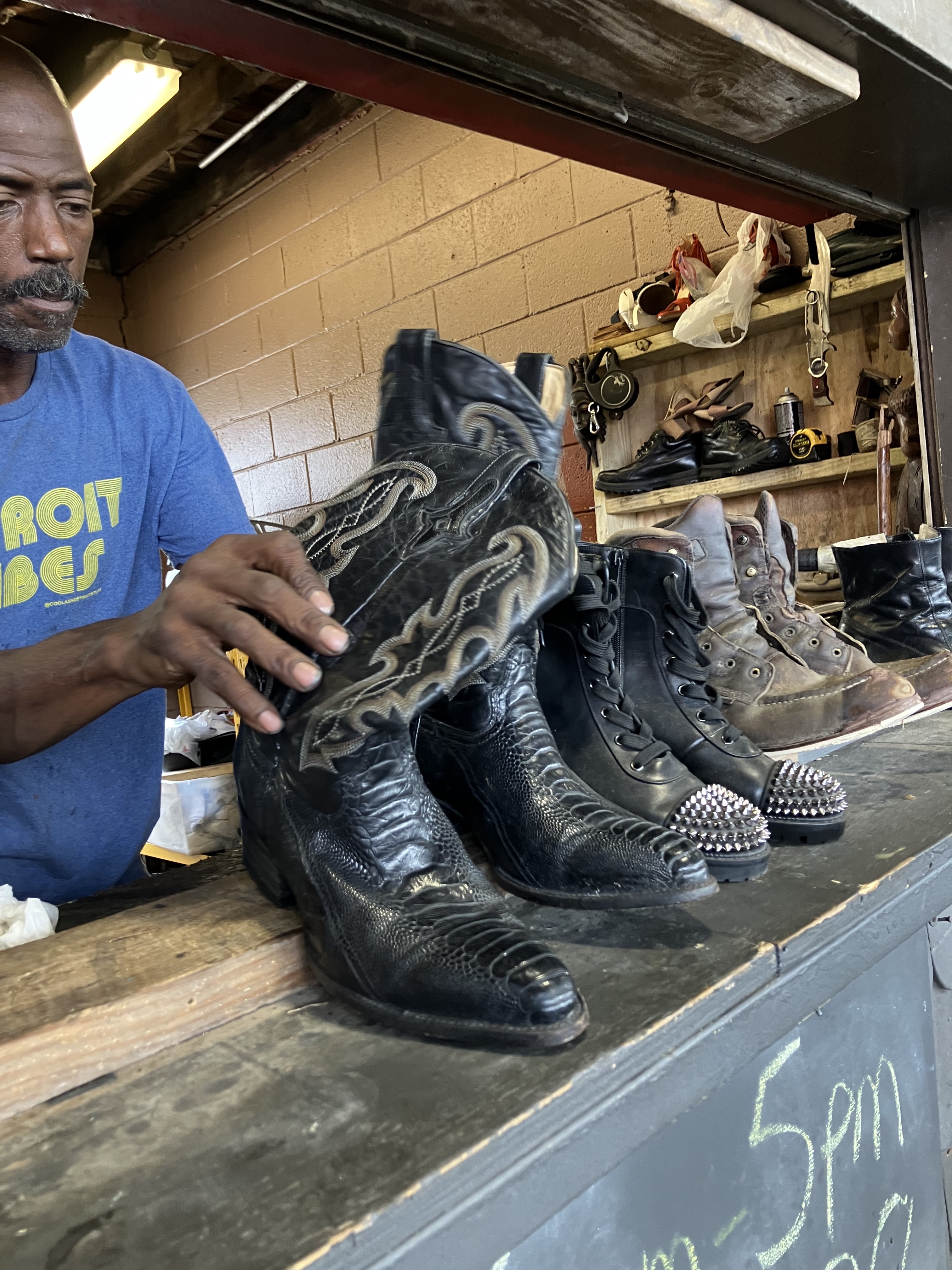
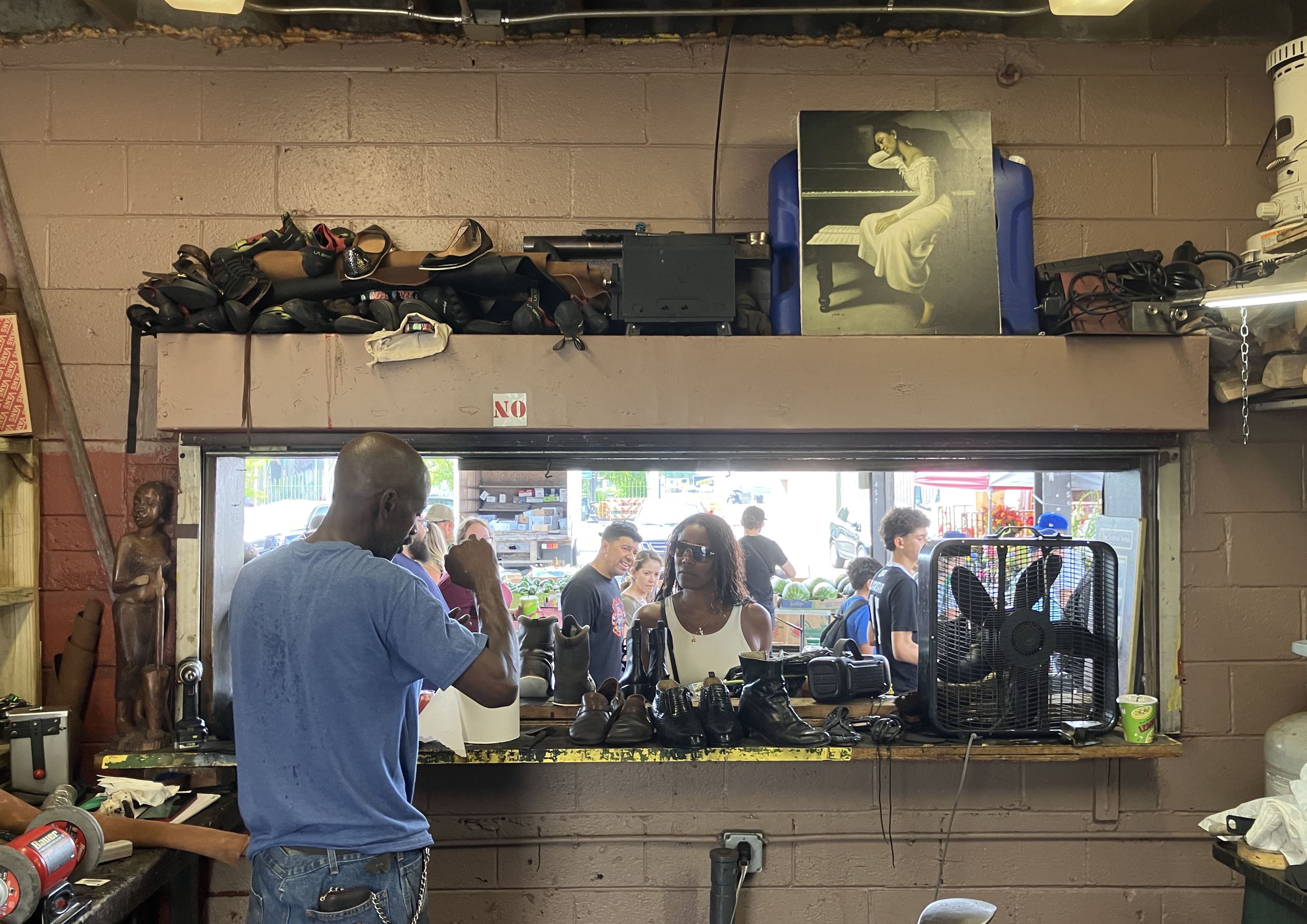
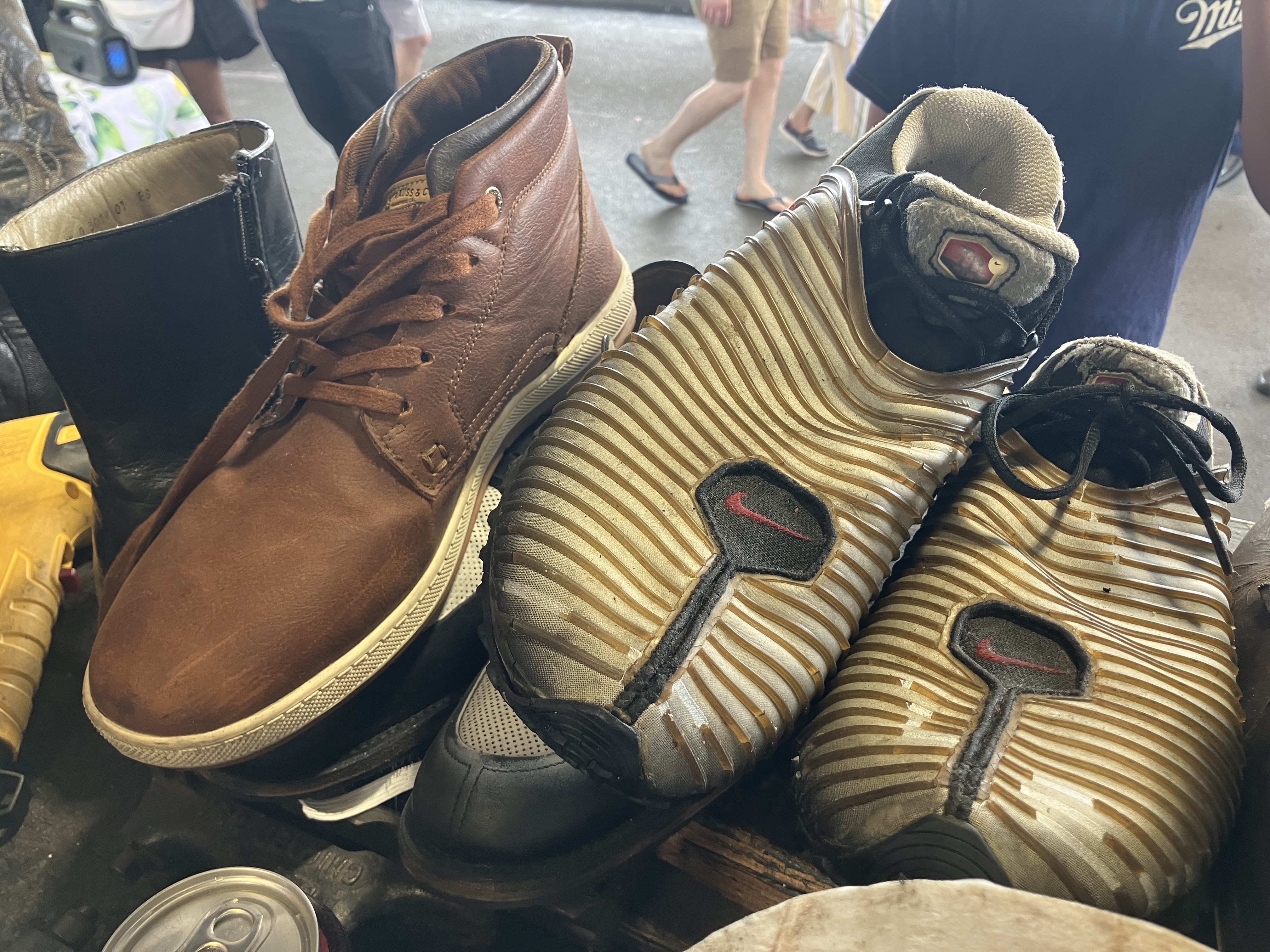
RM: Do you feel like there’s a sense of pride in continuing this craft? I overheard you earlier saying that it was a dying industry.
M: Yes I do feel a sense of pride. There are so many different kinds of cobblers too. See, I specialize in work boots for example.
RM: But you obviously work on dress shoes and things like that also.
M: Yes ma’am. I got a pair right here I got a redo. Usually on Saturdays it gets real crazy until about 1 or 2 o’clock.
RM: Are you only here on Saturdays?
M: Saturdays are the only days that I’m available to the public. That actually works out better for me because I used to work at nightclubs during the week.
Customer #2: Hello, how are you doing? Do you buy shoes here?
M: No, I don’t. I just fix things.
So what I did was, I wanted to be able to work on the shoes while the customer waits, but when things get in the way, it prevents me from being able to do that. If I am late to complete an order, I will not charge the customer. I like to do the work for free. Sometimes, I will be intentionally late in order to give the work away for free. In exchange, I would just tell people to give me a Google review. And I’ve been doing this since 2013, working with no expectation of being paid.
RM: So how can you financially support the business?
M: I write it off on my taxes each year.
RM: Hmm. Okay. And do you own this little space that you work out of or do you pay rent?
Customer #3: Hey Moe, did you get those shoes done for me?
M: Dude, I got so dog-gone slammed. I didn’t get to her shoes.
See, I don’t put pressure on myself. If I can’t do something, I just give the money back. It’s better to have a reputation for honesty than rushed work that is poorly done. Another reason I sometimes don’t get the work done on time is because I need to deal with issues around here. For instance, I just had a person have a stroke right out here in front of my shop, I took care of that.
R: A stroke?!
M: Yeah, sitting right there in the chair. They picked him up, put him on a gurney and took him away.
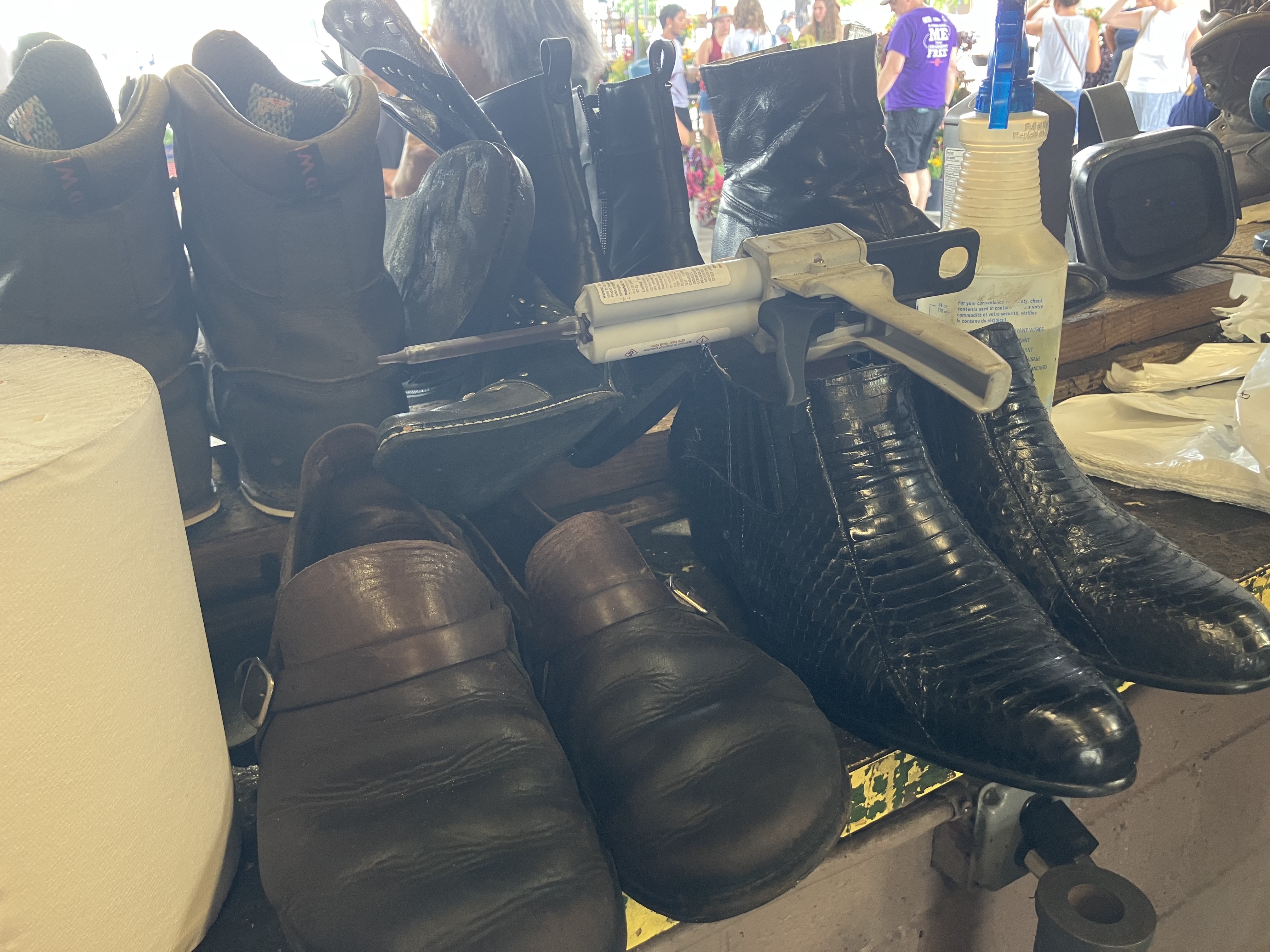
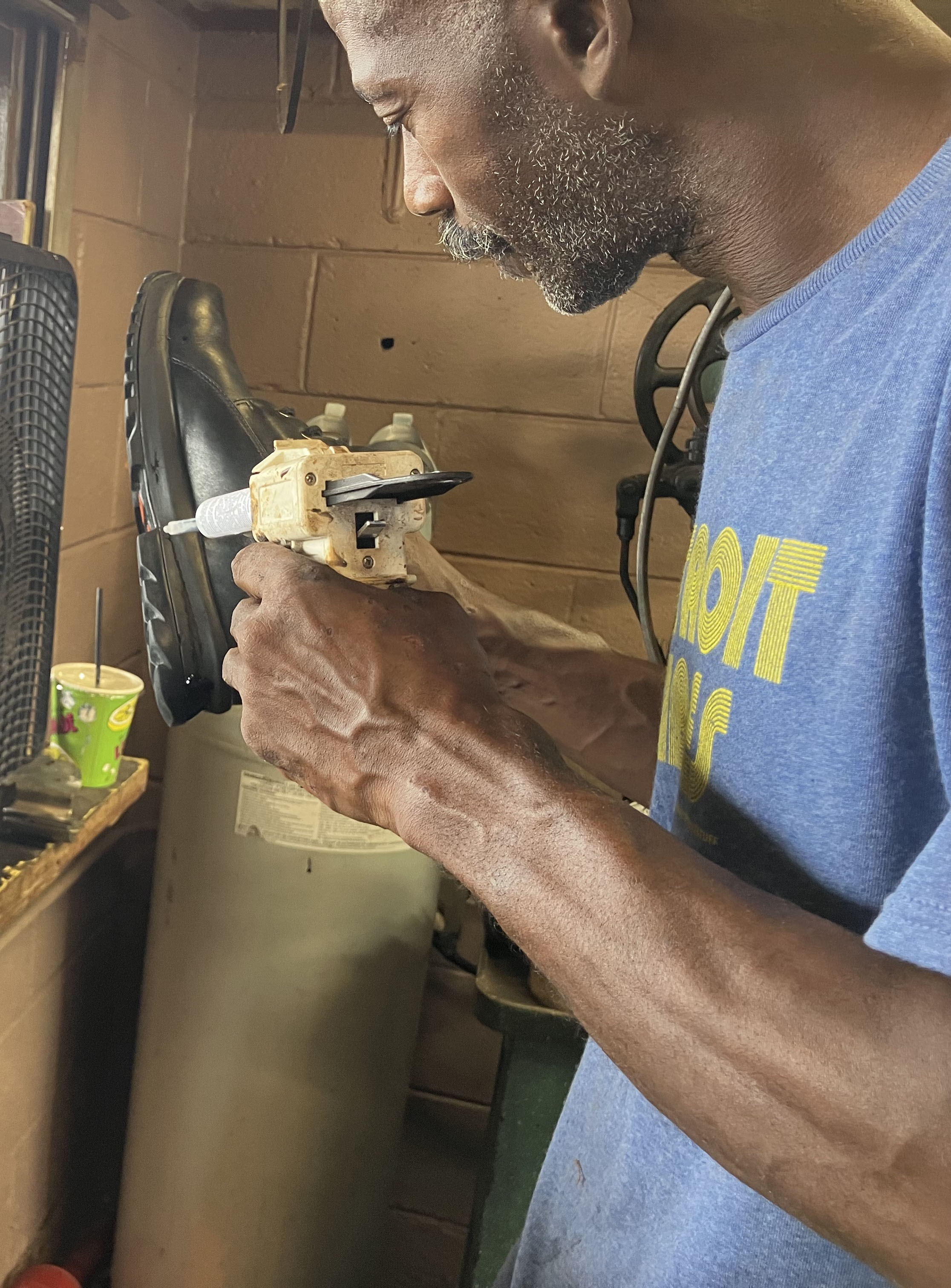
RM: Wow. So, OK, not to change the subject because that’s kind of a deep one, but this feels like a very special place, with so many old machines. Is it pretty typical of a cobbler to still be using machines like these?
M: Yes, yes. The thing is, most cobblers won’t let you see their equipment, or their equipment will be out, but you won’t see them actively working on stuff. Here, we have a finisher, a press, a blade stitch, a leather cutter...This is probably my fifth or sixth set of machinery. Now, I am working on converting it to use in my truck. That truck out there is going to be my mobile work station for the Southwest neighborhoods. Southwest is the only place I do that because a lot of that community does not come out to Eastern Market. They like to do everything within the community.
RM: And all the shoes in here, are they all from customers that are waiting for their shoes to get fixed?
M: Pretty much everything you see up here came in today. You get a week’s worth of work on a Saturday, and it keeps me busy until the next weekend.
RM: So when do you actually fix the shoes?
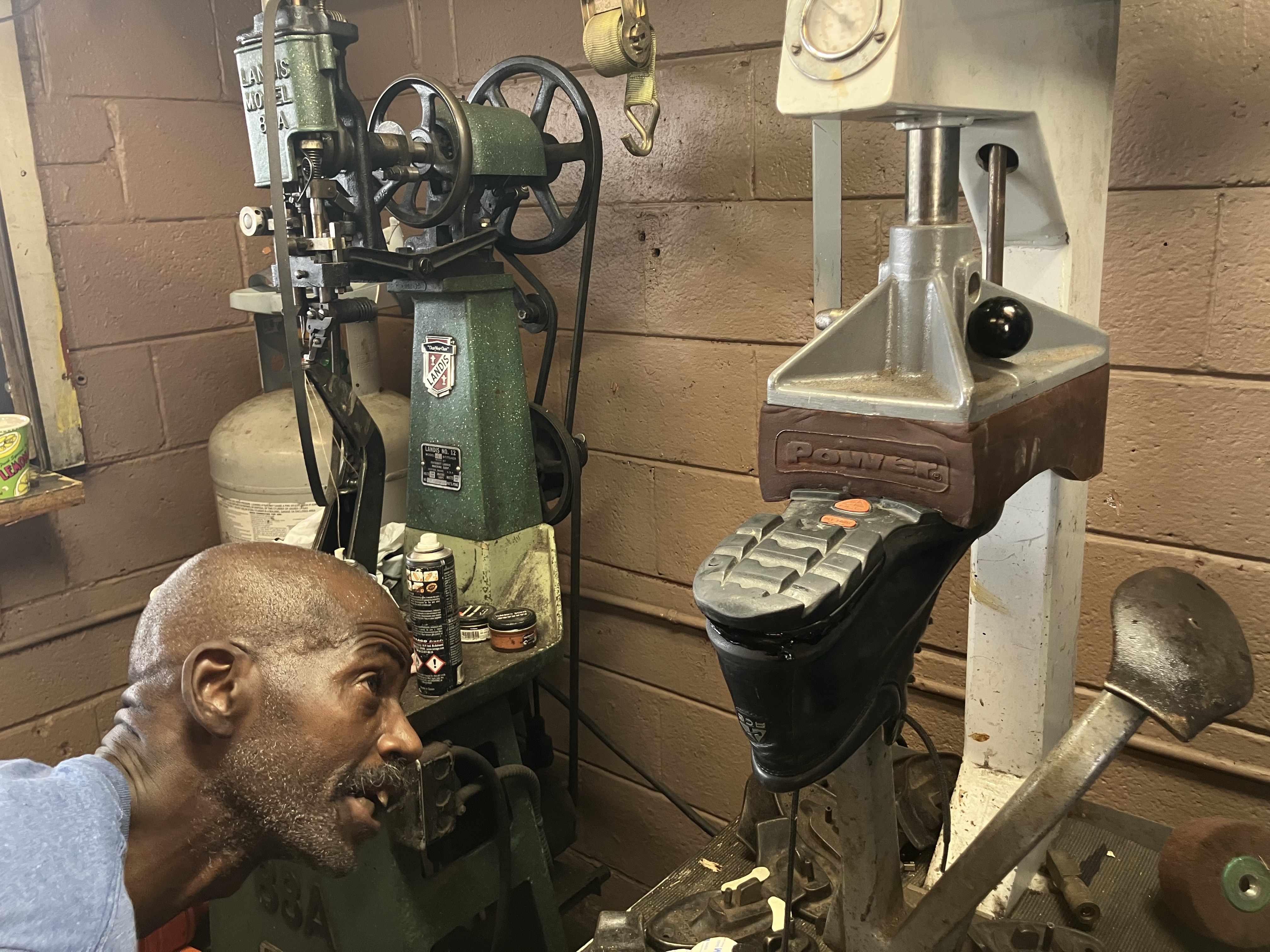
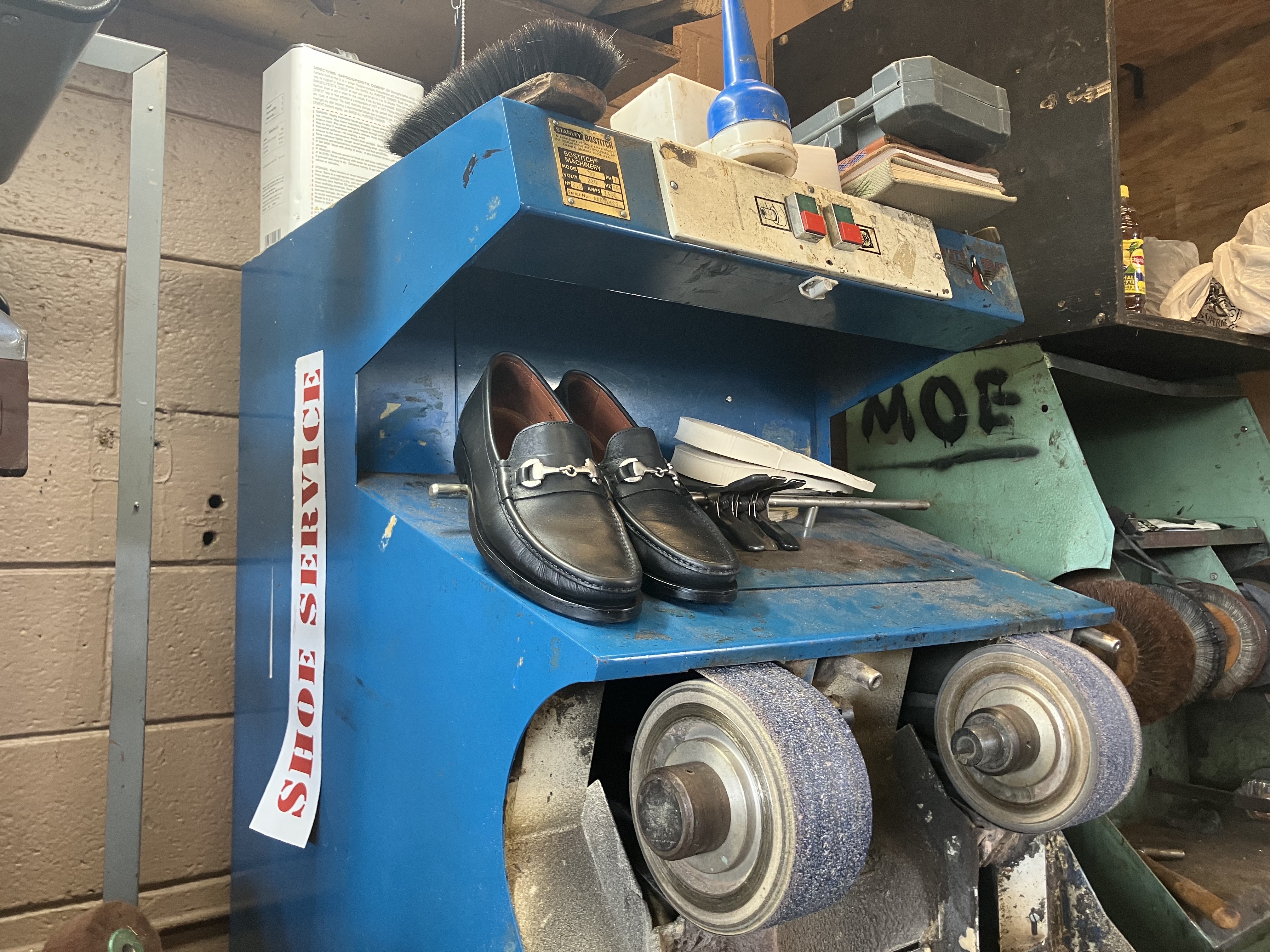
M: I come in at night on the weekdays and do my work, after working at my day job.
RM: So this isn’t your only job? What else do you do?
M: I break down metal that has been recycled.
Customer #4: Hello. I have a question, do you fix any kind of shoe?
M: I can fix most shoes, but I have to see it before I can confirm. Ladies shoes are especially challenging, because sometimes it costs more to fix them than they even paid for it initially. Bring them in so I can take a look at them.
Customer #4: Alright, I’m gonna come see you on Saturday at 6 p.m.
M: A lot of people wonder where I learned how to be a cobbler. It is really unusual to see a Black cobbler. As far as shops, there are probably about 2,000 shops left in America and less than 1% are run by African Americans.
RM: Are you from Detroit?
M: Yes, I get that in every interview because I don’t sound or act like most Detroiters. That’s because of my mom. I grew up in Rosedale Park and went to St. Mary’s. She would have me watch newscasters and ask me to talk like them. After a while, I started learning how to change my tone and disposition. My ability to speak to people in a clear and professional way has gotten me in many doors.
RM: Do you know what this space was used for before you moved in?
M: Back in the early 80s, it was a hot dog stand. It was built for that. I am not sure when it became abandoned but it was in pretty rough shape when I moved in, the ceiling was coming down and stuff. I fixed it up and also worked with Tyree Guyton to add some color and imagery to the outside. He painted these clocks on each wall, the one on the font is the time my son was born.
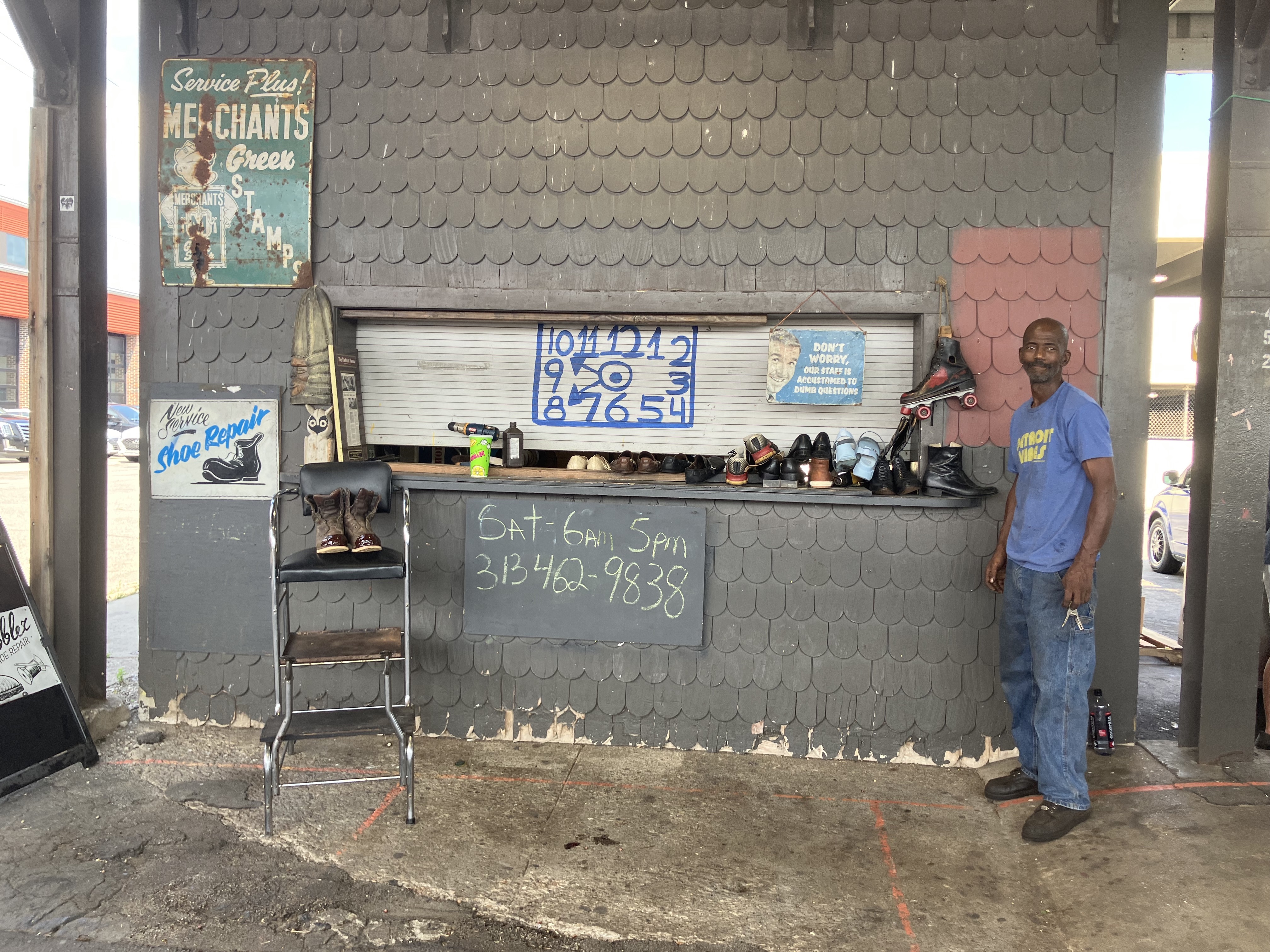
The Detroit Boot Cobbler is open on Saturdays Shed 4 of Eastern Market. Visit between 6am and 5pm, and bring your broken shoes.