




Lisa John Rogers
November 16, 2026
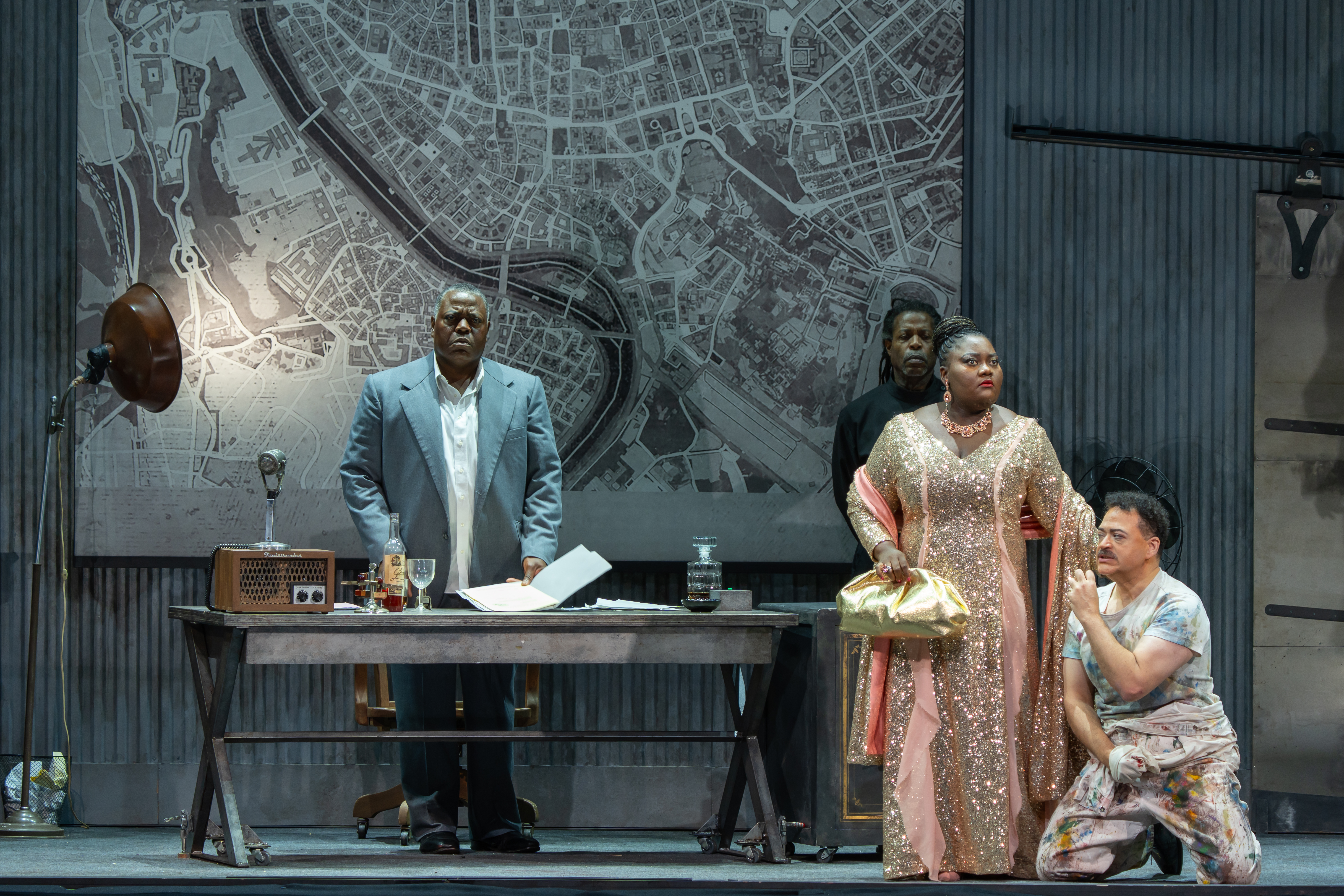
Left to right: Alfred Walker as Scarpia, Masabane Cecilia Rangwanasha as Floria Tosca, and Nathan Granner as Cavaradossi. Image courtesy of the Detroit Opera / Austin T. Richey
A new production of Giacomo Puccini’s opera Tosca premiered at the Detroit Opera on Sunday, November 1, 2026. Masbane Cecilia Rangwanasha made her Detroit Opera debut as the titular Floria Tosca, playing the jealous opera singer caught between the oppressive police state and her artist-lover, the painter Cavaradossi, played by Nathan Granner.
Directed by Louisa Proske, who took the classic opera and moved it from 1800 to sometime in the mid-to-late 1900s. This political thriller shows the harsh reality of being an artist under authoritarian rule.
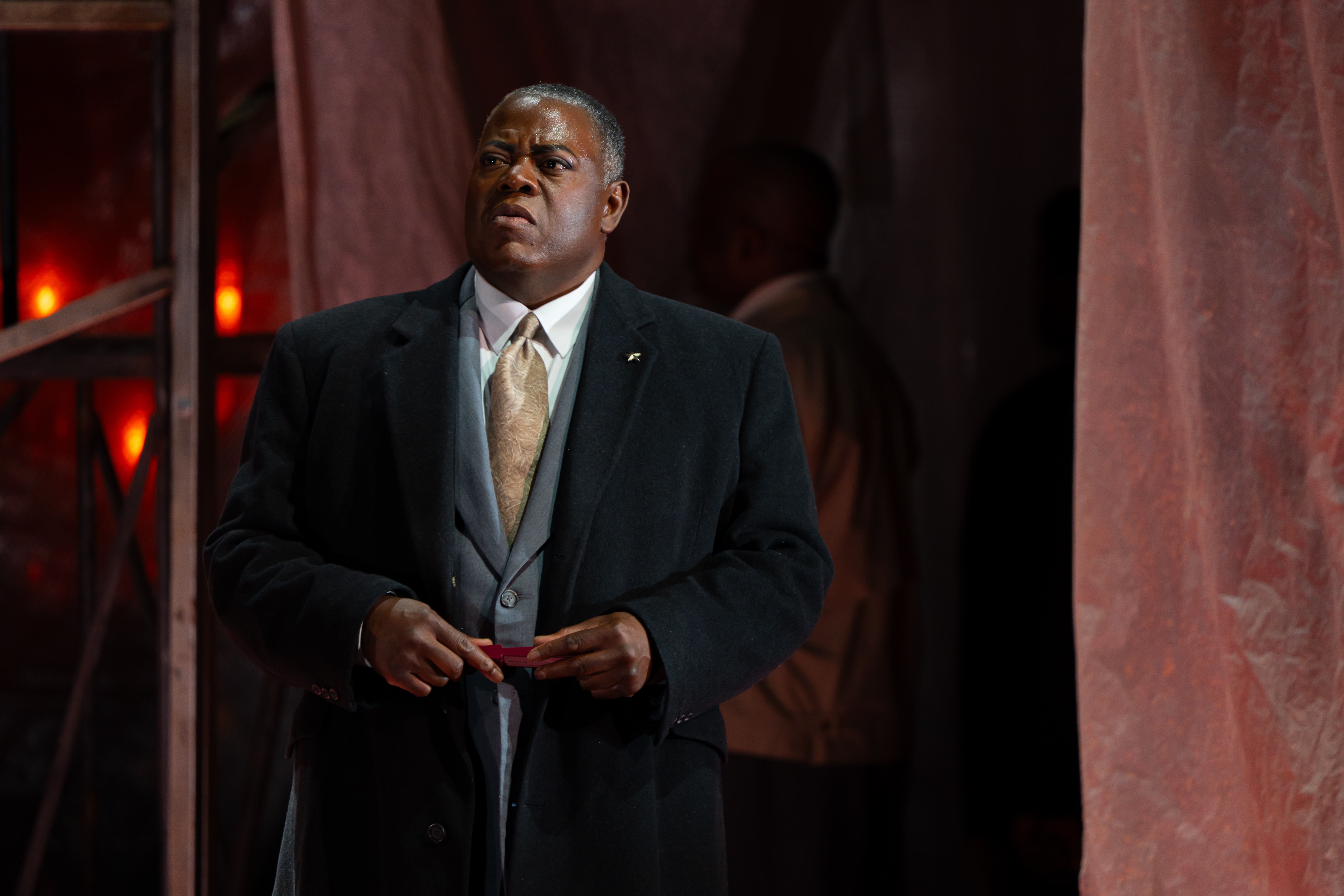
Alfred Walker as the police chief Scarpia. Image courtesy of the Detroit Opera / Austin T. Richey
Scarpia, played by Alfred Walker, is the evil police chief who is obsessed with Tosca. Once Scarpia discovers that the missing political prisoner Angelotti is being hidden by the painter Cavaradossi, he uses that as an opportunity to try to create a wedge between the singer and the painter.
This is when the plot turns, and Tosca’s bubble bursts. She thought she was living out the classic opera plot of the jilted lover. When actually she was in a story about a cop with so much power that he was suppressing art and free speech, all while maniuplating, killing, and raping at will.
The wedge didn’t last for long, even for the jealous Tosca. In Act II, as Scarpia belts about his pleasure for doing what he wants, when he wants, Tosca saw how he was torturing innocent people, like her beloved painter.
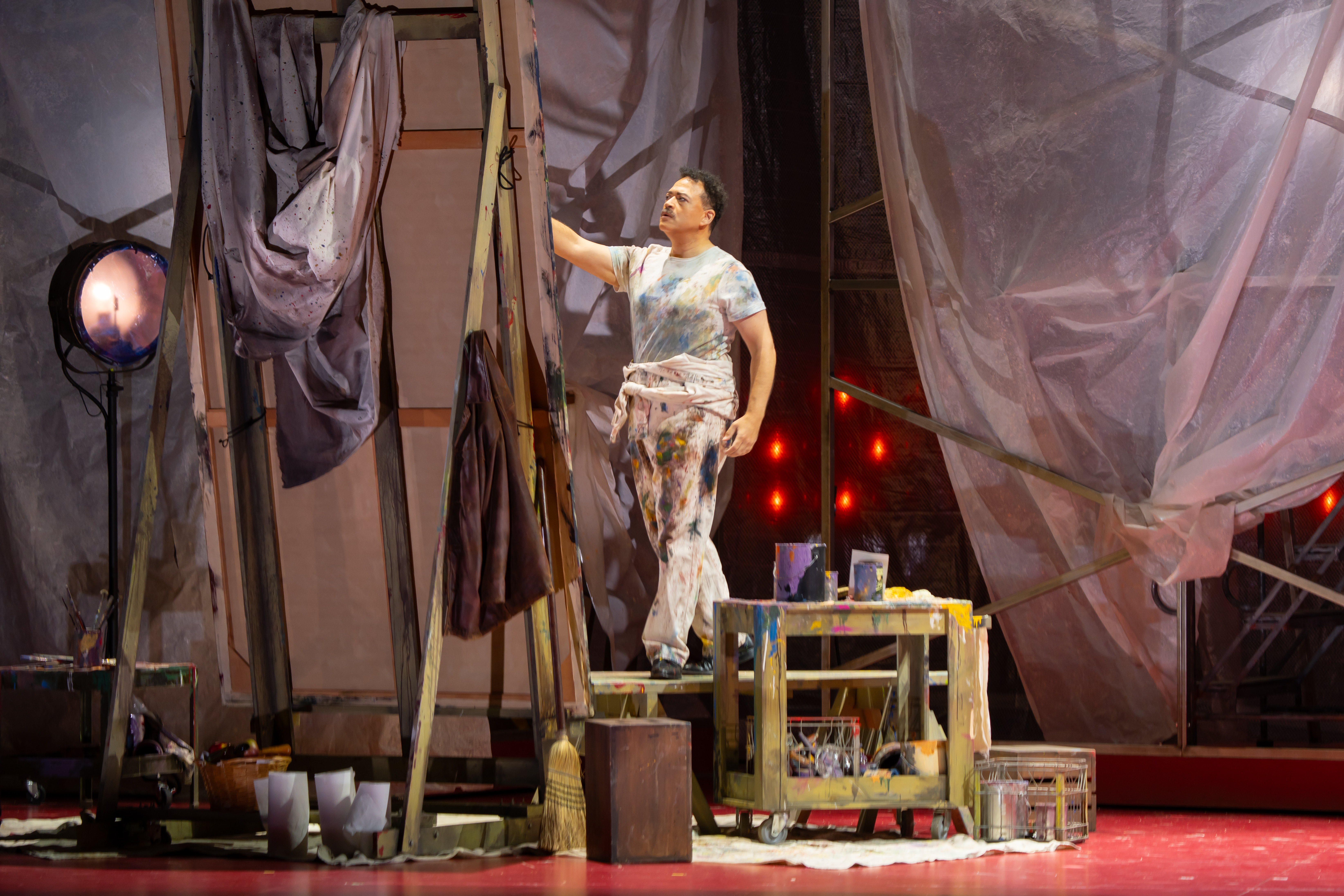
Nathan Granner as the painter Cavaradossi. Image courtesy of the Detroit Opera / Austin T. Richey
Scarpia claimed he would save her beloved Cavaradossi’s life (wink, wink), if only she gave her body to him. Tortured over this, Tosca attacked Scarpia—an act of retribution that made the audience go wild. As Rangwanasha sang “Vissi d’arte,” about how she lived for art and love, how painful it was to go against her spiritual beliefs to defend her life and the life of her lover—the entire opera house broke out in cheers and uproar. Only to be silenced by a red light.
Each act was separated by the stage being completely immersed in red light. A pulsing red that foreshadowed what was to come. Even after Tosca’s retribution, there was still something unsettling about the red lighting returning at the end of Act II, as if attacking Scarpia did not get at the root of the evil that had already taken hold.
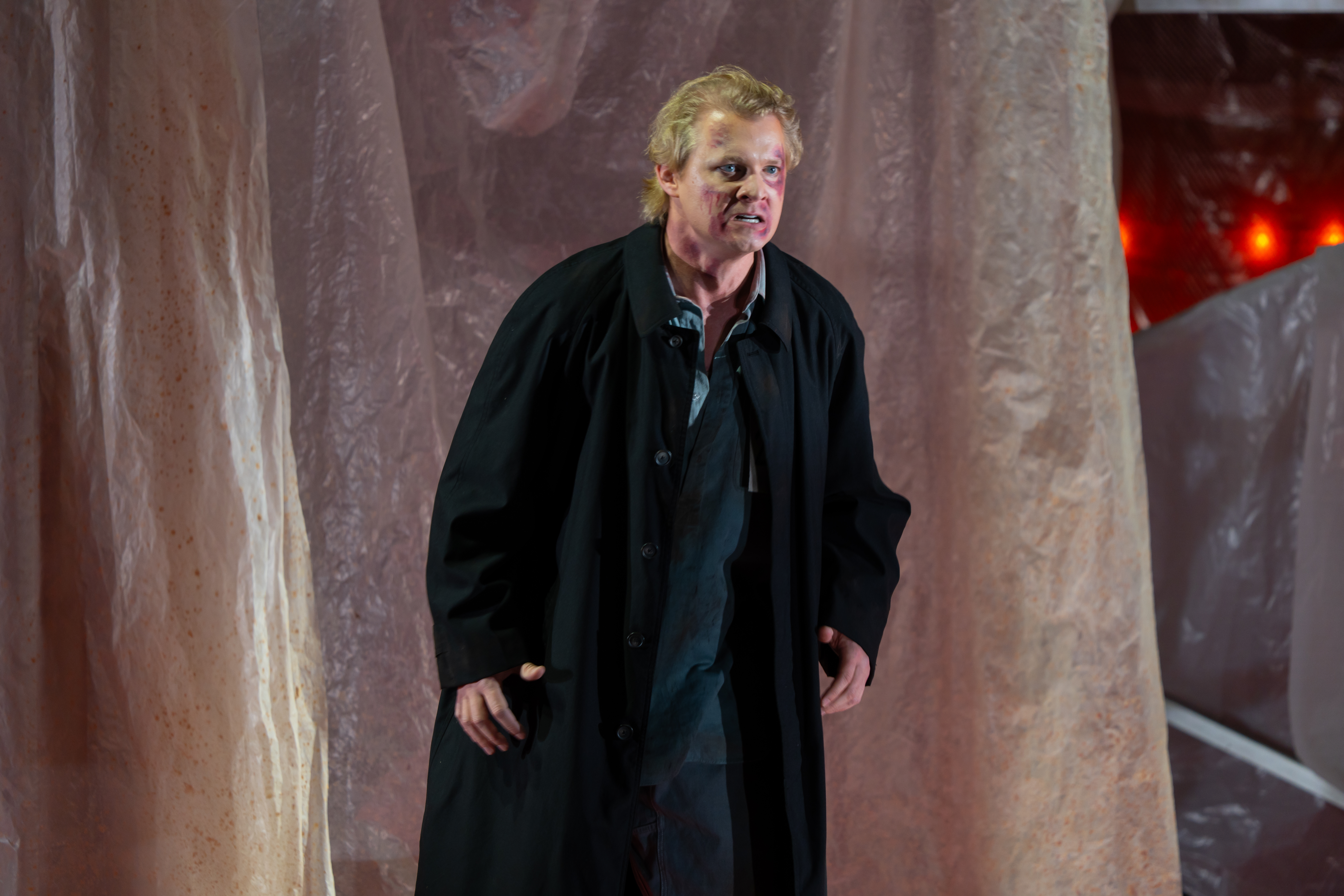
Lawson Anderson as Angelotti. Image courtesy of the Detroit Opera / Austin T. Richey
The meta nature of this story, with the main character being an opera singer, allowed Proske to get away with some interesting staging. In Act III, an audience is set up along the back of the stage. They’re watching the main characters in the prison yard with opera glasses and formal attire. They are watching us watch the opera. This opera was about us.
This modern interpretation of the classic transformed a story about Napoleon invading Rome into a timely one about art versus the police state.
The politics and timeliness of this narrative allow the audience to ask pertinent questions. As Proske said in her director’s note, “Can you make art during times of political repression? Should you leave or should you stay? And when does staying and working inside a political reality, the implicit acceptance of the terms, turn into collusion?”
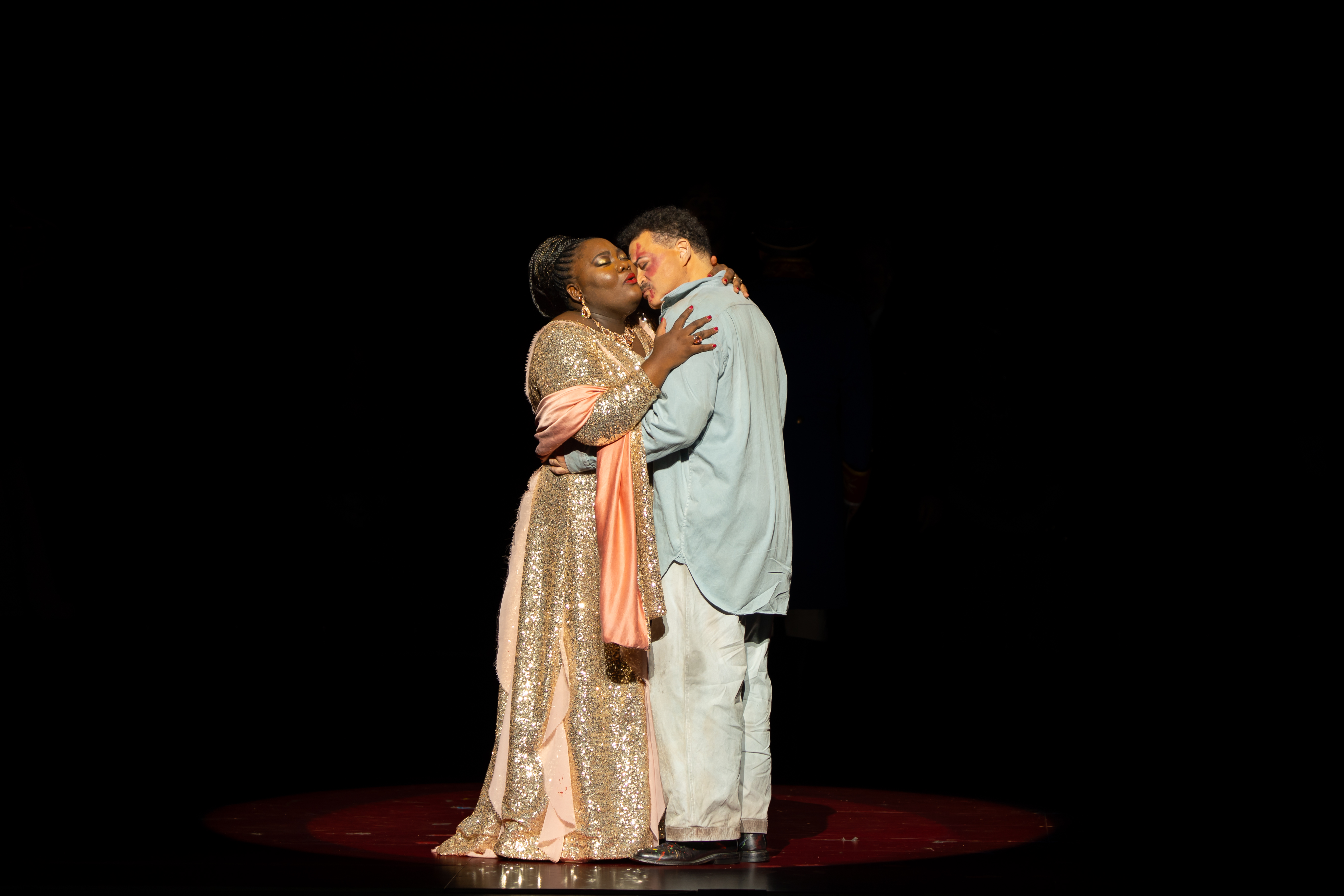
Masabane Cecilia Rangwanasha as Floria Tosca and Nathan Granner as Cavaradossi. Image courtesy of the Detroit Opera / Austin T. Richey
This production was first performed at The Glimmerglass Festival in 2025.
Tosca, directed by Louisa Proske, conducted by Roberto Kalb, and starring Masabane Cecilia Rangwanasha, Nathan Granner, and Alfred Walker.
The show ran on November 1, November 5, and November 7, 2026, at the Detroit Opera House, 1526 Broadway Street, Detroit, Michigan.
Images courtesy of the Detroit Opera / Austin T. Richey, taken during Detroit Opera’s opening performance of Puccini’s Tosca at the Detroit Opera House, November 1, 2026.