




Ashley Cook
March 18, 2026
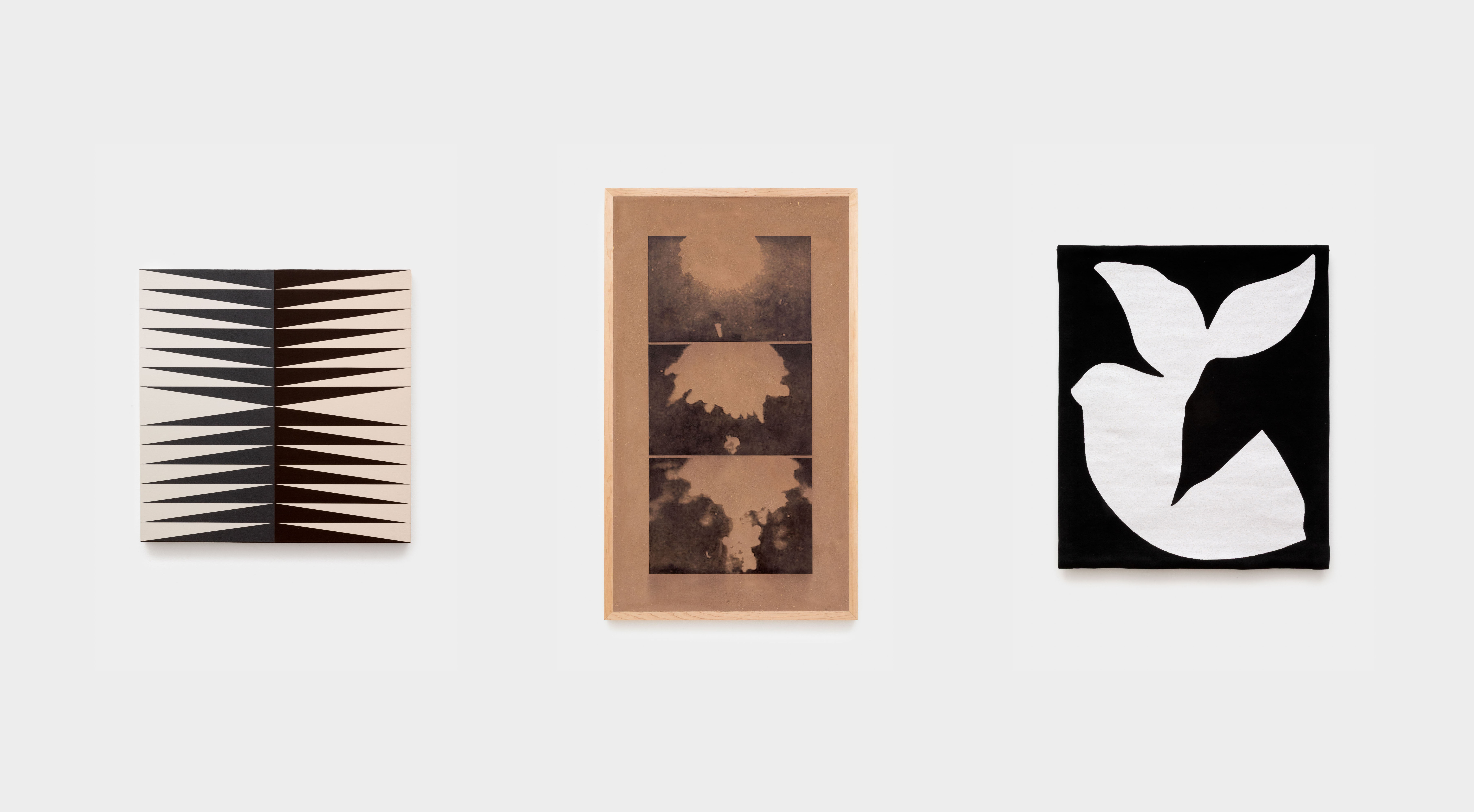
Left: Jordan Ann Craig, Sharp Tongue; Bruised Ego, 2025. Acrylic on canvas
Middle: Joanna Keane Lopez, Energetic Materials, 2025. Adobe earth, UV cured acrylic pigment print, maple frame
Right: Paul Kremer, Peel Tapestry 06, 2025. Jaquard Tapestry
On January 24, 2026, Louis Buhl & Co. and its neighboring gallery Library Street Collective opened two new exhibitions downtown; while each show is unique, echoes occur between them. At first glance, the blocks of color and form in the tapestries of Paul Kremer compare to those in the paintings by Jordan Ann Craig. The vibrational qualities of the archival images on adobe surfaces by Joanna Keane Lopez resonate with Craig’s geometrical patterns as well as Kremer’s color fields rendered by carefully interlacing fibers. Viewing these works in detail is a trance-like experience fueled by perceptual and conceptual layering; they prompt contemplations about abstraction as an expansive and timeless mode of representation.
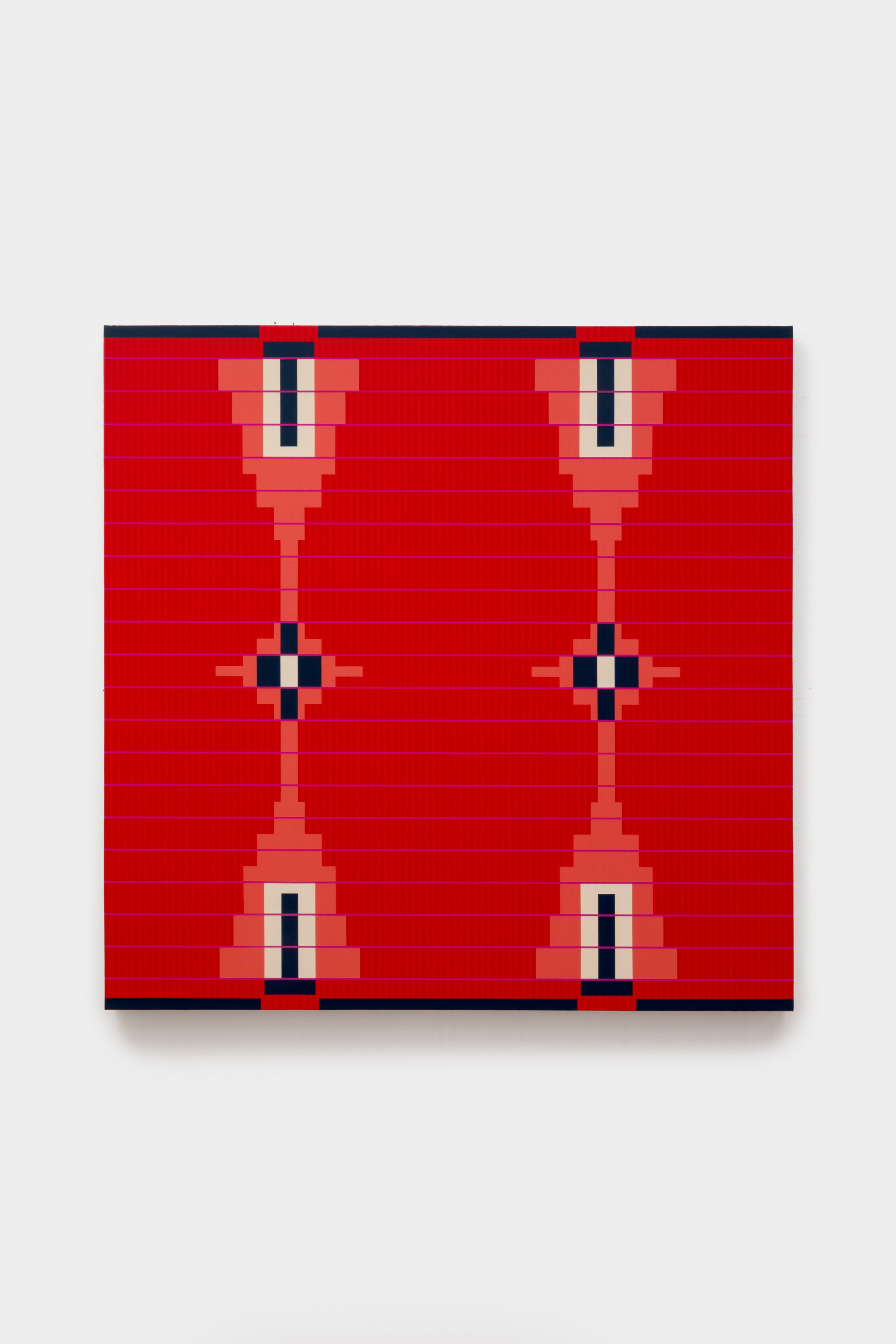
Jordan Ann Craig, See You Seeing Me, 2025. Acrylic on canvas
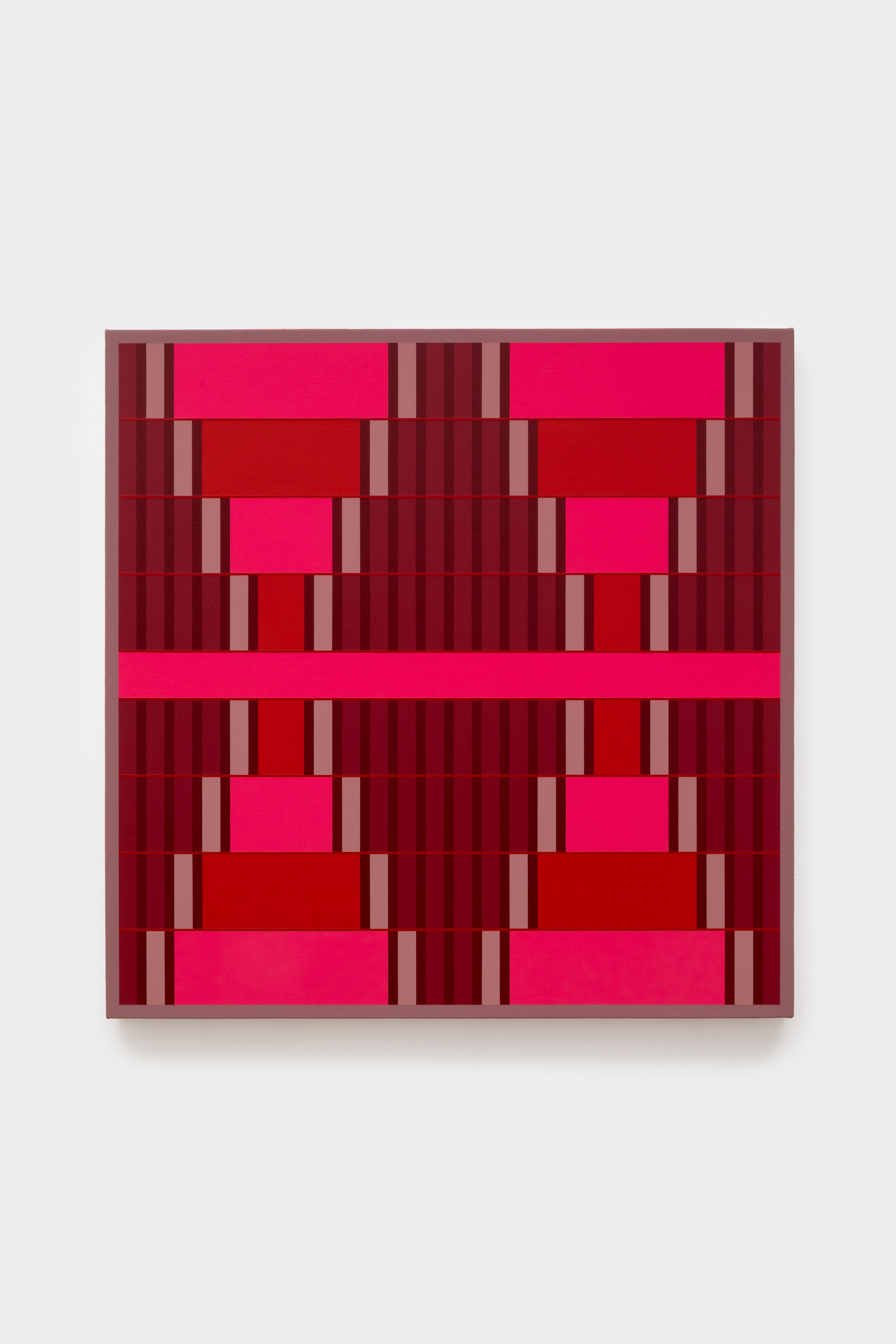
Jordan Ann Craig, Still, Still, 2025 Acrylic on canvas
A reproduction of an object or an experience is inherently abstract, detaching from concrete reality to explore a realm where images and materials are symbolic, process is ritual, and meaning is infinite. An art object—regardless of its proximity to the likeness of its subject—is a souvenir of relation that casts light on the spectrum of lived experiences and the artist’s role in the timeline of their heritage. A Heart and A Land at Library Street Collective embodies intergenerational collaboration as practiced by Joanna Keane Lopez and Jordan Ann Craig. The curator of the exhibition, Allison Glenn, invited them to consider their connection to the city of Detroit, leading to meaningful discoveries. Jordan Ann Craig is a descendant of the Northern Cheyenne Indigenous Tribe; she is recognized for her acrylic paintings of geometric patterns inspired by her native predecessors. Guided by her ongoing research into the history of their material culture, Craig surveyed the collection of Cheyenne artifacts at the Detroit Institute of Arts. The paintings at LSC serve as responses to some of these objects—including moccasins, a beaded knife case, weathering buckskin, and a tobacco bag—as she continues to explore Indigenous expression and its influence on Modern and Contemporary Art.
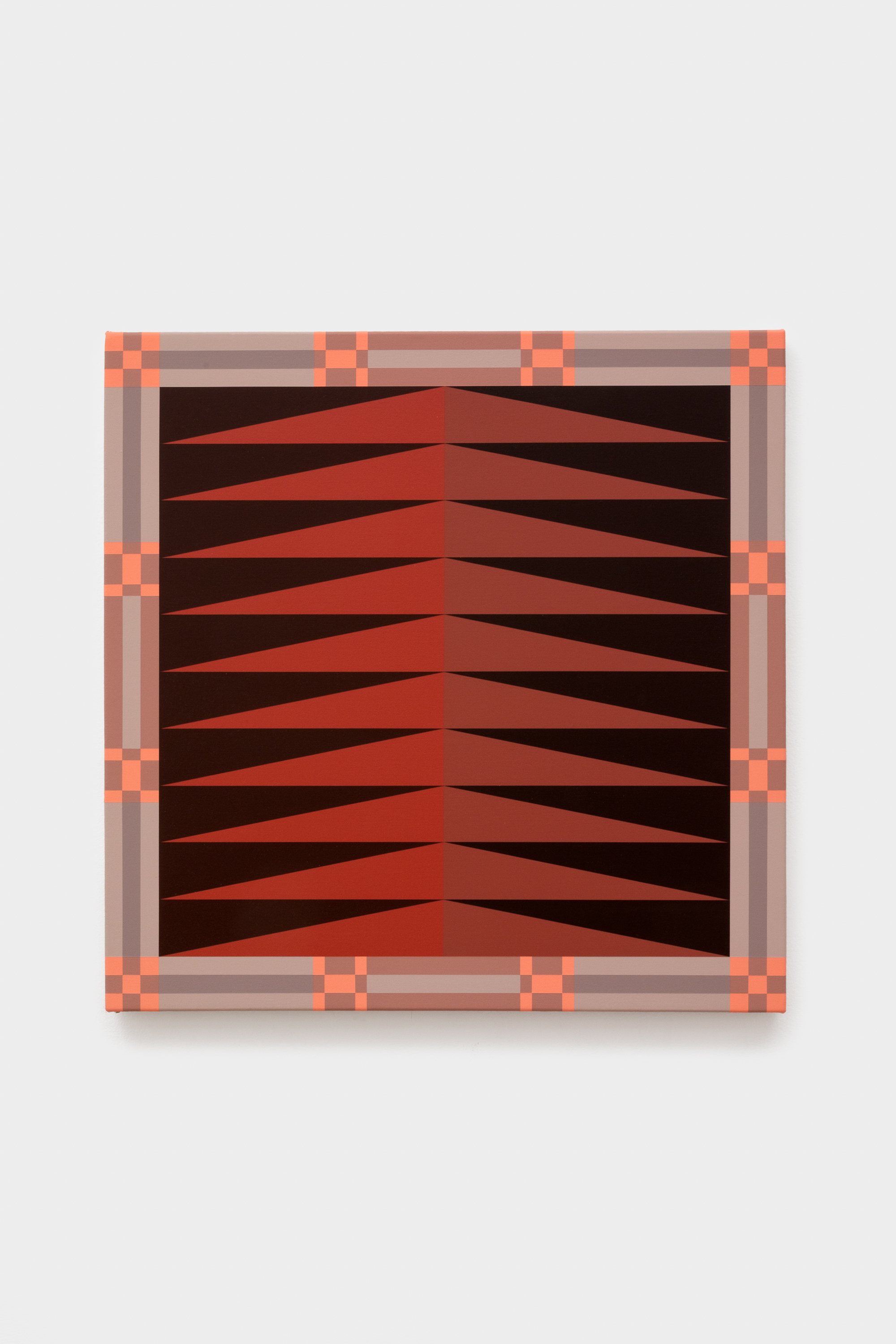
Jordan Ann Craig, The Dirt Loves You, 2025 Acrylic on canvas
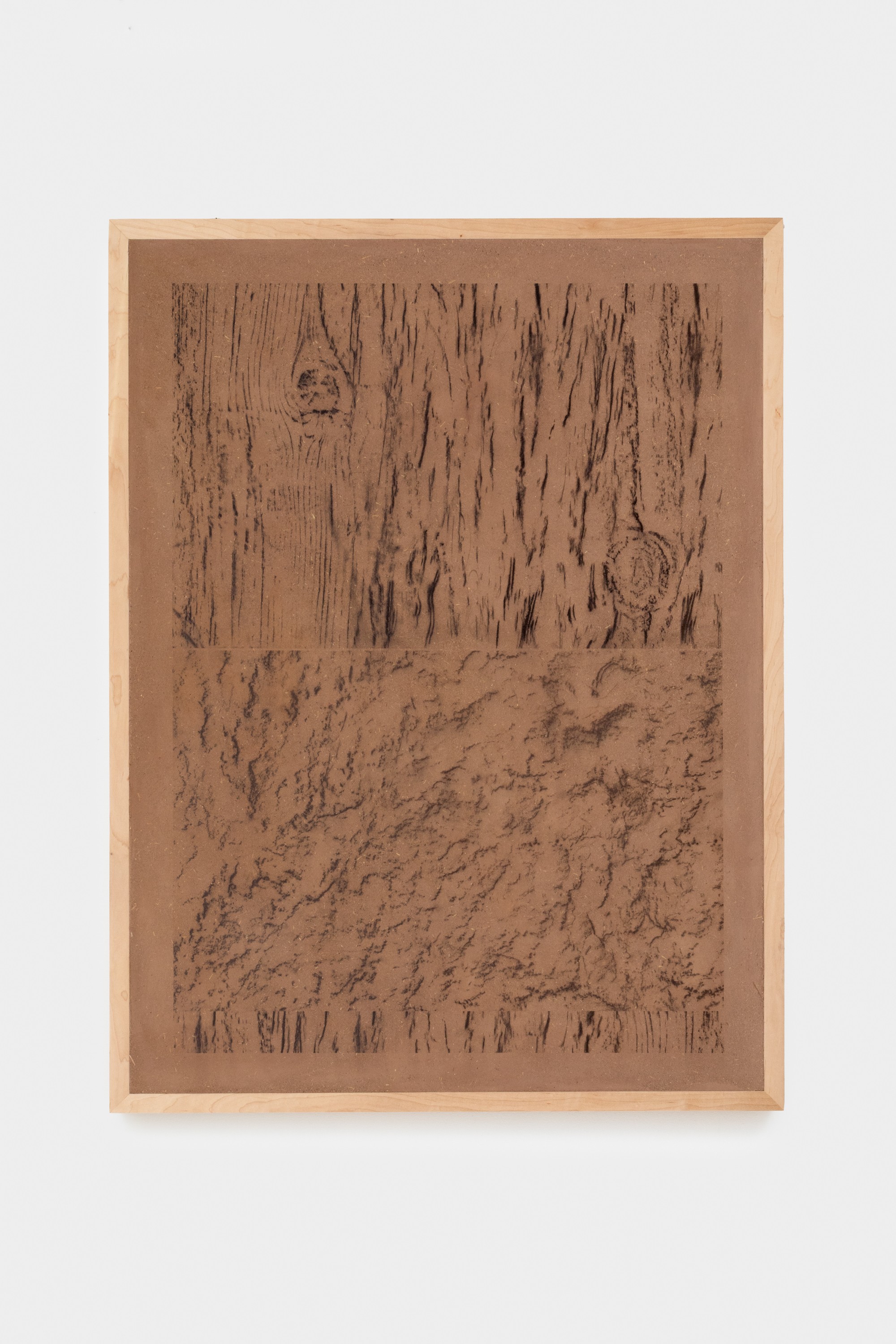
Joanna Keane Lopez, Stone Wood, 2025. Adobe earth, UV cured acrylic pigment print, maple frame
Culture is an endless series of remixes. Like Craig, Joanna Keane Lopez participates in the continuous, cumulative process where existing ideas, artifacts, and media are combined, reinterpreted, and transformed over time. For A Heart and a Land, Lopez incites recollection of the U.S. Army’s Cold War-era Nike Missile Program, and its use of several American locations—including Southeast Michigan and Southern New Mexico—as test sites. With familial roots in both of these spaces, her response to such activities imply a disquieted hum of internal or external unrest. Joanna Keane Lopez’s research into the military industry and land contamination continues to inform her practice, as seen in the works on view here. As alloys of land and memory, Lopez presents maple-framed, hand-cast adobe surfaces infused with archival images of the Nike sites in Detroit and graphite rubbings of her family’s ranch near the White Sands Missile Range in New Mexico. The artist’s investigation into energetic materials used in the science of war is complemented by the term’s parallel use when describing elements of spiritual significance; her unconventional use of adobe building techniques underscores her role as a steward of both tradition and transformation.
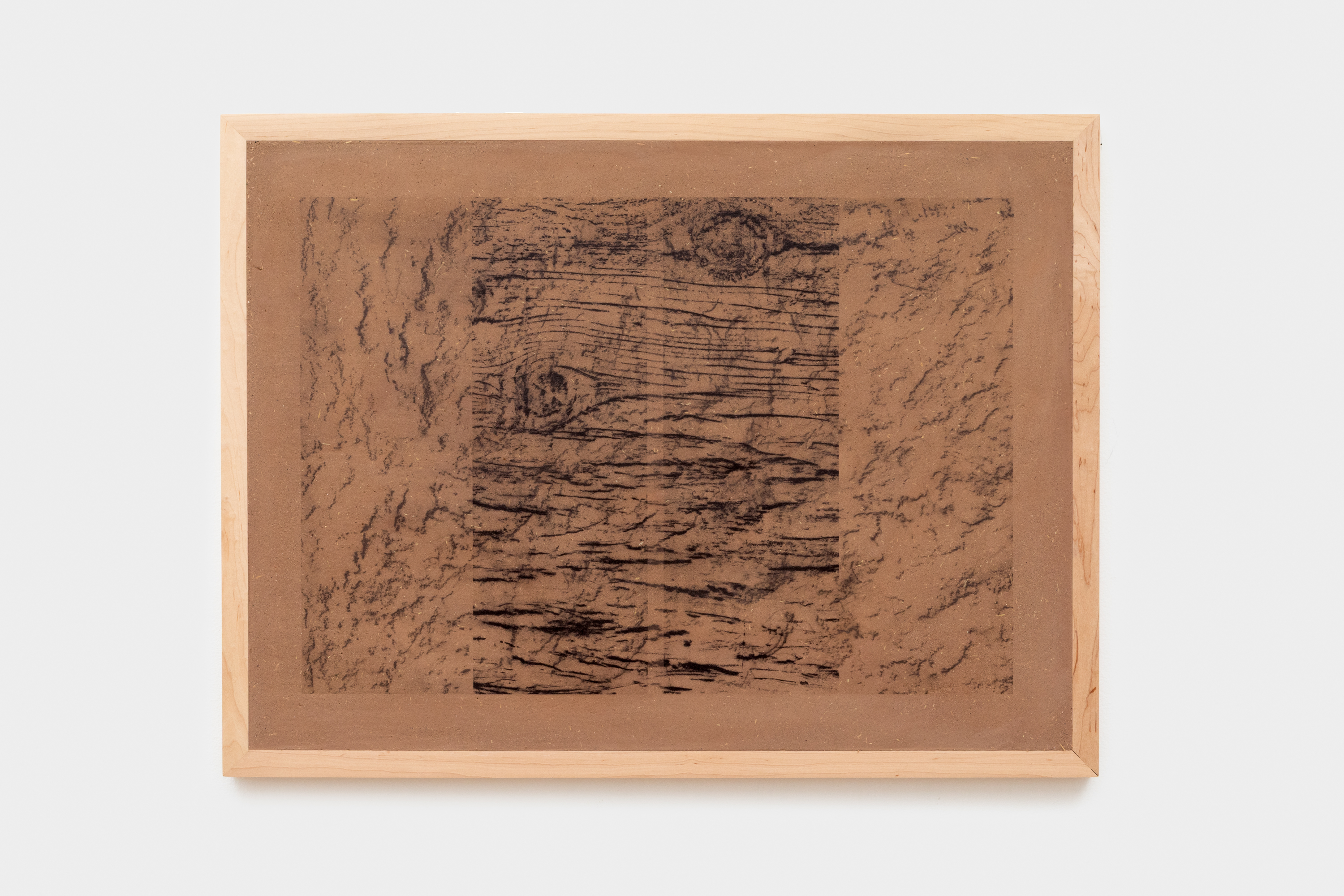
Joanna Keane Lopez, Del Curto Ranch, 2025. Adobe earth, UV cured acrylic pigment print, maple frame
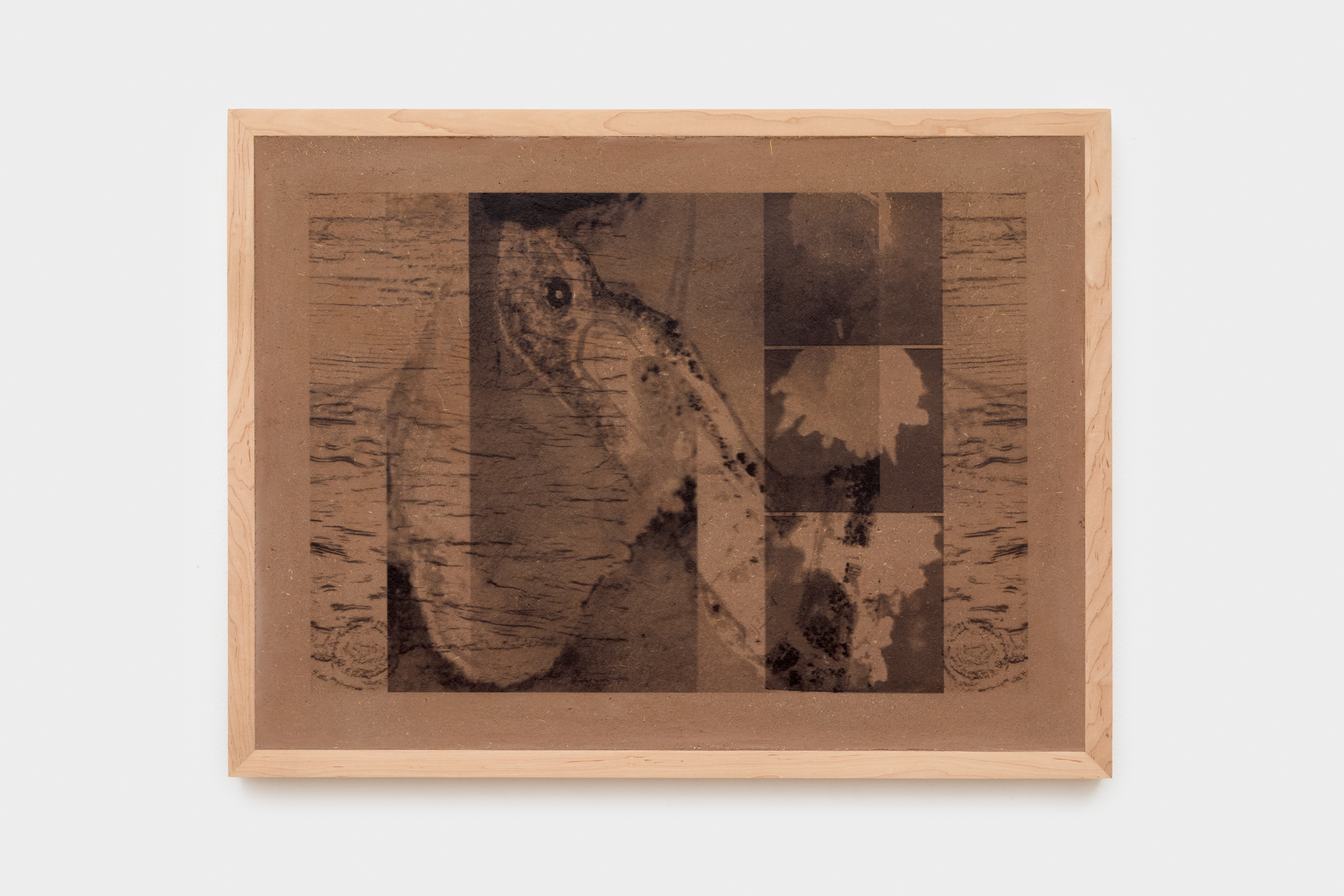
Joanna Keane Lopez, Belle Isle & White Sands, 2025. Adobe earth, UV cured acrylic pigment print, maple frame
Both Craig and Lopez are based in New Mexico; they share a deep respect for the dessert, and for the interdependence that it invokes. This sentiment is articulated in the exhibition text as they touch on the decision to also include an earthen vessel by traditional Taos Pueblo potter Brandon Adriano Ortiz-Concha and a photograph taken by artist Maryssa Chávez during an adobe-building workshop led by Lopez. “Within the desert landscape, interdependence is necessary for survival”, and is a core aspect of their communities and creative circles.
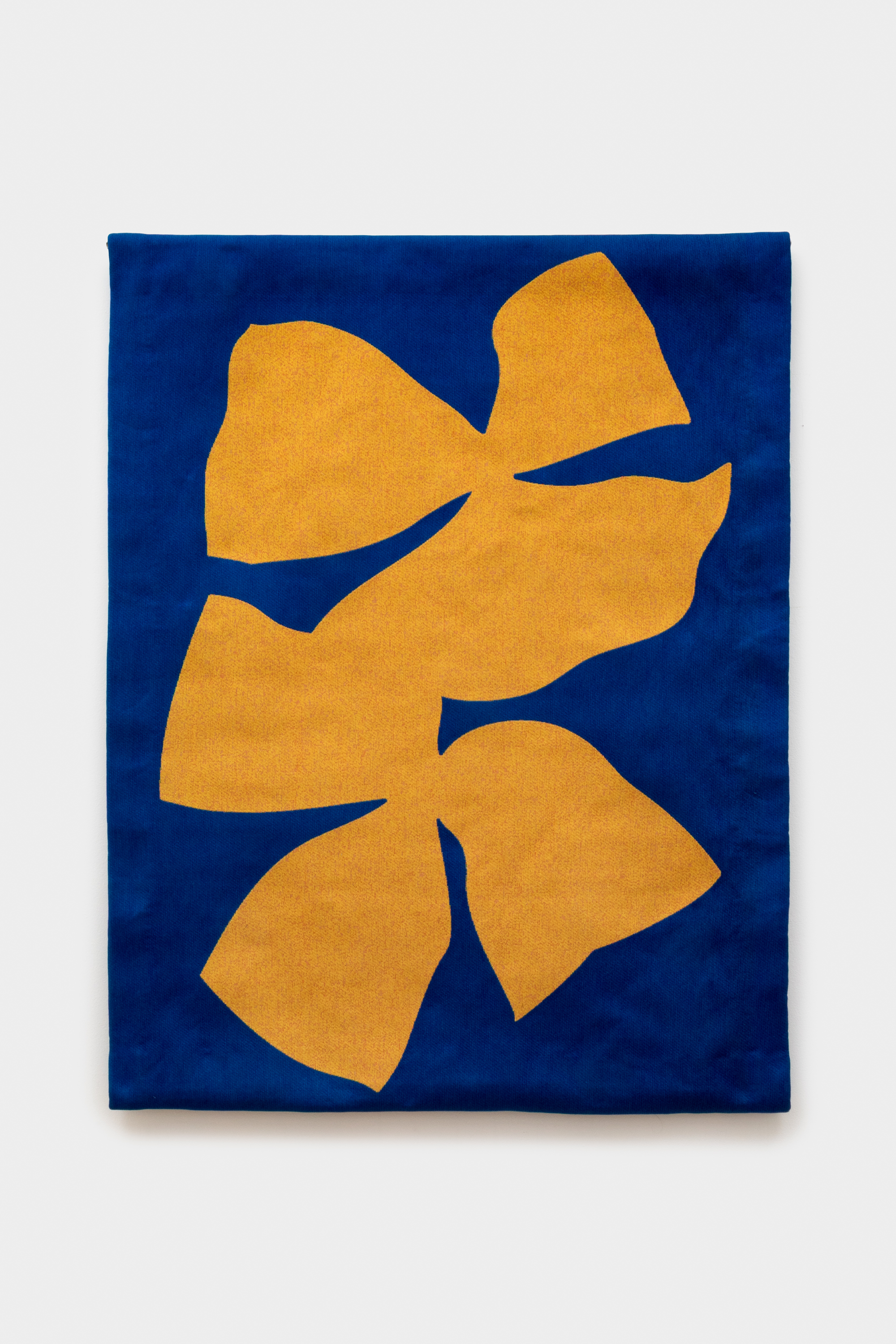
Paul Kremer, Peel Tapestry 01, 2025. Jaquard Tapestry
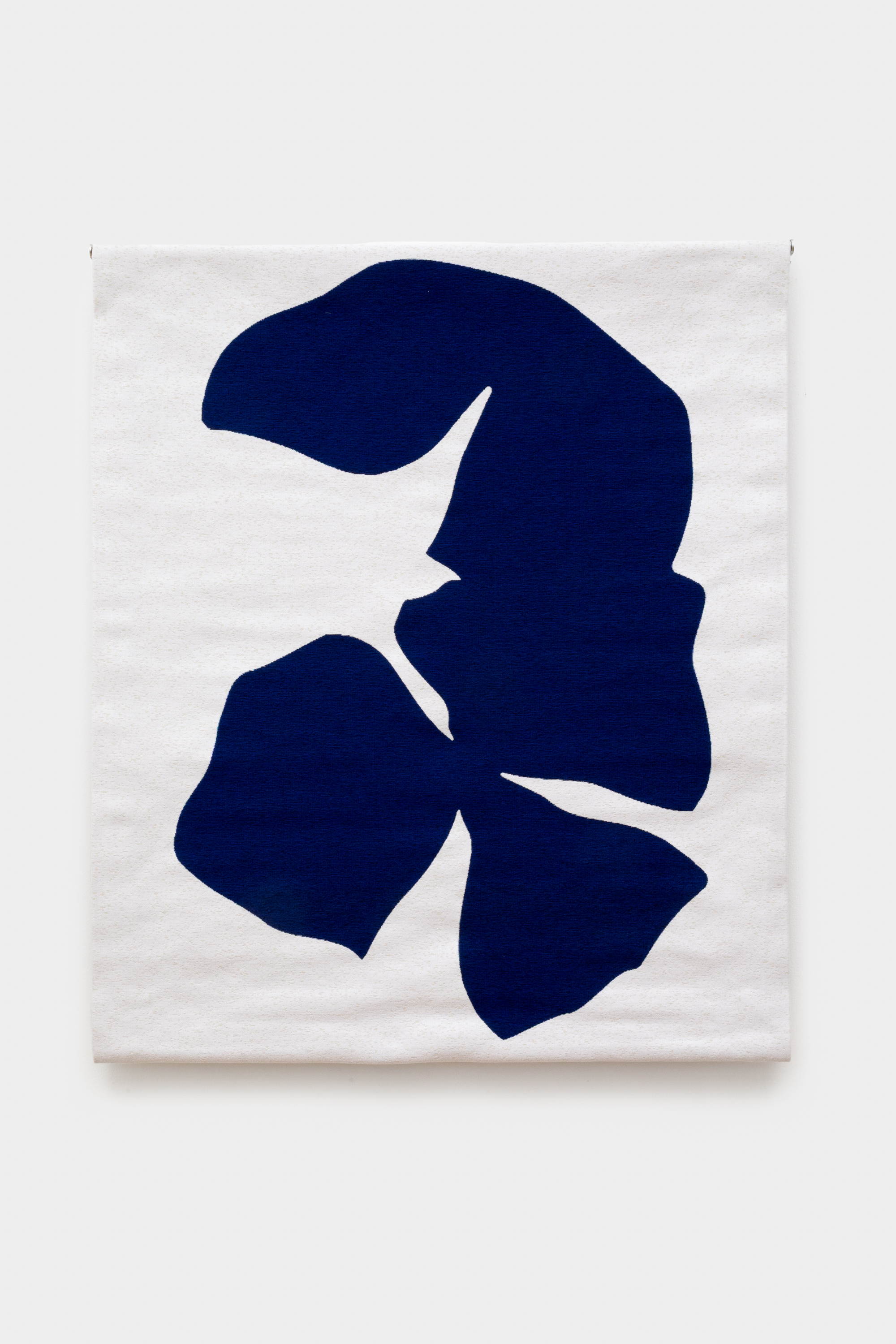
Paul Kremer, Peel Tapestry 04, 2025. Tapestry
Interdependence is also a key element in Paul Kremer’s exhibition Threads at Louis Buhl & Co. Drawing from the artist’s “peel” series, these large scale woven and embroidered compositions were created in collaboration with professionals at VANGART Textile and Design studio and Magnolia Editions Inc., who assisted in translating the artist’s digital images into physical form. Like any fine artist practicing today, part of Paul Kremer’s heritage is art history, and his collaboration with these master fabricators fits comfortably within that lineage. Additionally, his creative practice encompasses a reverence for the spiritual and meditative potential of Essentialist thought, building on the history of Color Field painting that emerged in the 1940s as a divergence from the emotional mark-making of Abstract Expressionism. Like in the work of Jordan and Craig and Joanna Keane Lopez, familiar forms become freed from the limits of representation, dancing weightlessly along the walls to inspire a meditative exchange with infinity.
Paul Kremer at Library Street Collective, January 24, 2026 - March 18, 2026
A Heart and a Land: Jordan Ann Craig and Joanna Keane Lopez at Library Street Collective
Threads: Paul Kremer at Louis Buhl & Co.
Both exhibitions opened on January 24, 2026, and are on view through March 18, 2026
Images courtesy of Louis Buhl & Co. and Library Street Collective