




An Interview with Dylan Rundle
November 19, 2026

slack:work installed in Fred Fuller Park, Kent, Ohio
Somatic lounging is the practice of calming the nervous system and releasing stored tension by tuning into the body’s internal physical sensations during moments of rest. Rather than decompression being associated with zoning out while scrolling the phone, this mindfulness modality turns downtime into a restorative experience. Dylan Rundle is an architectural designer and interdisciplinary artist based in Cleveland, Ohio. In his most recent public installation, slack:work, Dylan worked in collaboration with the architecture and interior design firm +Detail to build a pavilion centered around rest and somatic awareness.
The temporary structure of interconnecting tube and clamp scaffolding, debris fabric, and batting cage netting premiered at the 33rd annual Art in the Park Festival in Kent, and was designed to provide a “gradient of postures for rest”. Over the course of two days, guests were encouraged to engage autonomously with the work, test their standards of comfort, fulfill the need for a pause, and take time to observe the ways that the breeze gently manipulated the fabric, the light dappled across its forms, and the fallen leaves of autumn decorated the canopy above.
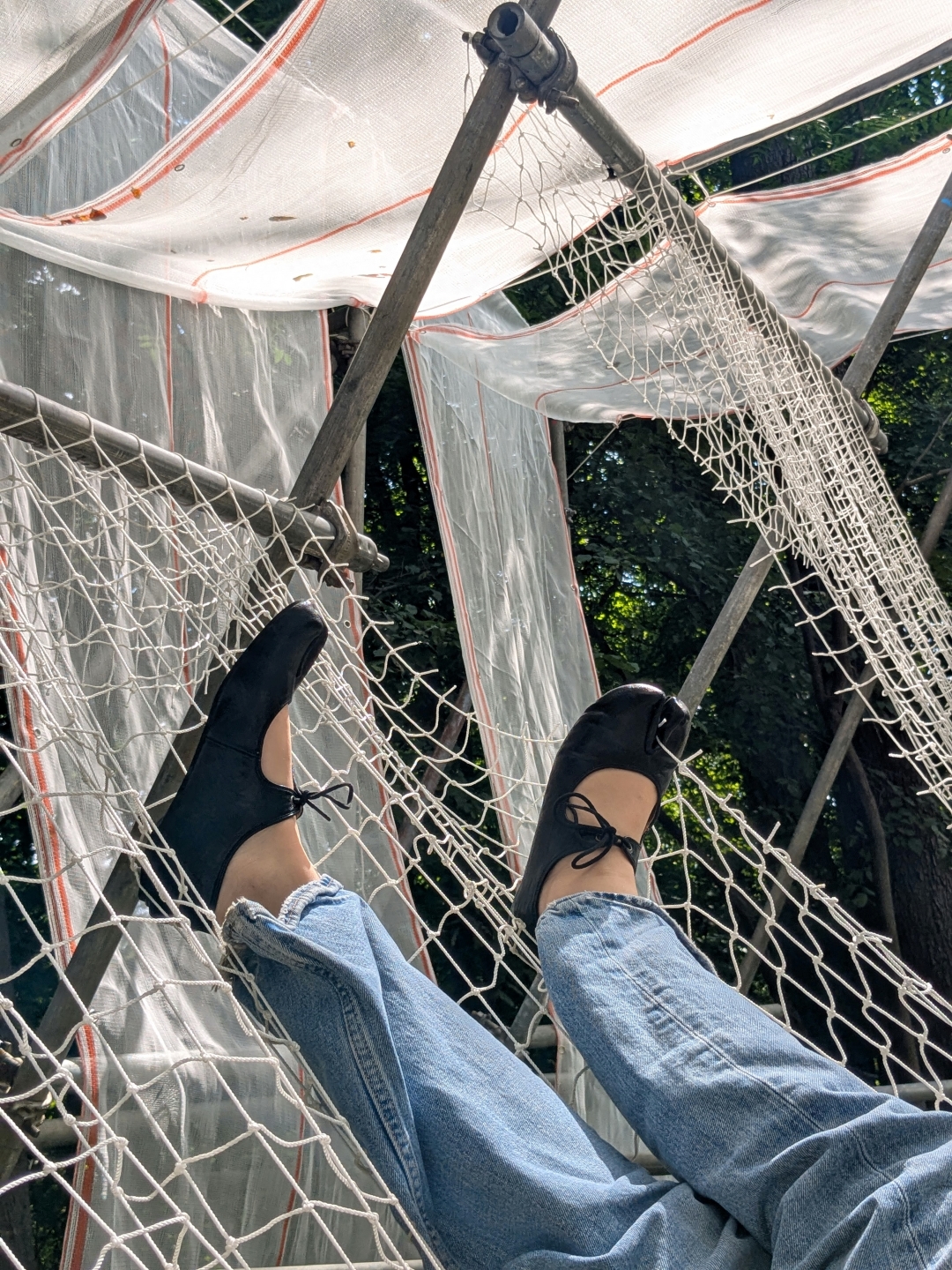
Rest, play, and flossing
We had the opportunity to speak with Dylan about his background in architecture and his experience planning and executing slack:work.
runner: So, you are currently based in Ohio, where you work on architectural projects. You studied architecture in school?
Dylan: I studied Architecture at Rensselaer Polytechnic Institute in Troy, New York. I graduated in 2022.
runner: How did you end up in Ohio?
Dylan: My wife and I were both finishing our thesis projects, planning a wedding, and deciding where to live and work after graduation. I decided to continue a remote gig after school, so I had Sarah take the reins on where we should live. At the time, she was getting her MFA in painting at Kent State, and suggested we stay in lovely Northeast Ohio. I was skeptical at first, but I’ve really grown to love it. There’s an incredible scene in Cleveland.
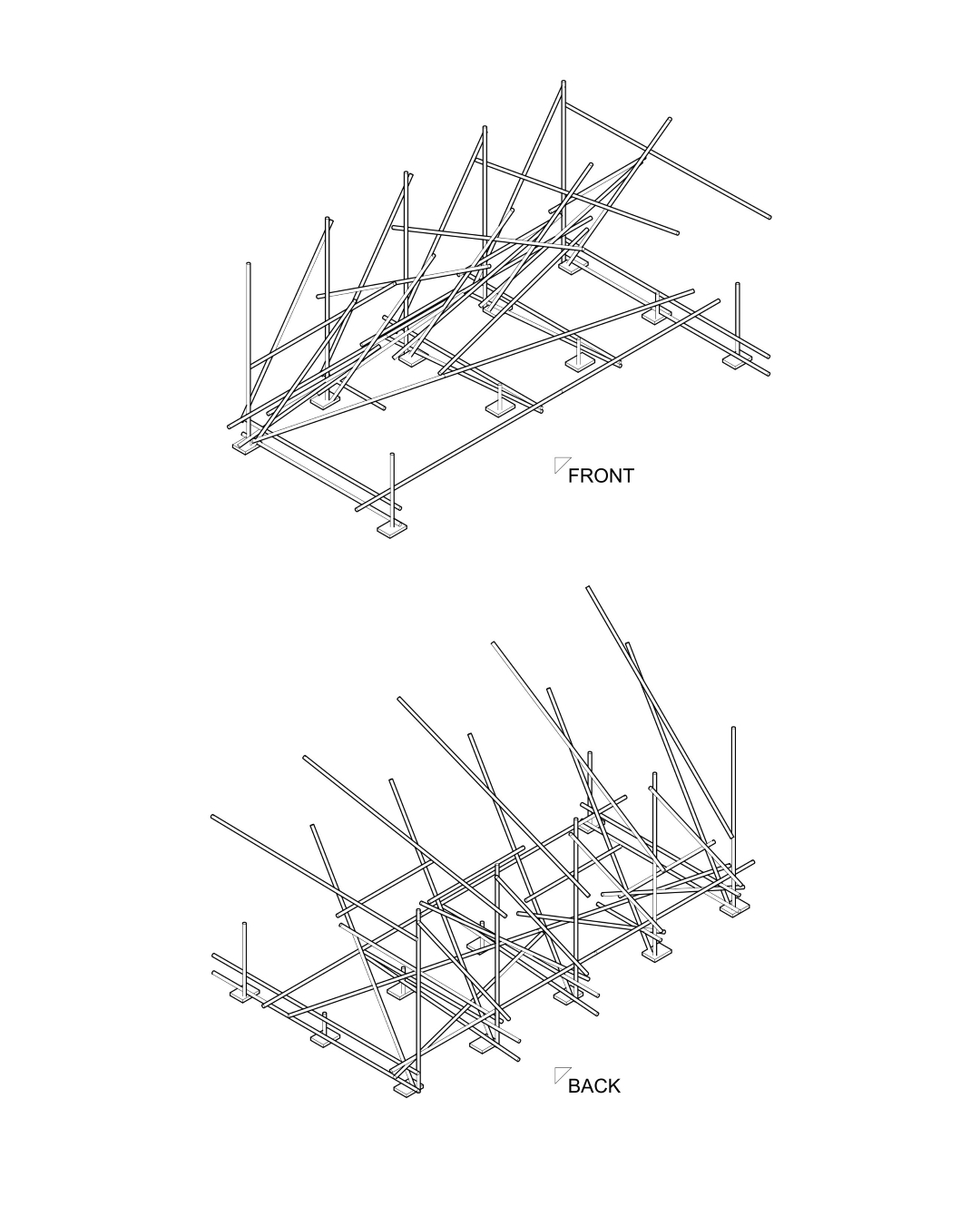
Assembly drawings excerpt: Frame Isometric
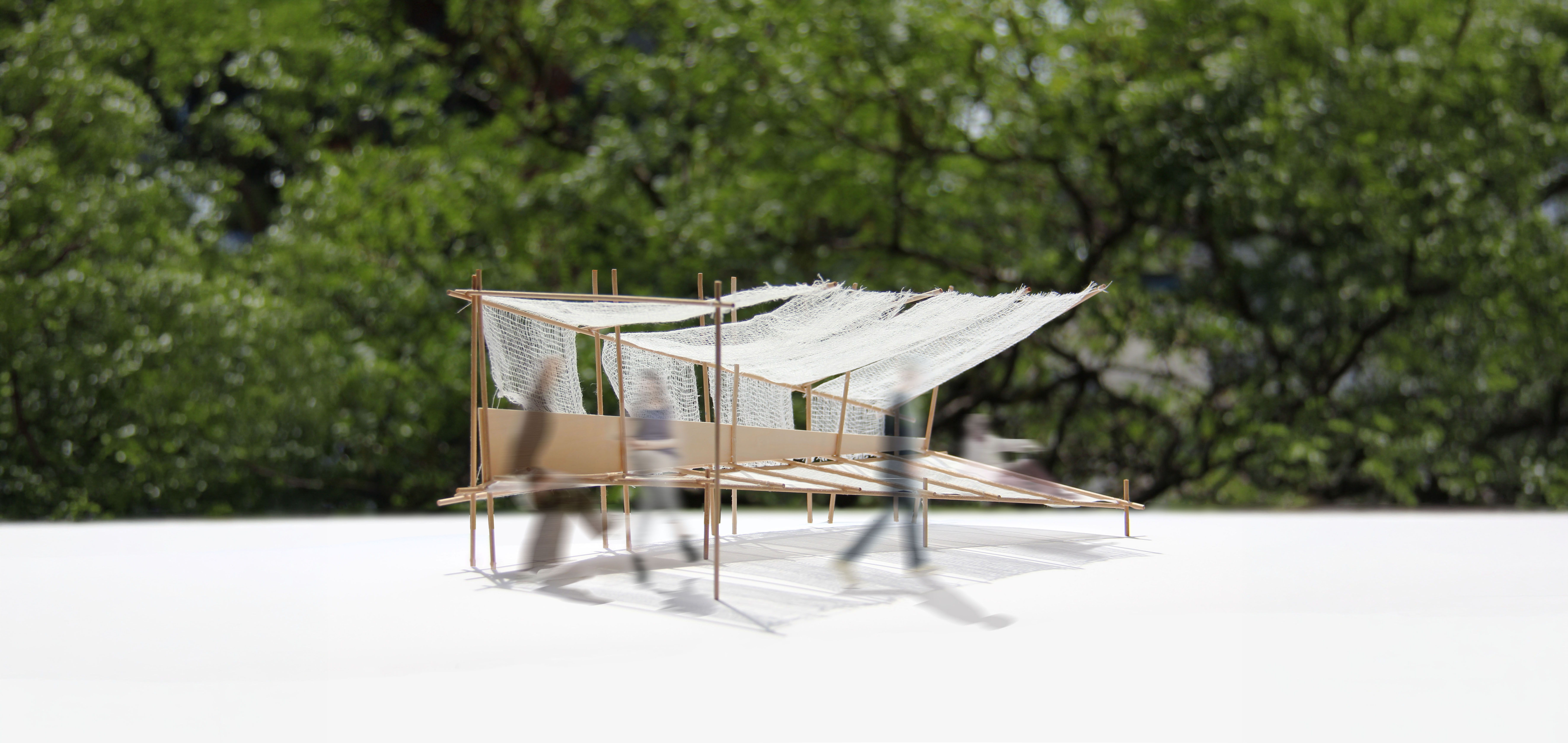
Basswood and cheesecloth study model
runner: That’s great! So your piece, slack:work, did you give it that name because of the droopy quality of the fabrics used?
Dylan: Yep! We liked the word “slack” as a double entendre for droopiness as well as relaxation. All the excitement at a festival can get tiring or overwhelming, so addressing that felt right. It was one of the more fun projects that I had worked on while at +Detail.
runner: Sometimes the best work comes from play. So this project was a collaboration with +Detail?
Dylan: I agree! I had been itching to play with scaffolding, and it was an experimental project for everyone involved. I worked at +Detail for about nine months. In the past they had primarily done interior work, but more recently it has become a full service architecture and interior design firm.
I led the project, along with two other designers at +Detail: Josh Myers, and our summer intern, Lauren Leemaster. Together we did research, sketches, drawings, models, mockups, and all the coordination for assembly.
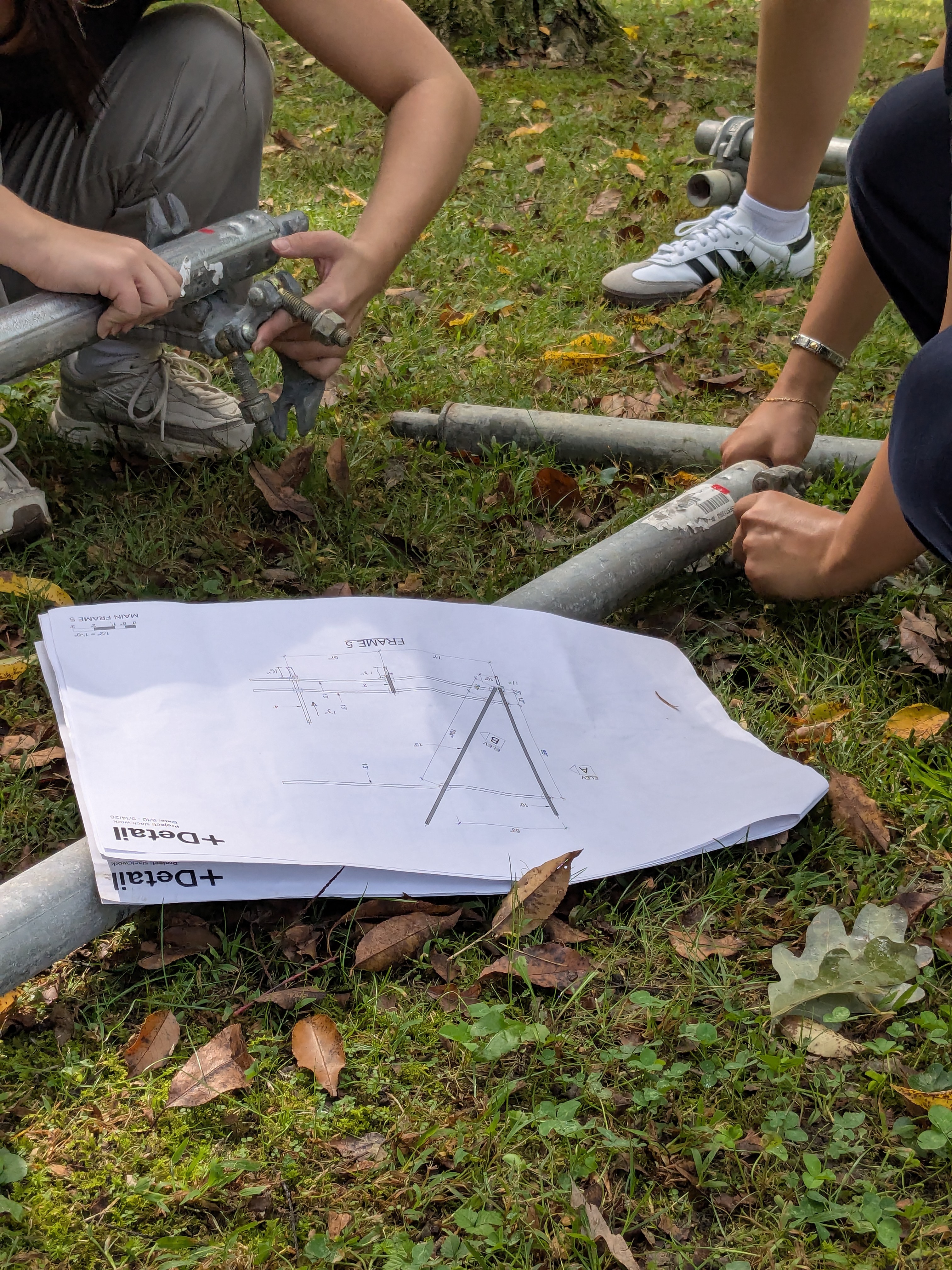
Kent State design students refer to construction documents and assemble steel members
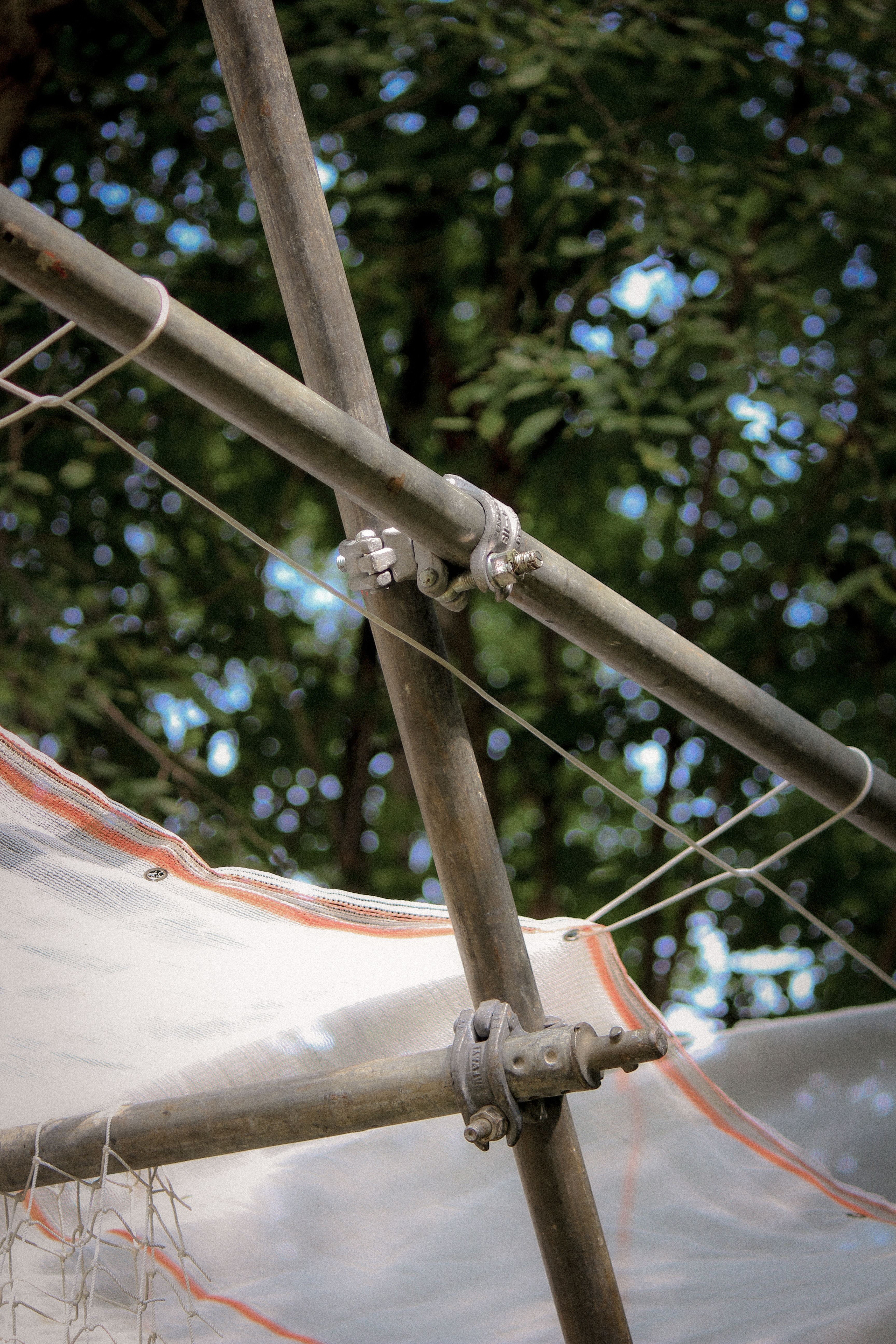
Connection Detail. Image courtesy of Ryan Shaw
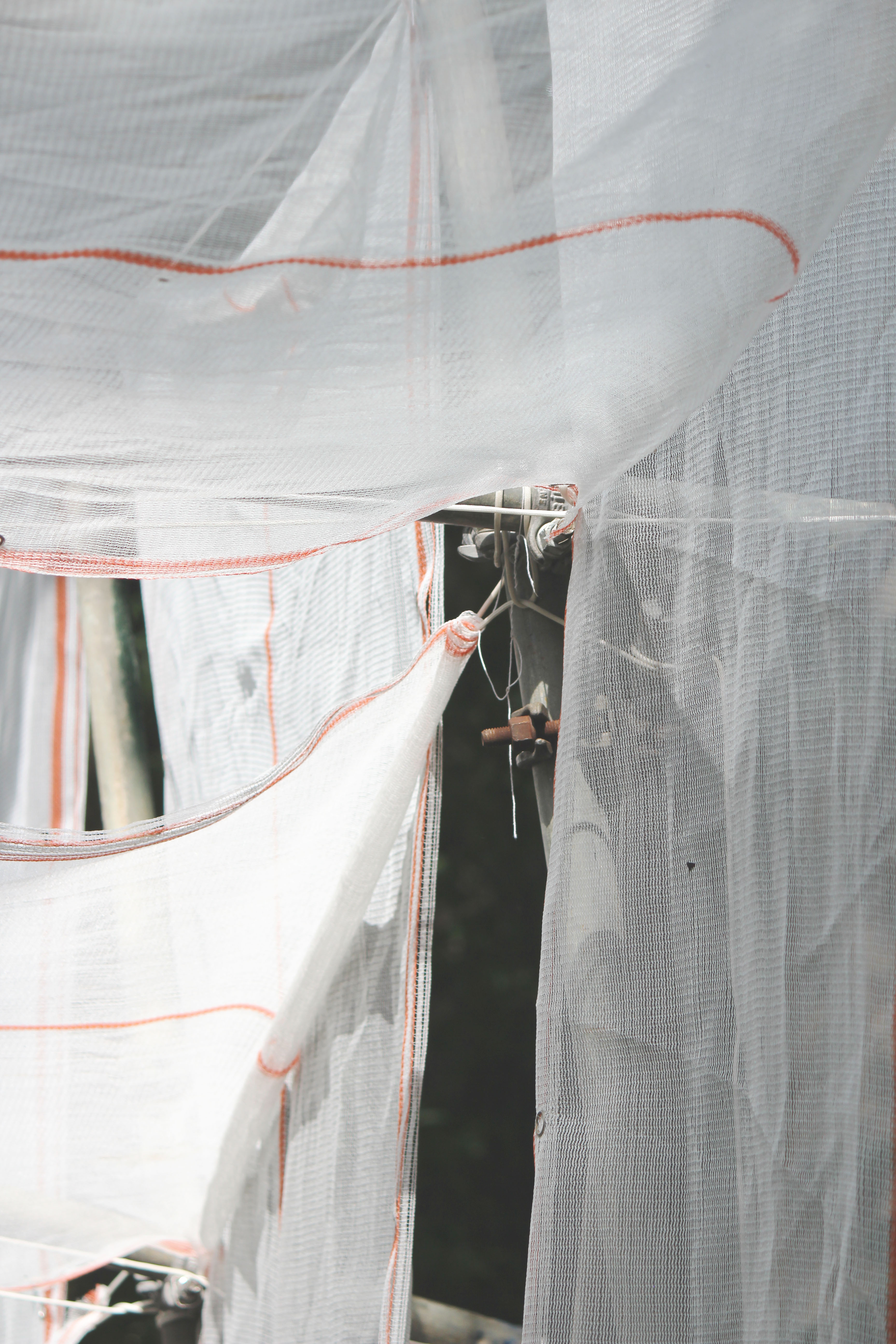
Debris fabric detail. Image courtesy of Ryan Shaw
runner: When I was researching +Detail, something that stuck out to me was the quote on the landing page of the website that says “we believe well-designed spaces have the power to create connection, influence wellbeing, and shape memorable experiences.” I feel like that speaks directly to the goal of your project, which focuses on somatic awareness. Is somatic experiencing something that you’re generally interested in as an architect?
Dylan: Absolutely. I’m always thinking about physically inhabiting the space I’m designing for, and how the form, materials, light, and acoustics effect the overall sensory experience. I would put somatics underneath a larger umbrella of considering everyone’s sensitivities and needs, whether it be a niche user scenario, a disability, or neurodivergence.
slack:work was about meeting people where they were, you know? Maybe your back hurts and you need to lay down, or just sit while you eat something. The structure had a variety of different functions, but all of it was focused on rest and positive distraction.
 copy.jpg "slackwork")
Point of view from sling chair
runner: It is hopeful that neurodivergence is starting to have influence in the field of architecture and interior design. When you studied architecture, were these considerations part of the curriculum too?
Dylan: I feel like it’s something that I’m becoming more aware of through practice rather than from education.
runner: And you wanted it to be built with rapidly deployable materials, which I think also enhances the accessible nature of the project, because it is something that almost anybody could make on their own.
Dylan: The scaffolding was like playing with heavy duty LEGOs. With only two nuts to tighten for each steel connection, the volunteer design students easily picked up the system. Beyond the construction documents, they didn’t need much guidance. Things got assembled quickly.
runner: It’s sort of like a jungle gym for adults.
Dylan: We definitely wanted play to show up in the project. When you engage with it, how does the piece engage back? The final install turned out to be quite sensitive. For instance, the cantilevered steel gently flexed as people sat down, and it would waft the fabric. A kid tapping or swinging would send vibrations through the whole structure. You could feel all those forces surprisingly well when the netting suspended you in the air. It was like laying on a trampoline. Strong, but also like Jello.
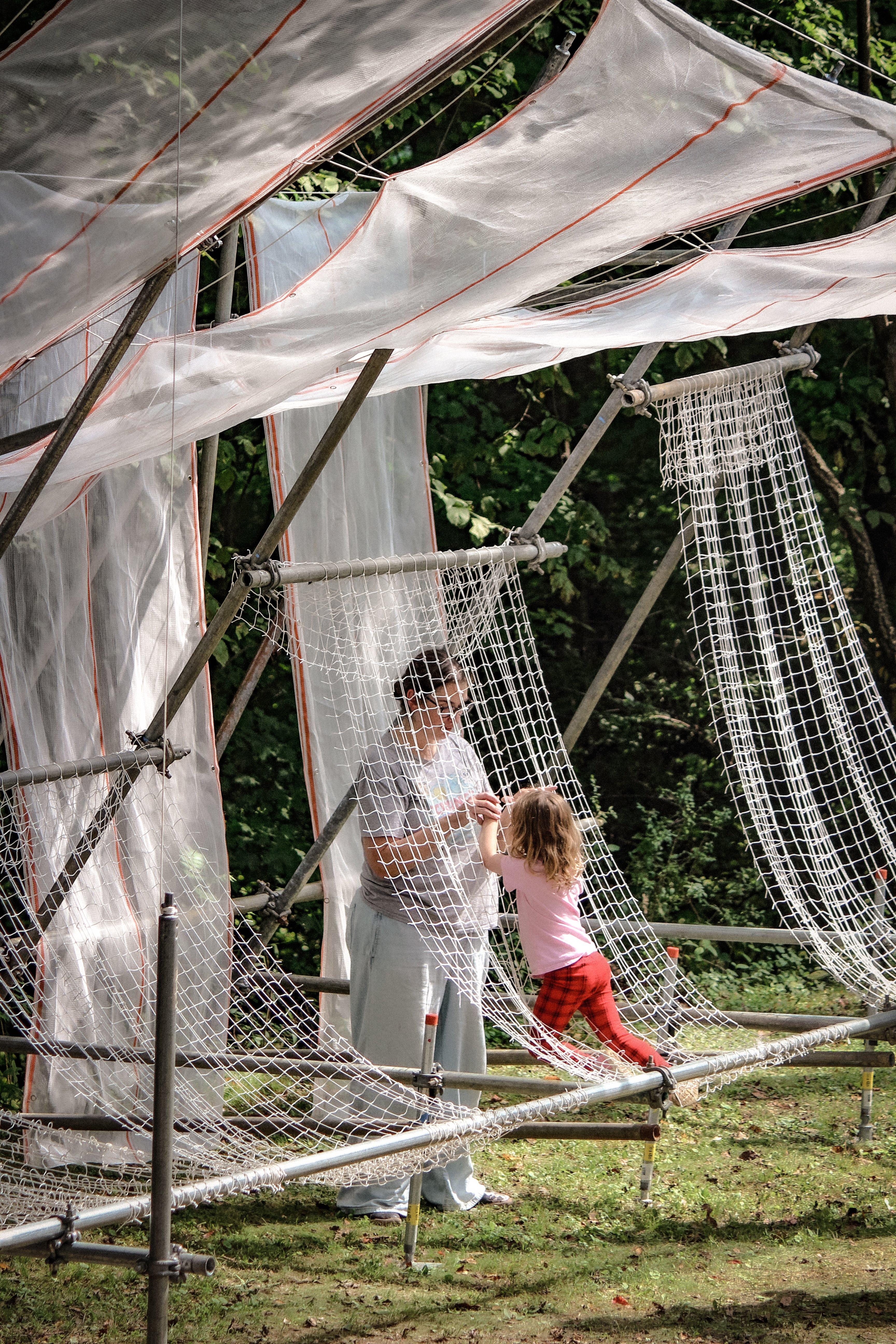
Playing. Image courtesy of Ryan Shaw
runner: And because the materials it was built with makes it easy to put up and take down, the piece is environmentally friendly too.
Dylan: Yes! It was exciting to design and build right smack at the edge of an old growth forest. We were able to set up that close to the trees without harming them because we didn’t have to penetrate the ground with footings. We completely disassembled it in one hour and left no trace.
I see how much is wasted when it comes to building temporary structures, like at Burning Man or something. We are proud of the fact that no part of this pavilion was discarded after its disassembly.
runner: Another way that the project is like LEGOs. Everything can be taken down and then reused to create a completely different structure one day.
Dylan: Exactly. That steel is probably scattered all over Ohio being used as part of other construction projects right now.
runner: Can you see this same piece being installed again? I honestly feel like there’s probably millions of different ways you could go with this concept.
Dylan: For sure! Anyone could create the same piece somewhere else, like an IKEA shelf or something. We have all of the drawings, which tell you how much of each piece you need to rent from the scaffolding company. And the nice thing too is you can get the tube and clamp system almost anywhere.
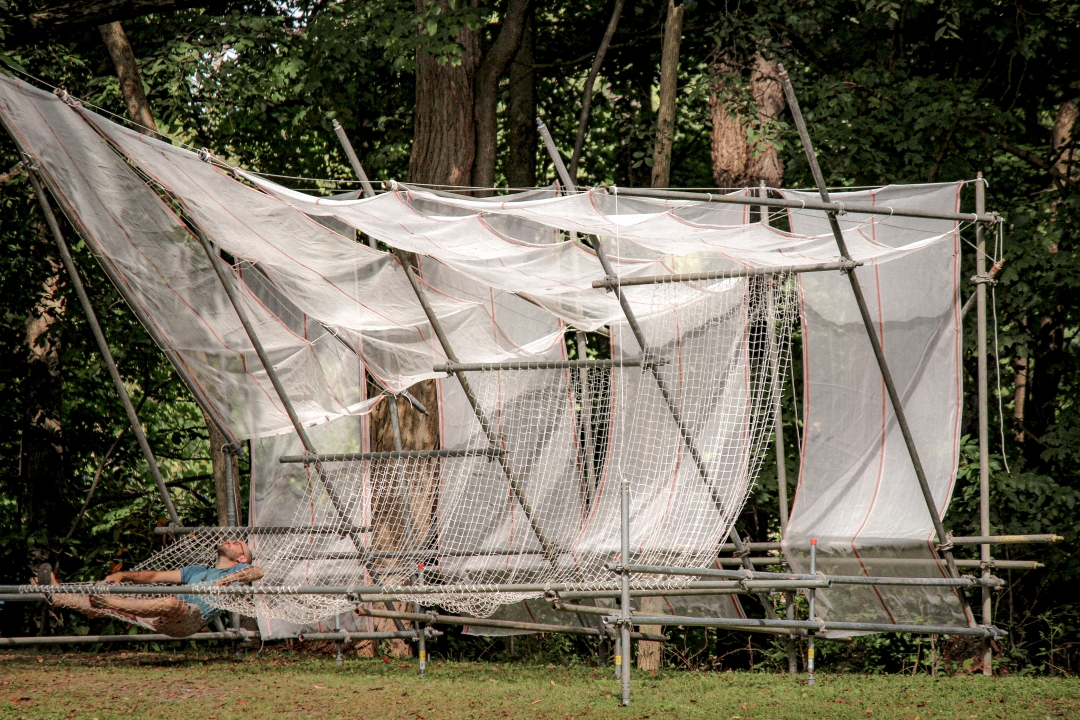
Slacking. Image courtesy of Ryan Shaw
slack:work was installed as part of the 33rd Annual “Art in the Park” Festival in Kent, Ohio, which took place on September 12th and 13th, 2026. Assembly of the piece was a two-day joint effort between +Detail project designers, volunteer CAED students, and local carpenter Anne Dargenio. Kent State College of Architecture and Environmental Design students were eager to build something real for their community, and experienced being on the other side of the drawing set.
Learn more about Dylan Rundle and +Detail at the links below: